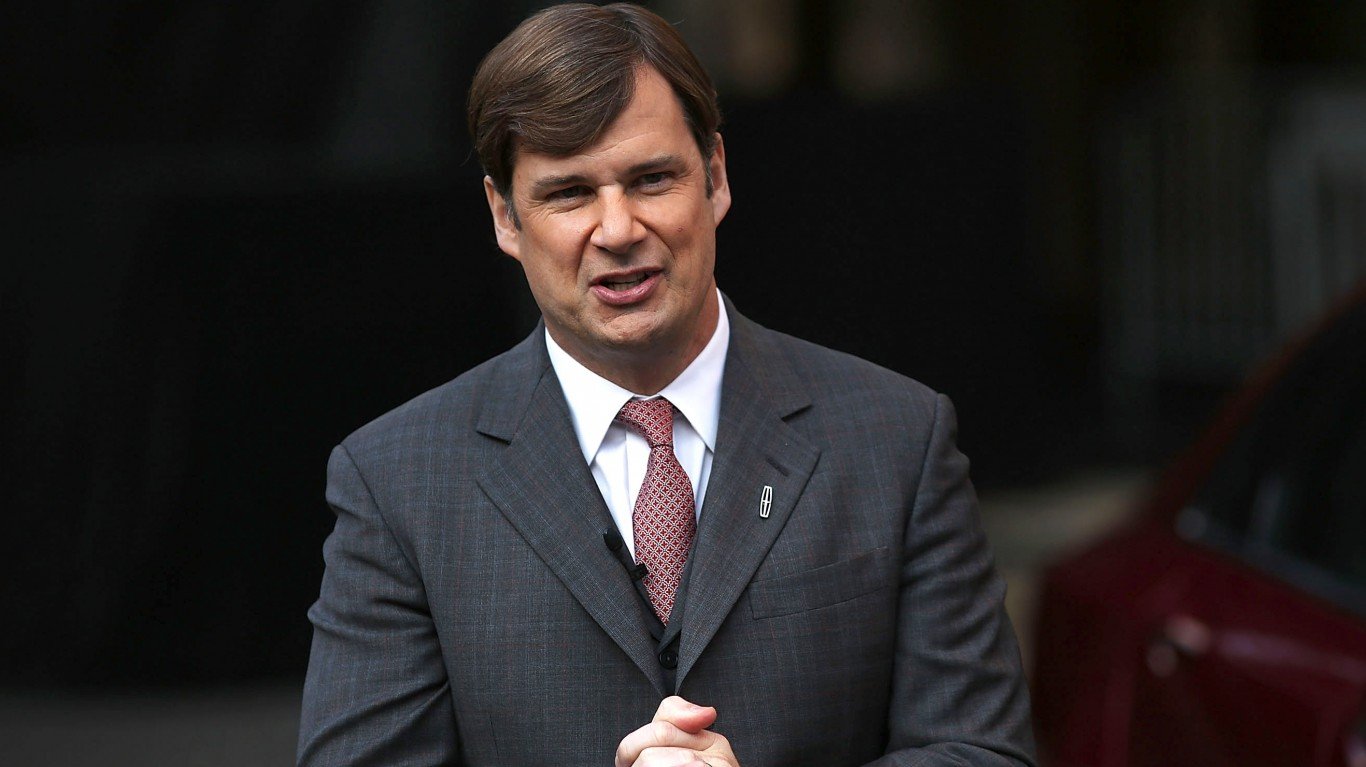
Ford CEO Farley Does More To Wreck The Company
Jim Farley steered Ford into a Chinese partnership he once warned would destroy the company, and now a Cabinet secretary is calling him out in writing. The fallout reveals a pattern of strategic miscalculations that keep mounting at one of…


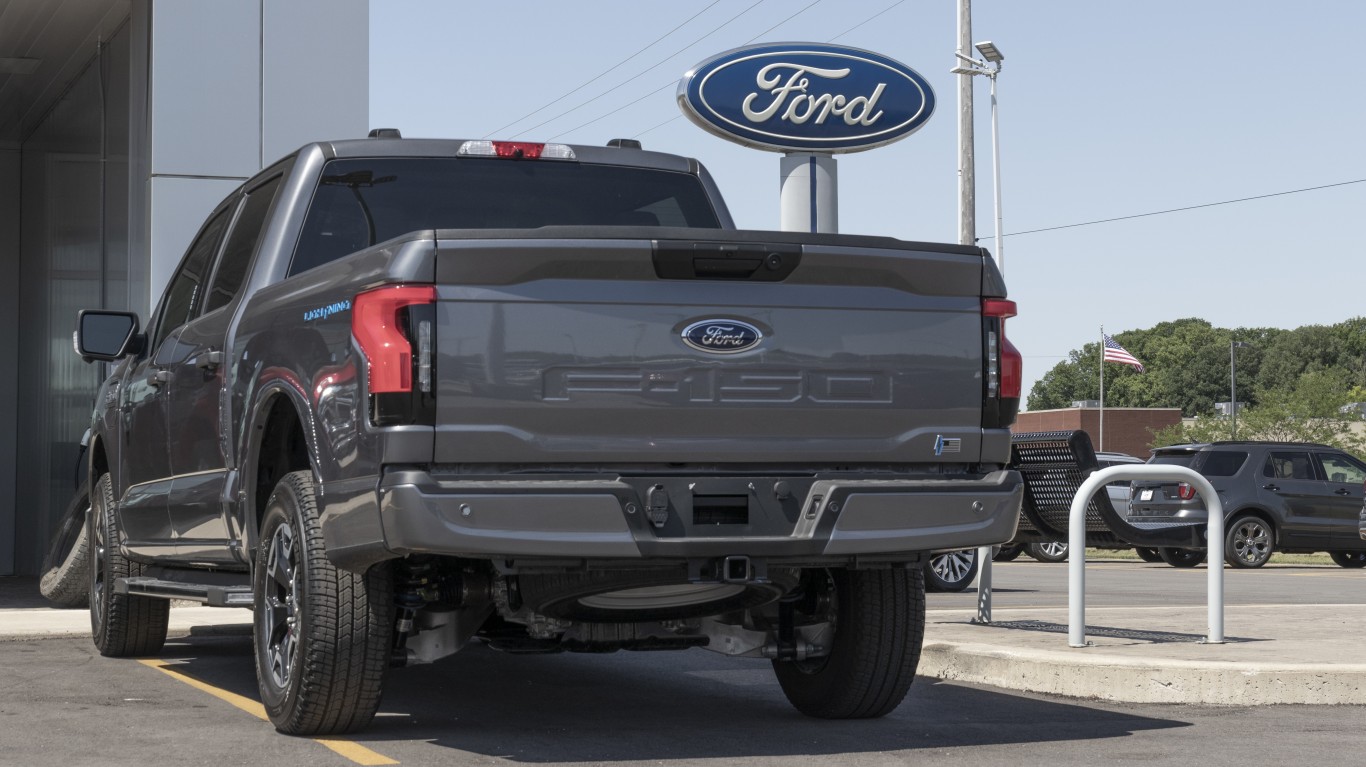
Ford (NYSE: F | F Price Prediction) was on a roll, briefly. It dropped out of the expensive EV race after pledging $30 billion in investment. Ford Energy, a battery storage business, was a solution for energy needs for installations like AI data centers.
Even Jim Cramer liked it. He gushed, “We know that demand for these big backup batteries is growing like crazy because all the new data centers really can’t afford to go offline.”
Not long ago, Ford CEO Jim Farley said that if Chinese EVs were in the US market, it could ruin Ford. Recently, it has formed an alliance with some Chinese companies, which some people believe will hurt the US labor market.
A reprimand from U.S. Transportation Secretary Sean Duffy hit Farley like a truck. The reaction to Ford’s deals with Chinese battery maker CATL and Chinese automaker Geely was one of “profound concern.” Duffy’s letter to Farley was even harsher. Duffy wrote, “When a company intentionally chooses to deepen operational dependencies on strategic competitors, it fails to act as the reliable partner the American public and this DOT require.”
Among the other things Ford missed was that both Republicans and Democrats have stated Chinese technology is a threat to US security. And, just as bad, many Chinese EV and battery companies exist only because their government has underwritten their founding and ongoing financing. Farley should have considered that his own fear of Chinese EVs is fundamentally what the Administration is using against him.
Farley is widely known for strategic blunders. EVs are at the top of that list. Years of product recalls are also something he did not fix quickly and which has continued to dog Ford.
Farley’s response to Duffy was that Duffy’s letter was based on a “misunderstanding,” Farley told the WSJ. He commented to the paper, “These are basic misunderstandings, mistruths, whatever words you want to use, that could be cleared up in a simple five-minute call.” It is just short of an insult to Duffy. And that call should have been made much earlier.
Contact [email protected] for any questions or corrections.
Douglas A. McIntyre is the co-founder, chief executive officer and editor in chief of 24/7 Wall St. and 24/7 Tempo. He has held these jobs since 2006.
McIntyre has written thousands of articles for 24/7 Wall St. He is an expert on corporate finance, the automotive industry, media companies and international finance. He has edited articles on national demographics, sports, personal income and travel.
His work has been quoted or mentioned in The New York Times, The Wall Street Journal, Los Angeles Times, The Washington Post, NBC News, Time, The New Yorker, HuffPost USA Today, Business Insider, Yahoo, AOL, MarketWatch, The Atlantic, Bloomberg, New York Post, Chicago Tribune, Forbes, The Guardian and many other major publications. McIntyre has been a guest on CNBC, the BBC and television and radio stations across the country.
A magna cum laude graduate of Harvard College, McIntyre also was president of The Harvard Advocate. Founded in 1866, the Advocate is the oldest college publication in the United States.
TheStreet.com, Comps.com and Edgar Online are some of the public companies for which McIntyre served on the board of directors. He was a Vicinity Corporation board member when the company was sold to Microsoft in 2002. He served on the audit committees of some of these companies.
McIntyre has been the CEO of FutureSource, a provider of trading terminals and news to commodities and futures traders. He was president of Switchboard, the online phone directory company. He served as chairman and CEO of On2 Technologies, the video compression company that provided video compression software for Adobe’s Flash. Google bought On2 in 2009.