Macy’s and American Eagle Both Got Crushed but Only One Looks Worth Buying
Macy's and American Eagle both reported earnings within hours of each other, both got punished by the market, and yet only one of them belongs anywhere near a retirement portfolio. The reasons why will surprise you.


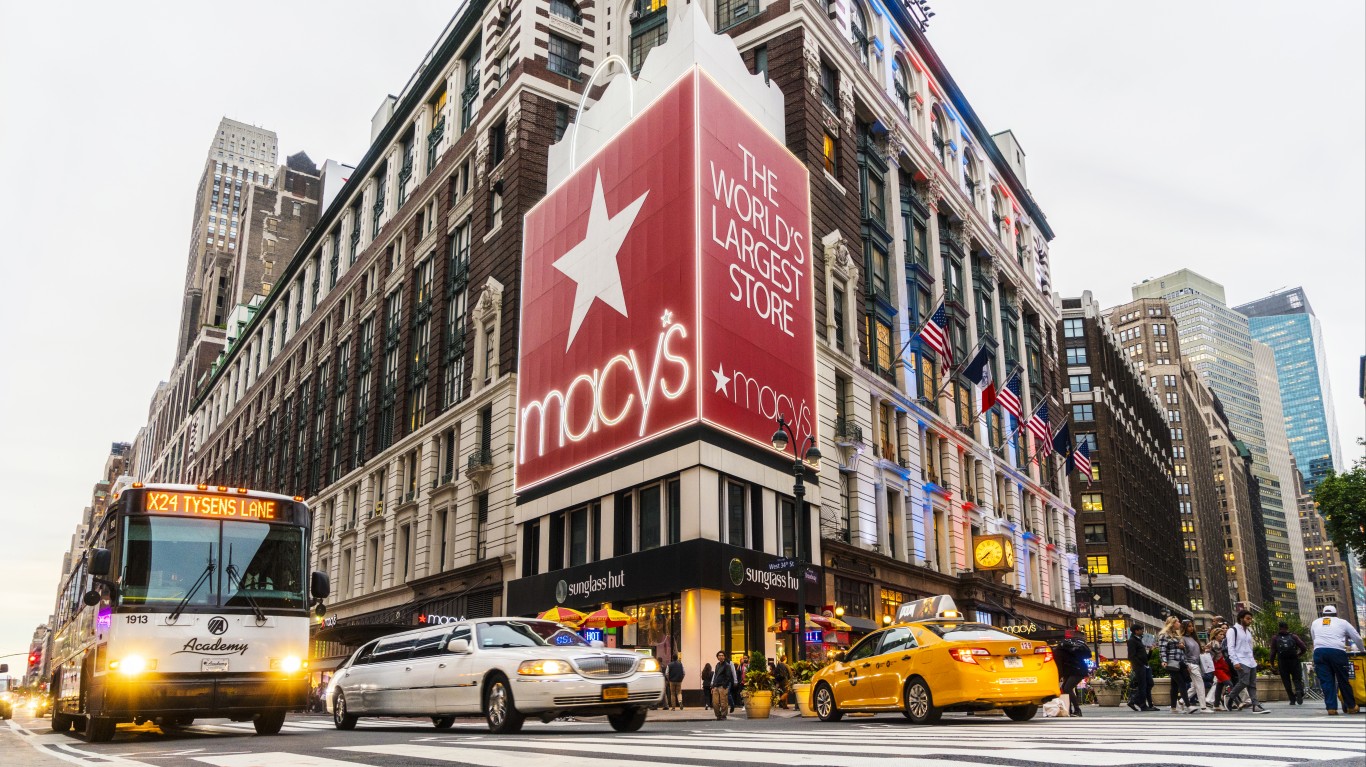
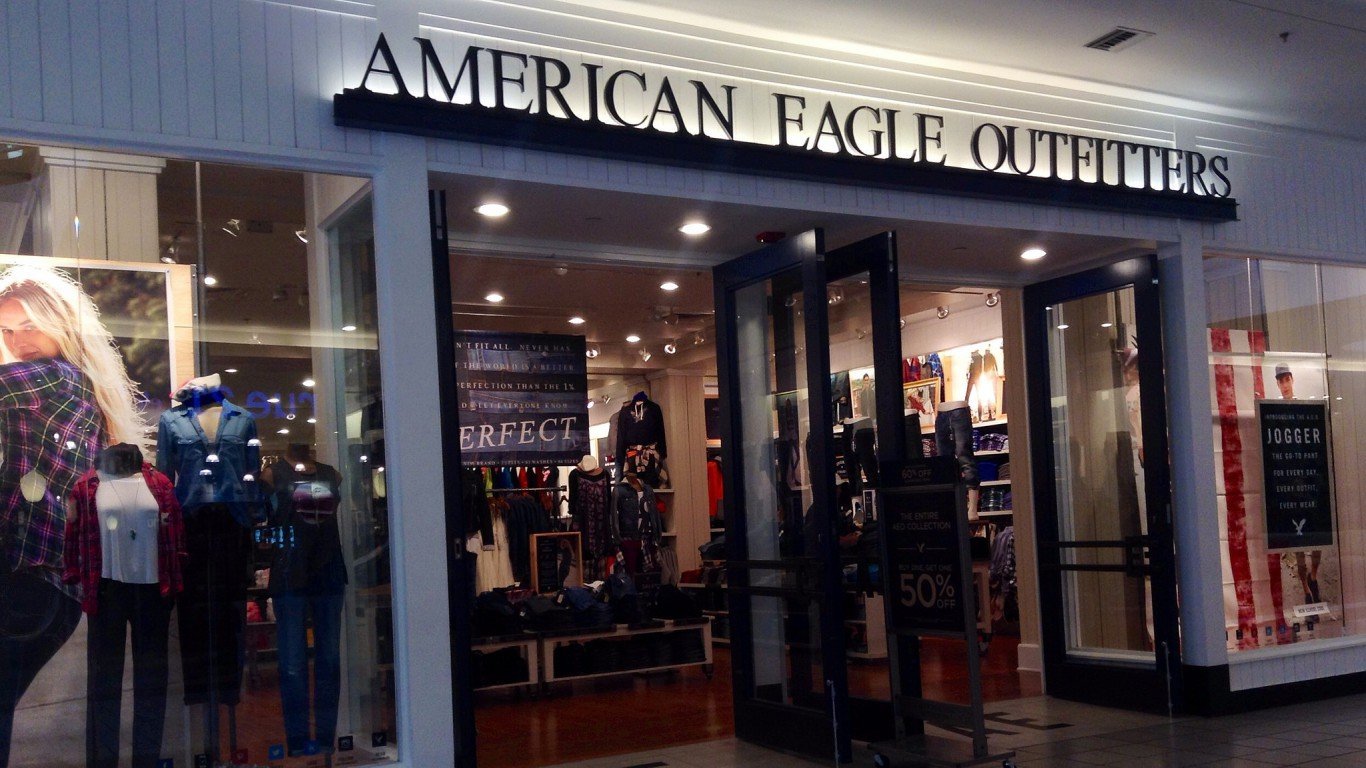
Two struggling apparel retailers reported within hours of each other, both got sold, and now retirement-focused investors have to answer a plain question: own Macy’s (NYSE:M | M Price Prediction) or American Eagle Outfitters (NYSE:AEO) here, or neither? Macy’s beat on the top and bottom line and raised full-year guidance. American Eagle beat headline EPS but missed on the metric that matters, comparable sales at its namesake brand. The market punished both, sending Macy’s down 3.65% intraday and American Eagle down 13.77%. That reaction is the whole story, and it tells you which name a conservative income investor should actually be looking at.
Quality of the Quarter: Macy’s, Decisively
Macy’s put up adjusted EPS of $0.63 versus $0.36 consensus, its 10th consecutive EPS beat, on comparable sales up 2.7% across all three nameplates, a fifth straight quarter of positive comps. Bloomingdale’s comps rose 11.3%, Bluemercury 6.2%, and the Reimagine 200 stores 1.9%. Gross margin expanded 180 basis points to 41.5%. A $98 million IEEPA tariff refund flattered the numbers, with roughly $96 million being reinvested into the strategy rather than flowing through to the bottom line.

American Eagle’s reported $0.79 EPS versus $0.21 consensus flatters a weaker underlying quarter. The number was inflated by a $161 million net tariff refund benefit included in operating profit. Strip that out and the underlying story is that revenue beat by only 0.89%, the American Eagle brand posted a 1% comparable sales decline, merchandise margins deleveraged 330 basis points, and inventory rose 14%. Aerie and OFFLINE remain excellent, with 25% revenue growth and 19% comps, but the flagship brand is shrinking. Winner: Macy’s.
Yield and Income Durability: Macy’s Again
Macy’s pays a quarterly dividend of $0.1915, following a 5% increase earlier in FY2026, for a trailing yield of roughly 3.29%. It backs the payout with $1.43 billion of operating cash flow and $797 million of free cash flow in FY2026, plus roughly $1.0 billion remaining under its $2.0 billion buyback authorization. American Eagle pays $0.125 quarterly, a 2.9% yield, with a much smaller cash cushion of $148 million at quarter-end. For a retiree, Macy’s offers a bigger yield, a recent hike, and a coverage profile supported by cash flow across all three nameplates rather than a single growth engine. Winner: Macy’s.
Valuation Versus Own History: American Eagle
This is the only dimension American Eagle wins, and it wins on pain. AEO trades at 11x trailing and 12x forward earnings after falling 43.7% year-to-date and 37.8% over five years. Its 50-day moving average of $17.03 sits well above the current $14.57. Analysts still carry a $19.55 target, but the rating skew is 11 holds, one buy, and a strong sell. Macy’s, at 9x trailing and 10x forward, is optically cheaper on multiple, but it’s actually up 24.98% over one year and has clawed back to only 4.19% below year-end. AEO is more washed out relative to its own trend. Winner: American Eagle, on price alone.


Verdict: Macy’s for the Retiree, AEO for the Contrarian, Neither on Autopilot
For a retirement-focused investor, Macy’s screens as the stronger candidate. It offers the higher yield, a recently raised payout, real free cash flow, no debt maturities until 2030, and a business where every nameplate is comping positive. The Bold New Chapter strategy cited by management is producing measurable results across the store base. AEO is a trade for someone who believes Aerie can carry a shrinking American Eagle brand through a tariff-heavy back half at assumed 15% H2 rates, with markdowns already baked into third-quarter guidance. That profile fits a speculative trade rather than a retirement allocation. Macy’s screens better on income durability, while AEO’s yield carries meaningfully more risk (the same set of red flags we cataloged in a free guide to dividend traps).
Contact [email protected] for any questions or corrections.
Chris Lange is a financial and geopolitical writer with more than a decade of experience covering a myriad of topics. He has published thousands of articles for 24/7 Wall St., with past coverage focused heavily on stocks, IPOs, healthcare, defense, global affairs, and technology.
His work has been quoted, or referenced by a number of outlets including Business Insider, USA Today, Yahoo Finance, MSN, The Motley Fool, and many other publications. A graduate of Southwestern University, he studied business with a focus on investments and has previous experience in banking and startups.
When not reading or writing the news, he is following his passion for Lacrosse, playing chess, or building solar projects with his dad.