These 3 Pipeline Stocks Pay High Yields Without the K-1 Headache
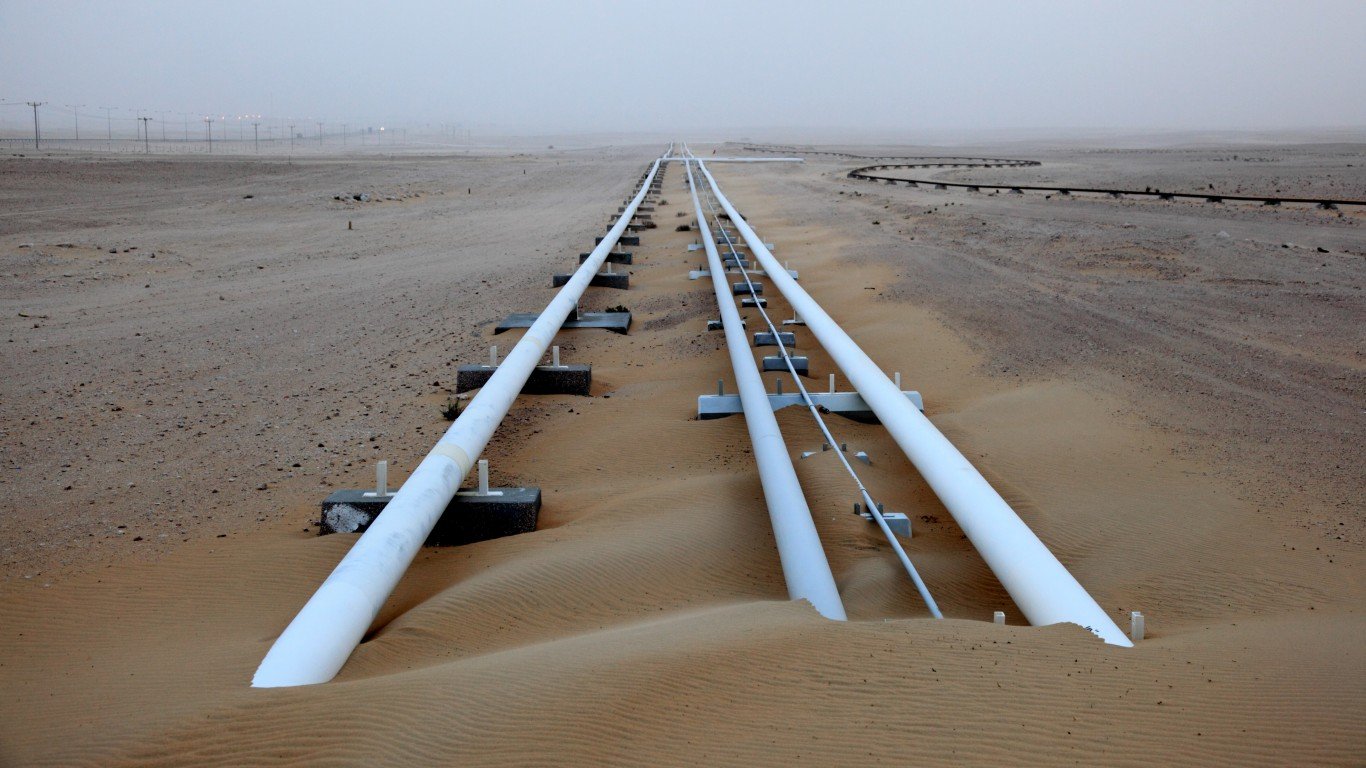
Pipeline stocks sit near the top of yield tables for a structural reason most investors overlook, and three C-corp operators are quietly collecting fee-based cash flow through every commodity cycle without mailing you a tax nightmare at year end.

Relying on a paycheck alone leaves too many households one layoff or medical event away from stress. Passive income closes that gap by paying you regardless of whether you show up to work, and dividend stocks do the job with more liquidity and flexibility than rental real estate, private credit, or annuities.
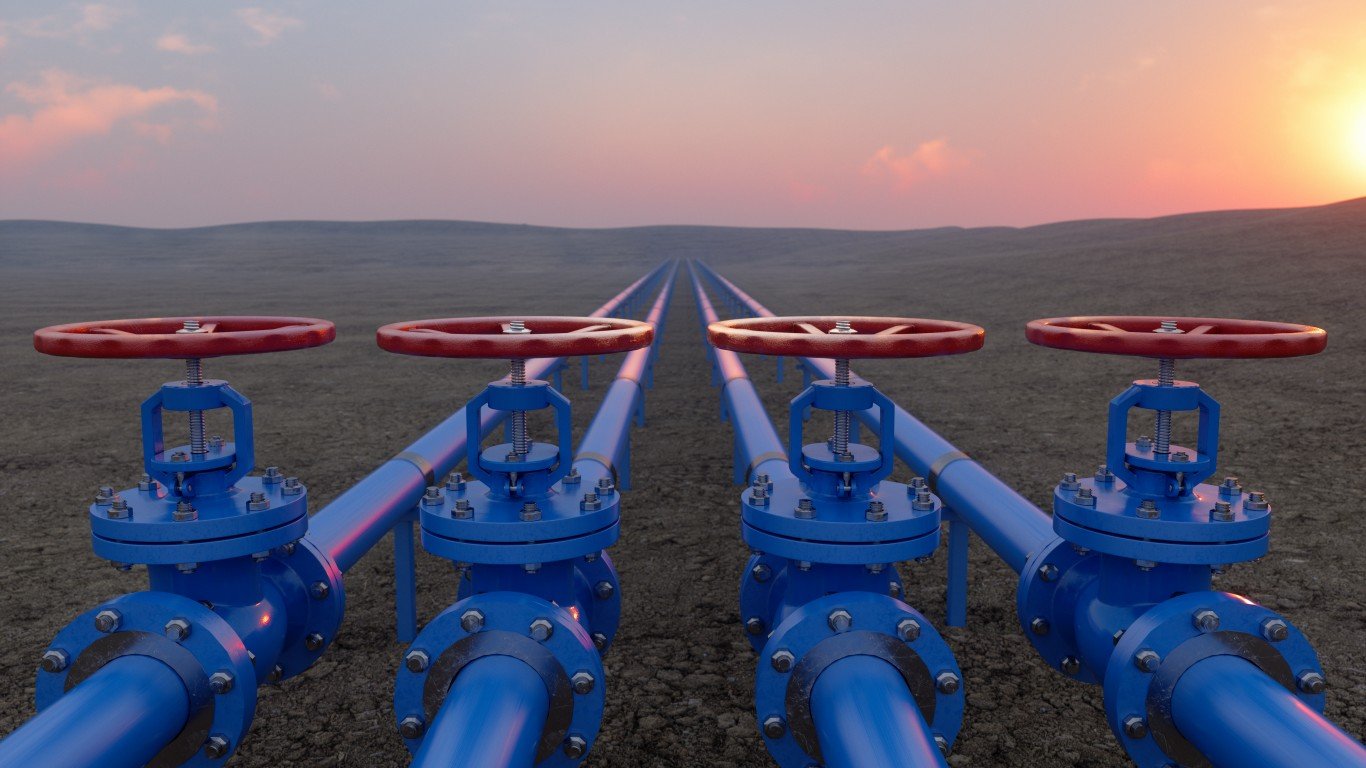
Midstream pipeline operators sit near the top of the dividend-yield tables for a structural reason most investors miss. Their revenue comes from long-term fee contracts on the volumes moving through the pipes, insulating them from the price of the molecule inside. That take-or-pay model insulates cash flow from crude and natural gas price swings, funds heavy debt loads, and leaves plenty over to send to shareholders. All three names below are C-corps, so distributions land on a standard 1099-DIV rather than the K-1 partnership schedule that complicates retirement accounts.
We screened our 24/7 Wall St. dividend equity research database, looking for stocks that pay massive dividends, and we found a collection of companies that, combined, can generate over $1,800 a year in passive annual income if you invest just $16,667 in each stock at the time of this writing.
Williams Companies
- Stock #3: Williams Companies (NYSE:WMB)
- Yield: 2.88%
- Shares for $16,667: 228.8
- Annual Passive Income: ~$480
Williams Companies (NYSE:WMB | WMB Price Prediction) is anchored by Transco, the largest-volume natural gas pipeline in the U.S., supplemented by Northwest Pipeline, MountainWest, Gulfstream, and Blue Racer Midstream. The system moves gas from Appalachia and the Gulf into East Coast and Southeast demand centers, with a growing Power Innovation platform tied to data-center load.
The dividend was lifted to $0.525 per share quarterly, an annualized $2.10, up 5% from $2.00. Coverage is comfortable, with AFFO guidance of $6.085 billion to $6.315 billion against a dividend coverage ratio of 2.36x to 2.45x. The quarterly amount has stepped up every year going back through $0.475, $0.4475, $0.425, $0.41, and $0.40. The biggest risk is leverage. Following the $5.5 billion Momentum Midstream acquisition, management guides to leverage of 3.75 times debt to EBITDA, with year-end tracking near 3.9 times. That leaves less cushion for a rate shock or a Hart-Scott-Rodino snag on the deal.
Kinder Morgan
- Stock #2: Kinder Morgan (NYSE:KMI)
- Yield: 3.86%
- Shares for $16,667: 540
- Annual Passive Income: ~$643
Kinder Morgan (NYSE:KMI) runs roughly 79,000 miles of pipeline and 139 terminals across Natural Gas Pipelines, Products Pipelines, Terminals, and CO2. Marquee assets include Tennessee Gas Pipeline, El Paso Natural Gas, and NGPL. Natural gas transport volumes climbed 7% year over year, with LNG deliveries, Texas intrastate demand, and Mexico exports doing most of the work.
The payout is $0.2975 per share quarterly, or $1.19 annualized, a 2% increase over the prior year. The declared rate has stepped up in sequence, from $0.2825 to $0.2875 to $0.2925 to $0.2975. Free cash flow of $978 million funded the distribution, and net debt to adjusted EBITDA sits at 3.6 times, at the low end of the target range. Rich Kinder said the company can “fund these projects almost completely with our internally generated cash flow while still continuing to pay a solid and growing dividend”. Risk to watch: capex jumped 51.78% year over year, and permitting delays on any of the multi-billion-dollar backlog projects would dent the growth story.
Oneok
- Stock #1: Oneok (NYSE:OKE)
- Yield: 4.43%
- Shares for $16,667: 172.5
- Annual Passive Income: ~$738
Oneok (NYSE:OKE) is a diversified operator moving NGLs, natural gas, crude oil, and refined products across an integrated footprint. The EnLink and Medallion acquisitions transformed scale, adding gathering, processing, and crude assets. Approximately 90% of earnings are fee-based, and full-year adjusted EBITDA reached $8.02 billion, up 18%.
The quarterly dividend was raised 4% to $1.07 per share, or $4.28 annualized. That step is the latest on a long ladder that ran through $0.935, $0.955, $0.99, $1.03, and now $1.07. Operating cash flow of $5.599 billion supports coverage, and management extinguished roughly $3.1 billion of long-term debt. The trade-off is the absolute size of that debt stack: total liabilities of $44.072 billion sit against the balance sheet, and any prolonged softness in NGL volumes or WTI below the $55 to $60 per barrel planning band would pressure gathering economics.
Combined, these three positions generate $1,861 in annual passive income on a $50,000 investment, a blended yield of 3.72%. Oneok contributes $738, Kinder Morgan adds $643, and Williams rounds out the portfolio with $480.
| Ticker | Annual Income | Slice Color |
|---|---|---|
| OKE | $738 | Navy |
| KMI | $643 | Slate |
| WMB | $480 | Green |
This trio works as an income sleeve. The fee-based, take-or-pay model keeps distributions arriving through commodity cycles, the C-corp wrapper keeps tax reporting simple inside an IRA, and reinvesting each quarter compounds the share count without adding fresh capital. The leverage is real, but it is priced in and actively managed, and the checks land on schedule.
Contact [email protected] for any questions or corrections.
Chris Lange is a financial and geopolitical writer with more than a decade of experience covering a myriad of topics. He has published thousands of articles for 24/7 Wall St., with past coverage focused heavily on stocks, IPOs, healthcare, defense, global affairs, and technology.
His work has been quoted, or referenced by a number of outlets including Business Insider, USA Today, Yahoo Finance, MSN, The Motley Fool, and many other publications. A graduate of Southwestern University, he studied business with a focus on investments and has previous experience in banking and startups.
When not reading or writing the news, he is following his passion for Lacrosse, playing chess, or building solar projects with his dad.