AMD Is Eating Intel’s Lunch
AMD and Intel both posted blockbuster Q2 2026 data center numbers, but one company is quietly locking up the customers, the sockets, and the AI rack deals while the other burns billions fixing its factories.

AMD (NASDAQ: AMD | AMD Price Prediction) and Intel (NASDAQ: INTC) both just posted Q2 2026 results, and the contrast is hard to miss. AMD’s Data Center segment more than doubled on EPYC and Instinct demand. Intel grew faster than it has in fifteen years, yet still swallowed a massive GAAP loss and a $2.1 billion Foundry hole. Same customers, same workloads, very different scoreboards.
EPYC Is Draining Intel’s Cash Engine
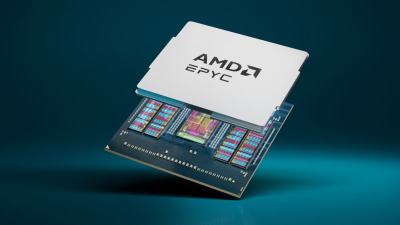
AMD’s Data Center segment brought in $6.72 billion, up 107% year over year, with cloud and enterprise server sales each growing more than 70%. Lisa Su called it the fifth consecutive quarter of record server CPU revenue, and management said AMD gained x86 server revenue share year over year. That is the punchline. EPYC is winning sockets.
Intel’s DCAI unit still put up $6.26 billion, up 59% YoY, its strongest server growth on record. Lip-Bu Tan admitted the constraint bluntly: “Some area we are still behind, but we are catching up very fast.” CFO David Zinsner said “Server CPU demand continues to far outpace available supply,” which sounds great until you remember AMD is the one absorbing the overflow.
| Q2 2026 Data Center | AMD | Intel DCAI |
| Revenue | $6.72B | $6.26B |
| YoY Growth | +107% | +59% |
| Flagship CPU | EPYC Venice (Zen 6, 2nm) | Xeon 6+ on Intel 18A |
One Ships AI Racks, One Fixes Its Fabs
AMD is pushing rackscale. Helios pairs Venice CPUs with MI450 GPUs, and customer commitments already include Anthropic (up to 2 gigawatts of MI450 in Helios), plus multi-generation deals with OpenAI and Meta. Su claims Helios delivers up to 30% more tokens per dollar than the competition. That is a marketing number, but the customer list is real.
Intel’s story is a manufacturing turnaround. Intel 18A output rose more than 50% quarter-over-quarter, and the company entered risk production on 18AP. Foundry still lost $2.1 billion in the quarter. A $12.53 billion non-cash charge tied to the CHIPS Act escrow drove a GAAP loss of $2.16 per share. Non-GAAP EPS of $0.42 beat the $0.22 estimate, so the operating story is genuinely better, but the balance sheet is doing gymnastics.
What I Am Watching Into 2027
AMD guided Q3 to roughly $13 billion, up 41% YoY, and expects the Data Center segment to more than double again in 2027. Intel guided Q3 revenue to $15.8 billion to $16.8 billion with non-GAAP EPS of $0.38. The variable I care about is whether Intel’s Diamond Rapids and Coral Rapids actually close the gap before Venice cements EPYC as the default cloud socket.
Why I Still Lean AMD, With One Caveat
Personally, I lean AMD. Product leadership, customer pull, and margin expansion (non-GAAP operating margin hit 27%, up from 12%) all point the same direction. The caveat: AMD is up 130.39% year to date and Intel is up 163.39%, so a lot of the turnaround is priced in on both. AMD offers the cleaner earnings story, while Intel Foundry represents the higher-variance turnaround thesis with more binary risk. If you are hunting for the next monster run in AI silicon, we reverse-engineered what the biggest tech winners looked like early in a free playbook here.
Contact [email protected] for any questions or corrections.
Alex Sirois is a financial writer with experience spanning both retail and institutional investing. He has written for InvestorPlace and held roles at BNY Mellon and Bernstein, giving him a perspective that bridges Main Street portfolios and Wall Street analysis.
Alex holds an MBA from George Washington University and has built his career across multiple industries, including e-commerce, education, and translation — a breadth of experience that informs how he breaks down complex financial topics for everyday investors. His writing is conversational, actionable, and grounded in long-term, buy-and-hold investing principles.
At 247 Wall St., Alex focuses on delivering analysis that is both accessible and useful, with a clear emphasis on helping readers make more informed decisions with their money.