ASML’s Current Share Price of $1,575 Shouldn’t Scare You.
ASML just shed over 14% in a month, and while the bears are pointing at stretched valuations and geopolitical exposure, the bulls see something the selloff is hiding about the world's only supplier of the machines that build every leading-edge…


ASML (NASDAQ:ASML | ASML Price Prediction) is a Buy at the current price of $1,575.15, and the pullback from recent highs is the opportunity. After a punishing -14.58% month that erased the summer melt-up, the stock now sits with the strongest order book, the widest moat, and the sharpest earnings revisions in the semiconductor equipment complex.
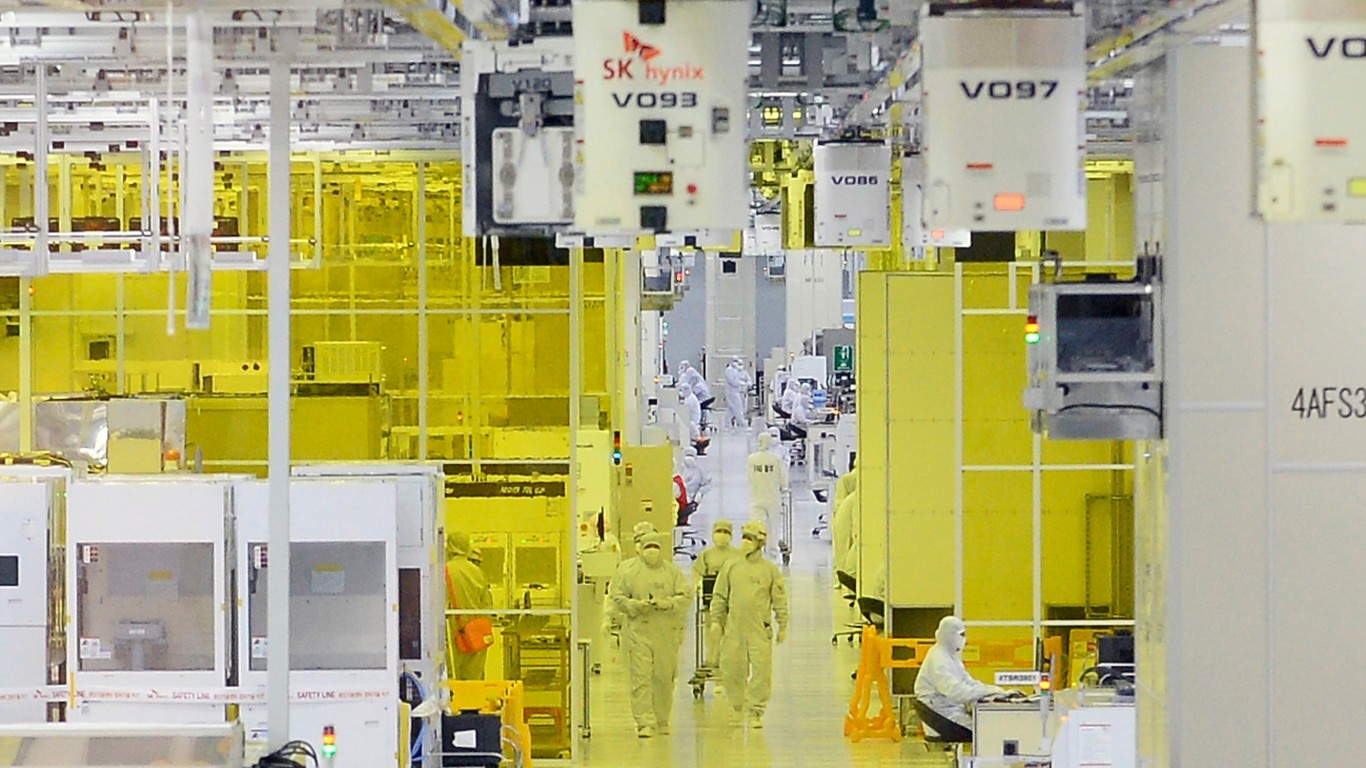
ASML is the sole supplier of extreme ultraviolet (EUV) lithography systems, the machines required to manufacture every leading-edge logic and memory chip in the world. That monopoly hands the Dutch company effective toll-collector status over TSMC, Samsung, Intel, and SK Hynix as they race to build AI capacity. A $45.06 billion backlog and two consecutive guidance raises in 2026 tell you where the cycle is heading, even if the market action doesn’t.
Why the Pullback Looks Like a Gift
The bull case starts with numbers that keep getting revised higher. ASML delivered Q2 2026 revenue of $10.65 billion, up 21.3% YoY, and beat consensus EPS by 10.401%. Management then raised full-year guidance to €43-€45 billion with gross margin of 54-56%. The 2026 consensus EPS estimate has moved from $31.4761 ninety days ago to $38.1899, with 28 upward revisions in the past 30 days and zero downward.
The AI capacity build is the catalyst. CEO Christophe Fouquet said “customers continue to accelerate their capacity expansion plans”, and the company is “close to being fully covered with orders for low NA EUV” in 2027. Memory-related system sales are guided to grow over 75% this year on a DRAM “perfect storm.” At 28x forward earnings, that growth is not expensive.
Why the Bears Have a Point
The stock is not cheap on trailing numbers. ASML trades at 57x trailing earnings and 18x sales, valuations that leave no room for error. Shares have already run 94.83% in the past year, meaning much of the AI thesis is baked in.
Concentration and geopolitics compound the risk. A handful of foundry customers drive the entire book, and China still represents around 20% of 2026 sales while facing tightening export controls. Bookings are lumpy: Q4 2025 net bookings of $15.28 billion followed a Q3 print of just $6.27 billion. One order push-out from TSMC or Intel can reset the narrative overnight.
Why Patience Has Merit
Hold advocates will note the guidance range for 2026 is genuinely wide at €43-€45 billion, reflecting real uncertainty on China and export policy. The Capital Markets Day scheduled for June 10, 2027 should reset the long-term revenue framework, and waiting for that clarity is defensible. Fundamentals are excellent, but the stock has already re-rated hard.
What the Data Actually Says
ASML currently trades at $1,575.15 against a consensus analyst price target of $2,157.62, implying roughly 37% upside if the Street is right. Analyst targets are one data point, not a promise. Of 43 covering analysts, the ratings breakdown skews decisively bullish.
- Strong Buy: 6
- Buy: 32
- Hold: 4
- Sell: 1
- Strong Sell: 0
On performance, ASML is up 47.95% year to date and 94.83% over the past 12 months, versus the S&P 500’s 11.57% YTD and 15.73% one-year gain. The recent drawdown of -8.15% in a week is what pulled the entry back into range.
Verdict on ASML at This Price
At $1,575.15, ASML is a Buy. Here is why.
The path to price appreciation runs through three specific catalysts. First, the Q3 2026 report, where the company guided revenue of €11.0-€12.0 billion and analysts have hiked EPS estimates 12 times in the past 7 days with zero cuts. Second, 2027 low NA EUV capacity is nearly booked, and the company is investigating a further 30% expansion for 2028. Third, the June 2027 Capital Markets Day will likely reframe the 2030 opportunity at €44-€60 billion in revenue at 56-60% gross margin.
The entry at 28x forward earnings implies asymmetric risk/reward when 2027 consensus EPS has moved from $41.4868 to $51.7225 in ninety days. You are paying a market multiple for a monopoly business growing revenue in the double digits with expanding margins and a €12 billion buyback running through 2028. The traits that show up in the biggest tech winners years before the headline runs are the same ones we cataloged in a free playbook here.
What invalidates the thesis: a hard-tariff escalation that cuts China sales below 15%, a TSMC or Intel capex freeze, or a High NA EUV maturity slip that pushes the mix benefit to 2028. Watch quarterly bookings, EUV as a share of net system sales, and any change to the 2027 coverage commentary. The $1,575 handle prices in enough of the risk that the AI-lithography monopoly is once again a bargain relative to its earnings trajectory.
Contact [email protected] for any questions or corrections.
Alex Sirois is a financial writer with experience spanning both retail and institutional investing. He has written for InvestorPlace and held roles at BNY Mellon and Bernstein, giving him a perspective that bridges Main Street portfolios and Wall Street analysis.
Alex holds an MBA from George Washington University and has built his career across multiple industries, including e-commerce, education, and translation — a breadth of experience that informs how he breaks down complex financial topics for everyday investors. His writing is conversational, actionable, and grounded in long-term, buy-and-hold investing principles.
At 247 Wall St., Alex focuses on delivering analysis that is both accessible and useful, with a clear emphasis on helping readers make more informed decisions with their money.