What Stops the AI Memory Boom? It Might Have Nothing to Do With Chips.
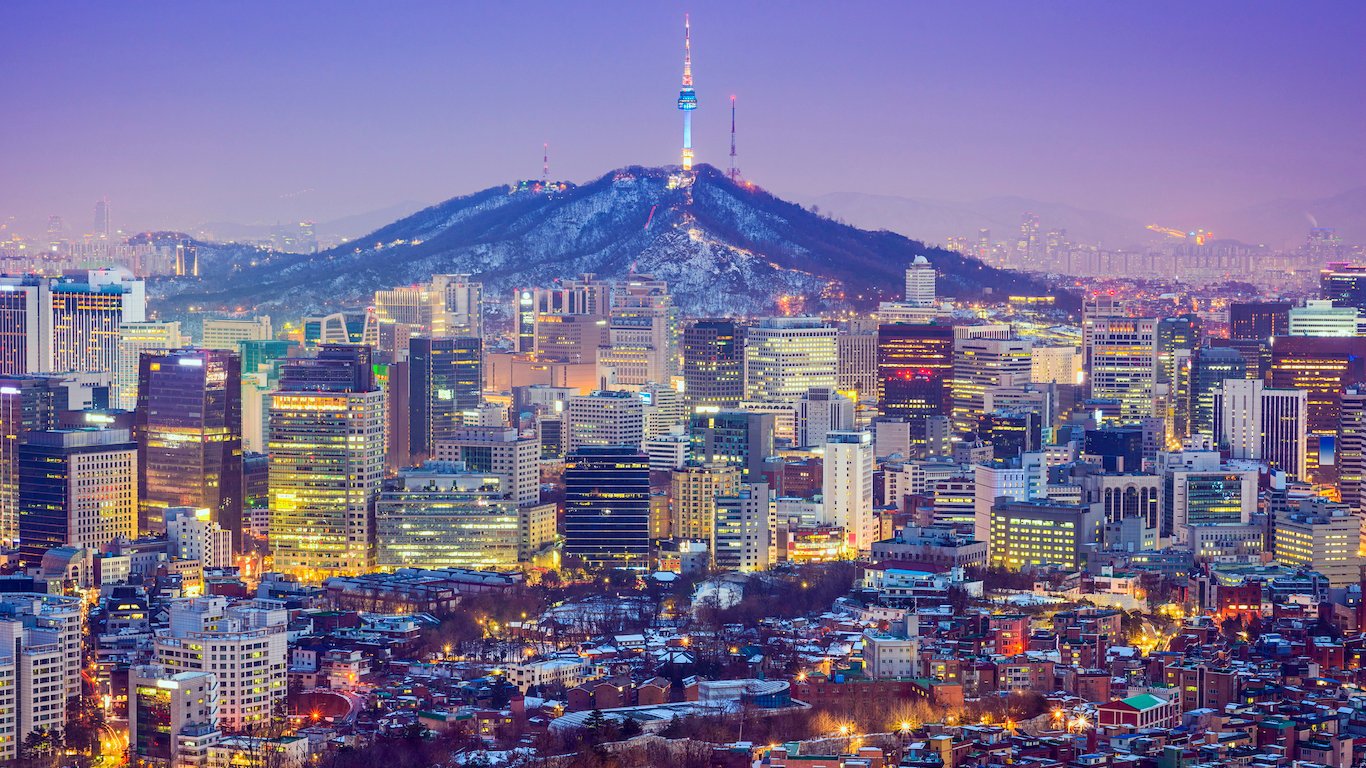
South Korea's grid cannot keep up with the AI memory factories SK Hynix is racing to build, and the question of who pays to fix that is now holding up one of the most critical supply chains in semiconductors.

This post may contain links from our sponsors and affiliates, and Flywheel Publishing may receive compensation for actions taken through them.

Samsung and SK Hynix (NASDAQ:SKHY) said no. South Korea’s state utility KEPCO had asked the country’s two memory giants to prepay for the grid buildout that will feed their new semiconductor clusters, and both companies walked away from the table. The request was non-binding, and it has now been rejected.
The story continues past that refusal. The proposal existed because South Korea does not have enough electricity coming online to power the AI memory factories SK Hynix is building.
If you own SK Hynix through the American Depositary Shares listing, this is now your problem too. High bandwidth memory demand from AI is running well ahead of supply, so the variable in doubt is power availability, not order books.
5 Years of Power Bills, Refused
The KEPCO prepayment proposal would have cost SK Hynix roughly five years of the company’s electricity expenses, with Samsung asked to contribute the larger share of the joint bill.
Utilities in most markets recover grid costs through rates over decades. Front-loading half a decade of power spend into a single upfront payment is what triggered the refusal from both companies.
Rejecting an unsolicited bill is straightforward corporate defense. The underlying question of who funds the grid doesn’t resolve when manufacturers say no, because somebody still has to build the substations and transmission lines. The meter is running on when Korean fabs need firm power.
Meanwhile, the operating story at SK Hynix tilts firmly in the company’s favor. Q2 revenue came in at KRW 79.32 trillion, up 256.8% year over year, and operating profit reached KRW 60.54 trillion, up 557.2%. Net profit attributable to controlling interests rose 1,240.8% year over year, and those preliminary figures remain subject to audit.
Twenty Reactors’ Worth of New Demand
South Korea projects that new semiconductor plants and data centers will add electricity demand roughly equivalent to the output of twenty nuclear reactors. That is a second national grid layered on top of the first, dedicated almost entirely to chips and AI compute.
Physically, that requires new high-voltage transmission corridors, substations, and generation capacity, most of which take years to permit and build. Memory fabs cannot run on intermittent supply, so the load has to be firm and continuous. That constraint pushes back against every expansion timeline the industry has published.
Context from the United States tells you where this pressure is heading globally. Lawrence Berkeley National Laboratory estimates data centers could reach between 6.7% and 12% of total annual U.S. electricity consumption by 2028, up from 4.4% in 2023. The same demand curve is arriving in Korea, only concentrated across a much smaller land area, and it is why the power, cooling, and grid suppliers behind AI keep showing up in our free report on the seven companies powering the AI buildout.
That is why SK Hynix is diversifying its geography. The company broke ground on an HBM production base in Indiana on August 27, 2026, calling it the “beginning of a new future for US-Korea AI.” Building outside Korea addresses political and grid-capacity risk in the same move.
Three Ways This Ends
Path one: the Korean government and KEPCO absorb most of the infrastructure burden through rate-based recovery and public funding, with the manufacturers paying a smaller share tied to actual consumption. That resolution keeps AI memory supply on schedule.
Path two: the parties negotiate a middle-ground cost-sharing arrangement, with manufacturers contributing meaningfully but not paying the full upfront figure proposed. That is politically easier than either extreme and, in my view, where this most likely lands.
Path three: nobody agrees, and the buildout schedule slips. Fabs get delayed, HBM supply tightens further, and pricing power for existing production stays elevated for longer. That path punishes AI customers, although it is not obviously bad for SK Hynix shareholders in the near term.
The middle path looks most likely because Korean industrial policy has historically socialized infrastructure costs when the strategic stakes are high enough, and memory is the country’s largest export category. The negotiation will take time, though, and the market may price the uncertainty before it prices the resolution.
Where SKHY Stock Sits
Valuation is not stretched by any conventional measure. The trailing P/E is 11x and the forward P/E is 5x
Capital return is real and accelerating. SK Hynix said it was accelerating a 40 trillion won share repurchase and cancellation program, targeting shareholder returns above 50% of free cash flow. Q2 EPS of $8.76 came in well ahead of the $5.12 consensus.
Compared with Micron (NASDAQ:MU | MU Price Prediction) and Samsung, SK Hynix carries the deepest HBM relationship with NVIDIA (NASDAQ:NVDA) and the strongest pricing leverage in the cycle. The power constraint is real, although it is shared across the Korean semiconductor complex and does not disadvantage SK Hynix relative to its domestic competitor.
The setup looks constructive on the numbers. The operating and shareholder-return stories are both intact; the valuation still leaves room, and ADS holders will want to keep currency exposure to the won and the unresolved KEPCO fight in view as buildout negotiations continue.
Contact [email protected] for any questions or corrections.
Omor Ibne Ehsan is a writer at 24/7 Wall St. He is a self-taught investor with a focus on growth, cyclical, and dividend equities that have strong fundamentals, value, and long-term potential. He also has an interest in high-risk, high-reward investments such as penny stocks.