Jim Cramer Says the AI Slowdown Is Fake. Dell Is His Evidence.
Jim Cramer built his case that AI spending fears are overblown on three stocks, but two of them moved in the exact wrong direction on the day he made the call.

This post may contain links from our sponsors and affiliates, and Flywheel Publishing may receive compensation for actions taken through them.

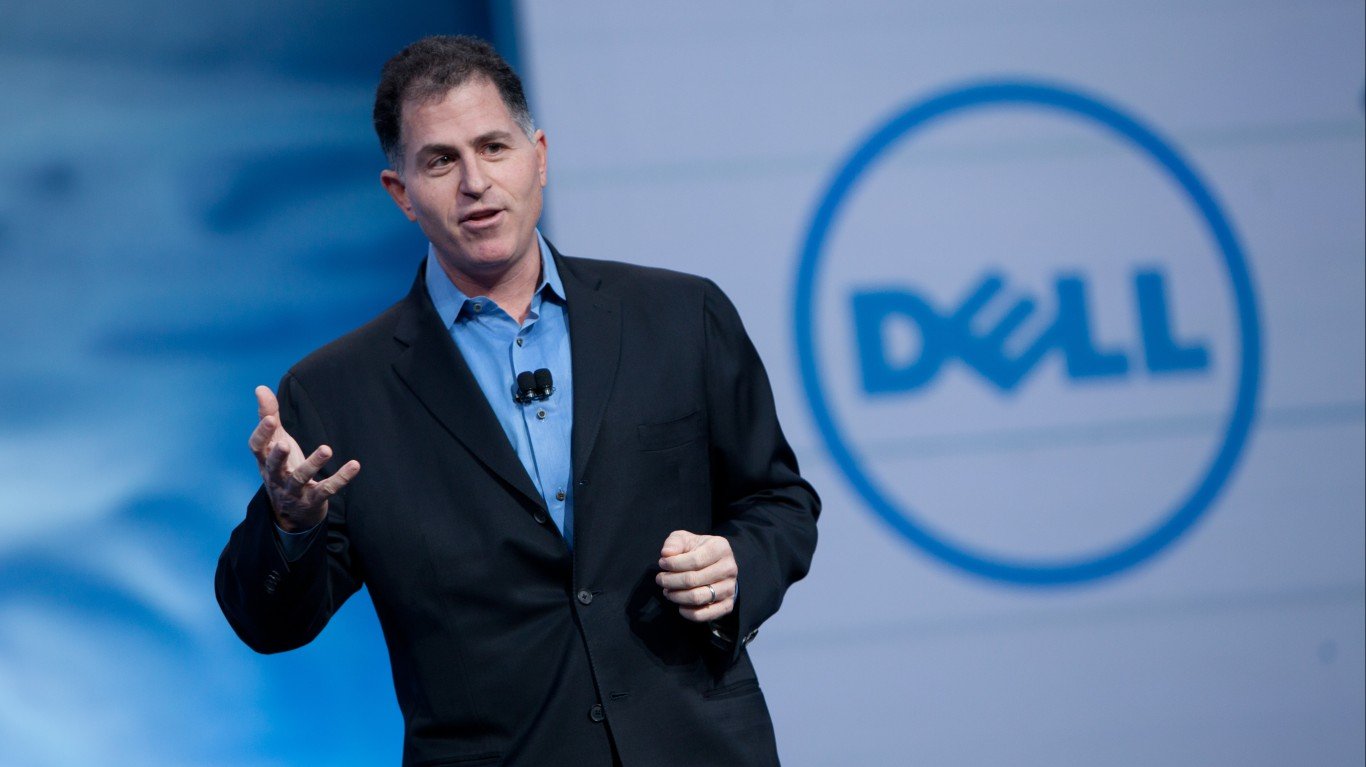
Jim Cramer used his Stop Trading segment on CNBC to argue that Dell Technologies (NYSE:DELL | DELL Price Prediction) proves the AI spending slowdown story is overblown. His reasoning: server and networking gear is fungible, so if one hyperscaler pulls back, another buyer takes the slot in the queue.

That is a real structural point about how AI infrastructure clears, and it deserves engagement rather than dismissal. The trouble is the evidence he chose. Dell rose in the session and has run hard for months, which fits his read.
Broadcom (NASDAQ:AVGO), the stock he said would “take hold of the narrative,” fell that day and is down over the past week. Hewlett Packard Enterprise (NYSE:HPE), the other name he tied to Dell, is down over the past month. A thesis that only holds when you cherry-pick the confirming ticker is a weak one.
Why the Fungibility Argument Is Genuinely Strong
Cramer’s central claim was blunt: “If you decide and I spoke to a lot of executives who are in the chain, if you decided you don’t want any equipment, the equipment is well available to everybody else and they’re going to take it.”
AI server capacity trades as fungible infrastructure. Orders sit in a queue with long lead times because DRAM, NAND, CPUs, disk drives, MOSFETs, optical components, and power racks are all constrained, and Dell’s Jeff Clarke said flatly that “demand outstrips supply.”
The numbers back the mechanism. Dell booked record AI orders of $60.9 billion in the quarter and exited with a record $95 billion AI backlog, with a pipeline management called “multiples of our backlog.” HPE reported a record-breaking backlog with orders growing faster than revenue.
Why the Evidence Does Not Match the Claim
Cramer said: “Dell is up a great deal. If you were going to slow down the spending on AI other than GE and Vertiv, I would say you should look at Dell and you should look at HPE. The fact that Dell is having a nice rally indicates there are a lot of people who believe things were overdone yesterday.”
Dell closed at $543.56, up 1.74% on the session, up 10.75% over the month and 335.81% year to date. That fits his read.
Broadcom is where he planted the flag: “Broadcom’s view, there will be no slowdown is the one that is going to take hold of the narrative. That’s a nice game.” Yet AVGO fell 1.58% in the session, is down 7.95% for the week, and down 13.67% over the past month.
HPE moved 0.85% on the day and is down 4.82% for the month, weighed down by an Evercore downgrade to In Line that Jim Cramer cited in the segment.
What Actually Decides This
Cramer added: “There is an unnatural effect, an unnatural belief that if OpenAI does want to buy stuff, and if Anthropic does want to buy stuff, that the stuff is going to sit on a shelf. I think Dell’s move today tells you that’s not going to be the case.” He raised those two labs only as a hypothetical.
Fungibility protects hardware vendors when a single customer steps back. It does nothing if aggregate capital expenditure shrinks, because then every slot in the queue empties at once.
The variable to watch is total hyperscaler and neocloud capex, plus backlog conversion at all three vendors. Broadcom’s Hock Tan guided fiscal 2027 AI revenue to approximately $115 billion and fiscal 2028 to roughly $230 billion. If those hold and industry budgets don’t contract, fungibility does the rest, and the power, cooling, and networking suppliers riding the same buildout keep filling orders (we profiled seven of them in a free AI infrastructure report).
Bull and Bear Case for DELL Stock
The bull case rests on the raised outlook. Dell lifted FY27 revenue guidance by $25 billion to $192 billion, pointed to $74 billion in AI-Optimized Servers, up 200% year over year, and guided non-GAAP EPS to $25.50, with an 8-K confirming the record quarter. The analyst target sits at $570.48.
The bear case centers on growth quality and price. Free cash flow fell 47% year over year to $986 million despite record revenue; shareholders’ equity is negative, and a 335.81% year-to-date gain prices in continued acceleration.
The deciding variable is hyperscaler and sovereign capex commentary over the next two quarters. If aggregate budgets keep expanding, the fungibility argument works, and Dell’s backlog converts. If they don’t, no substitution saves the group.

Contact [email protected] for any questions or corrections.
Omor Ibne Ehsan is a writer at 24/7 Wall St. He is a self-taught investor with a focus on growth, cyclical, and dividend equities that have strong fundamentals, value, and long-term potential. He also has an interest in high-risk, high-reward investments such as penny stocks.