Intel Stock Jumps 4% on SK Hynix Rumor, But Here’s Why the Real Win Is Years Away
SK Hynix is reportedly in talks to build memory chips inside Intel's Ohio complex, and the market loved it. But the plant has no timeline, no signed deal, and a product restriction that Seoul may never lift.

This post may contain links from our sponsors and affiliates, and Flywheel Publishing may receive compensation for actions taken through them.

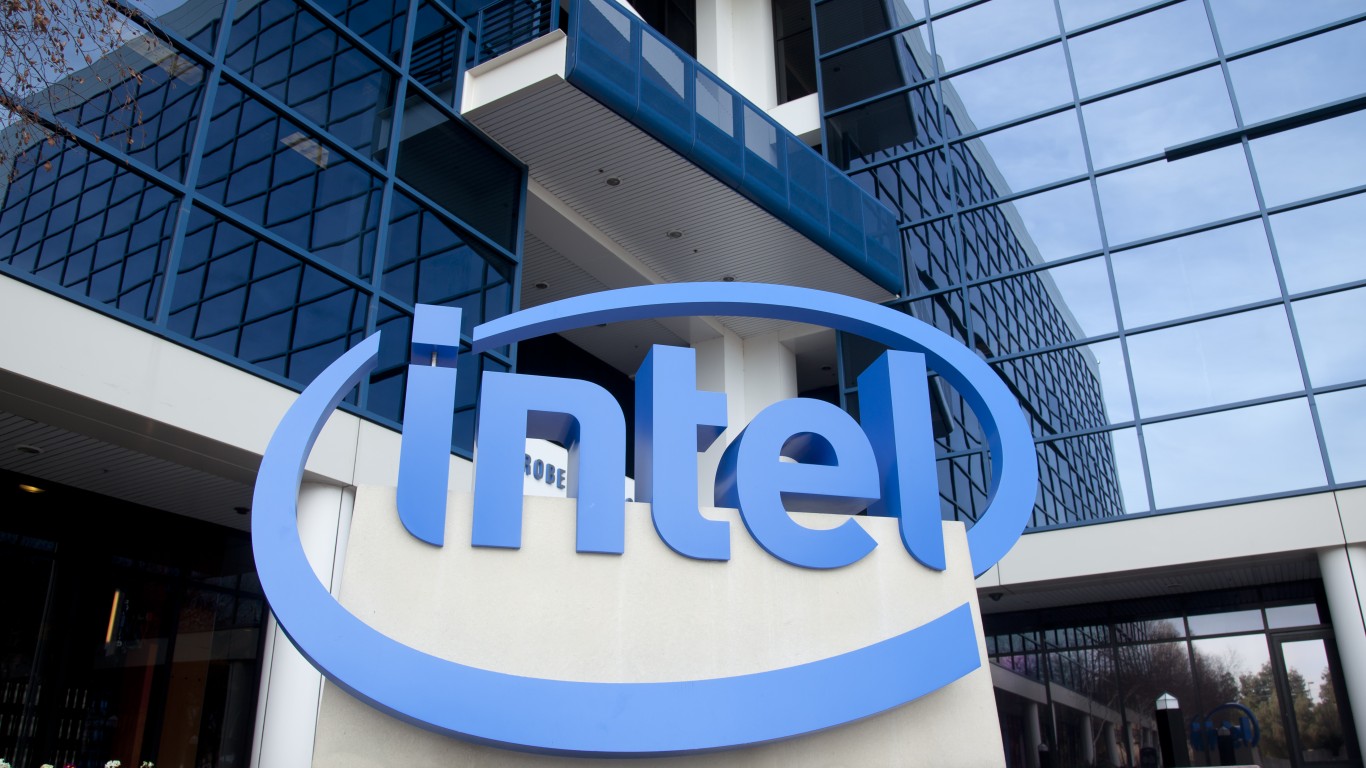
Intel (NASDAQ:INTC | INTC Price Prediction) climbed 4.03% Wednesday to close at $101.05 after reports surfaced that SK Hynix (NASDAQ:SKHY) is in early discussions with the company about producing memory chips inside the United States for the first time.

What’s being reported is narrower than the headline suggests. CNBC’s Kristina Partsinevelos described two possible structures: leasing part of the long-delayed Ohio complex, or a joint venture with Intel and large cloud buyers to anchor domestic memory supply. Neither arrangement has been signed, and Intel has not confirmed the substance of the talks.
The market response makes sense only if you read it as a vote on a strategic gap Intel has been unable to close on its own. The Foundry business generated $5.8 billion in Q2 revenue while posting a $2.1 billion operating loss, and outside customers contributed only $293 million of that total.
A named external anchor, memory or otherwise, would be the first genuine validation of a strategy that has consumed capital for years. The stock has already run 299.88% over the past year, so the question is whether an unsigned report of a facility that opens years from now deserves further re-rating.
Why a Paying Tenant Matters More Than a Partner
An idle fab is one of the most expensive assets a semiconductor company can carry. Depreciation begins whether or not wafers move, and finance costs on tools ordered years in advance accrue against no offsetting revenue.
Ohio has been delayed repeatedly because Intel could not justify finishing construction without demand to fill it. CFO David Zinsner said this plainly on the last call: “Until we really know that we’ve got the customers, we don’t want to put a significant amount of capital.”
A paying tenant flips that equation. It converts the site from a stranded cost into a partially amortized asset and lets Intel resume its $100 billion-plus domestic expansion with someone else absorbing the utilization risk.
Intel’s Foundry ambition has always required an outside anchor to signal that the process nodes are competitive. Internal wafers alone cannot fund the roadmap, and management has warned of a potential pause or discontinuation of Intel 14A if customer demand falls short.
Why This Report Is More Credible Than the Last One
The credibility upgrade has little to do with Intel and almost everything to do with Seoul. Partsinevelos noted that Korea is on the hook for a roughly $350 billion investment pledge in the United States, and that Washington wants SK Hynix, Samsung and others to build more on American soil.
That pressure changes the calculus. A deal built on political obligation gets structured, priced, and timed differently from one that emerges from pure commercial demand, and it survives objections that would otherwise kill it.
It also explains why Intel is a plausible counterparty even though it does not manufacture memory. Ohio has permitted land, prepared infrastructure, and a partially completed shell, which shortens the timeline that Korean producers would need to satisfy a Washington-driven commitment.
What Breaks the Trade
South Korea treats high bandwidth memory as national core technology and restricts its export. The most valuable memory product SK Hynix makes is therefore the one least likely to move to Ohio, which limits the mix and the margin of whatever gets produced there.
The plant reportedly won’t open until the end of the decade. That timeline puts any Ohio revenue well beyond the holding period of most investors trading INTC today.
The analyst target price of $115.74, versus a current $101.05, already prices in continued execution on 18A. A memory deal announced years before first output would need to justify additional multiple expansion on top of that.

Bull and Bear Case for INTC Stock
The bull case is that the Ohio talks give Intel Foundry its first credible external anchor and validate the domestic-manufacturing thesis that already brought in $5 billion from NVIDIA (NASDAQ:NVDA) and $2 billion from SoftBank. With Q2 revenue up 25.4% year over year to $16.13 billion and 18A ramping ahead of internal targets, an SK Hynix arrangement would confirm that Washington’s industrial policy is producing real commercial commitments, not photo opportunities.
The bear case is that a stock trading at a forward P/E of 53x, after a 173.85% year-to-date advance, just rallied on an unsigned arrangement for a facility that will not ship product for years, involving a product line that Seoul may not allow to be manufactured abroad. Foundry losses of $2.1 billion per quarter continue regardless of what Ohio ultimately becomes.

The variable is whether the talks yield a signed structure, lease, or joint venture before enthusiasm fades. Details published in the Q2 8-K show Intel finally has the operating momentum to make an anchor customer meaningful, provided one actually signs.
Contact [email protected] for any questions or corrections.
Omor Ibne Ehsan is a writer at 24/7 Wall St. He is a self-taught investor with a focus on growth, cyclical, and dividend equities that have strong fundamentals, value, and long-term potential. He also has an interest in high-risk, high-reward investments such as penny stocks.