Intel’s Surge on an Apple Chip Deal Means Investors Are Betting on Its Foundry, Says Bernstein’s Stacy Rasgon
Intel (NASDAQ:INTC | INTC Price Prediction) ripped higher last week after former President Donald Trump posted on Truth Social that Apple (NASDAQ:AAPL) had agreed to design and manufacture chips with Intel inside the United States. Intel closed up 10.64% at…

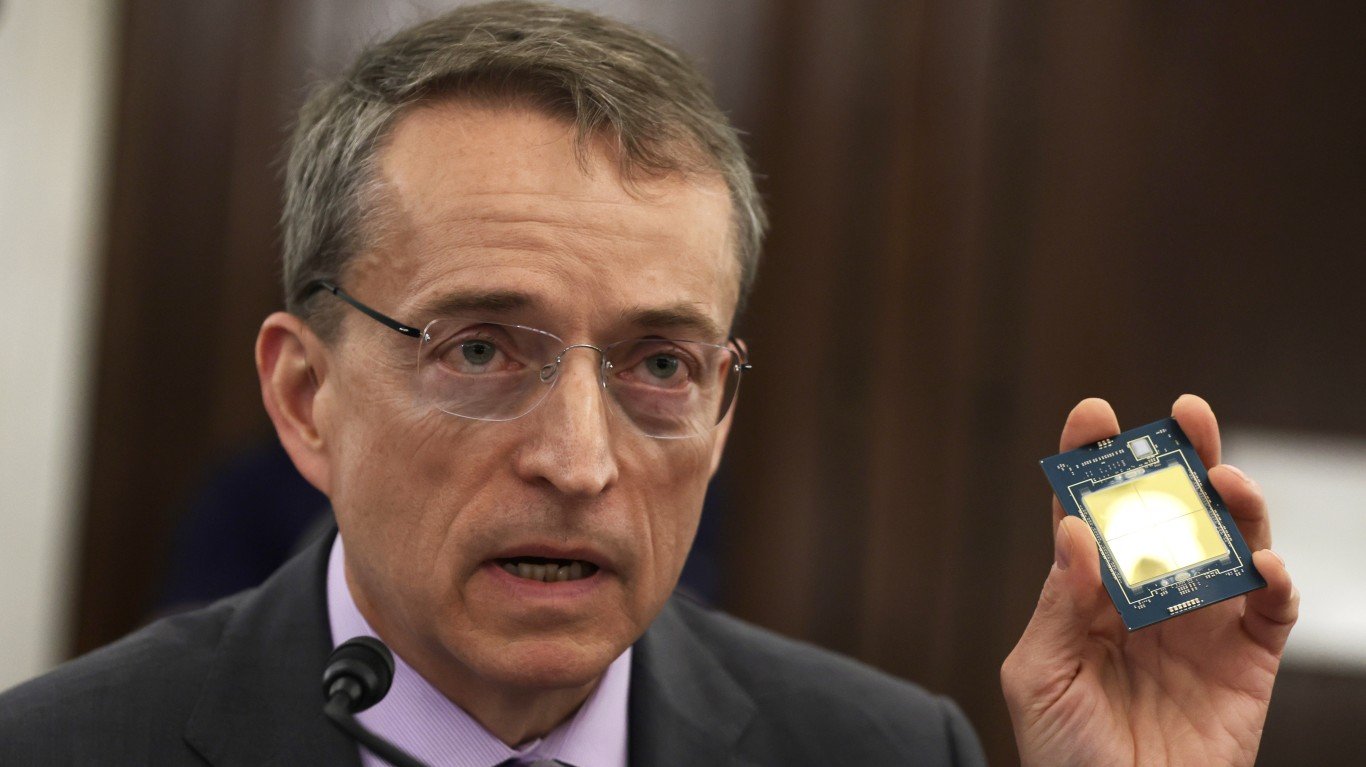
Intel (NASDAQ:INTC | INTC Price Prediction) ripped higher last week after former President Donald Trump posted on Truth Social that Apple (NASDAQ:AAPL) had agreed to design and manufacture chips with Intel inside the United States. Intel closed up 10.64% at $133.99, with INTC stock now above $140. Bernstein’s Stacy Rasgon, on CNBC, framed the move bluntly. “Intel at these prices, I mean, you’re betting on foundry success.”
What the rumored Apple deal actually is
Neither company has confirmed anything. No official statements from Apple or Intel had been issued as of Thursday afternoon, and Wedbush analysts cautioned that Apple’s involvement would likely focus on mature or lower-end silicon rather than its flagship processors. So when Rasgon says the rumored part is probably a low-margin PC chip, that lines up. The dollars at stake on day one are small.
“The first step is always the hardest. And if it actually does happen, at least it’s the first step.” Apple has been a TSMC customer for years. Pulling any wafer volume back to Arizona is symbolic capital that compounds. Dan Ives of Wedbush agreed, telling viewers “This is the right time to now really double down on a potential partnership.”
Why foundry is the entire thesis
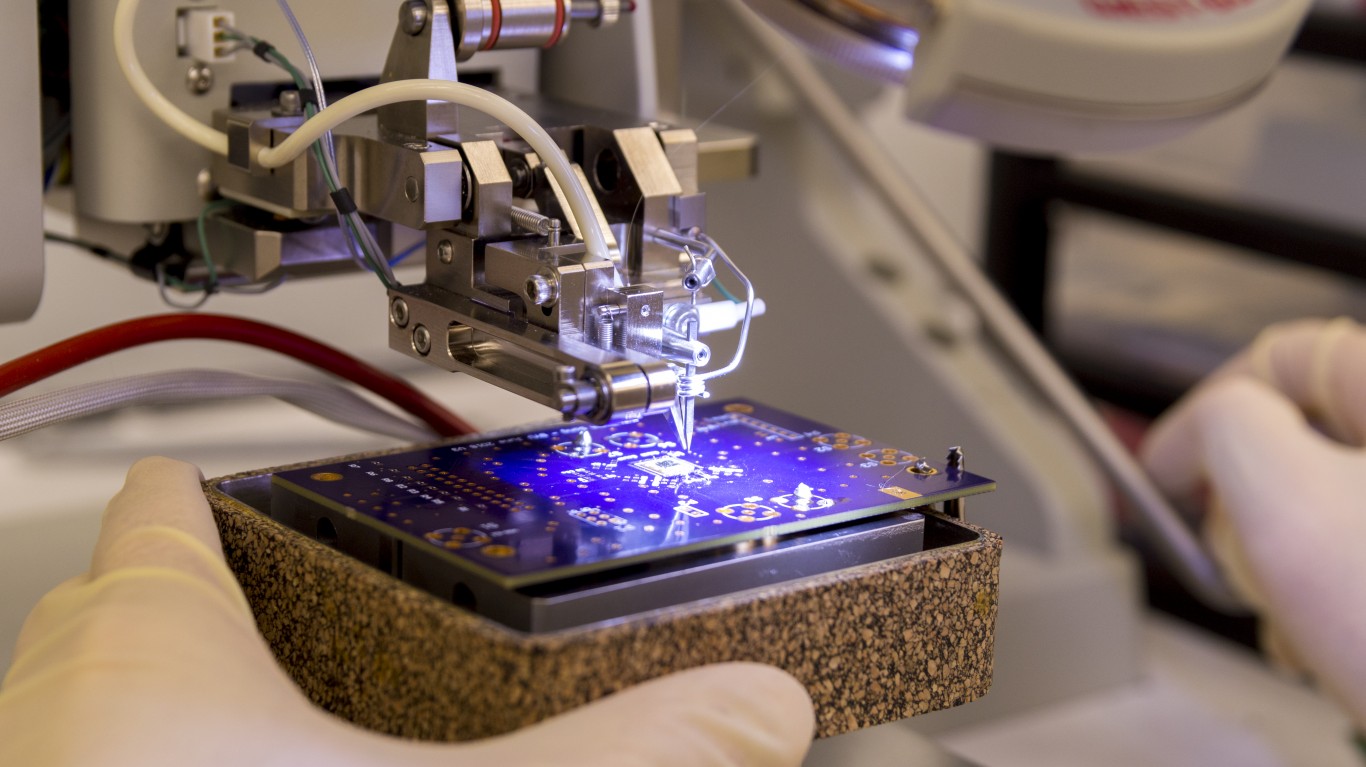
CEO Lip-Bu Tan has spent a year telling investors the foundry business is the future of Intel, and the numbers have started to cooperate. Q1 FY2026 Intel Foundry revenue came in at $5.421 billion, up 16% year over year, an acceleration from +4% in Q4 2025 and -2% in Q3 2025. Tan attributed the jump to “unprecedented demand for silicon and advanced packaging.” You can read the full release on Intel’s Q1 8-K filed with the SEC.
The losses are still real. Foundry operating losses ran $3.2 billion in Q2 2025, $2.3 billion in Q3 2025, and $2.51 billion in Q4 2025. Tan needs external customers to fill the new Arizona fabs or the depreciation math never works. He has been picking them up. NVIDIA (NASDAQ:NVDA) put $5 billion into Intel common stock last year, SoftBank added $2.0 billion, and Intel joined the Terafab project alongside SpaceX, xAI, and Tesla. The U.S. government took roughly a 10% stake and disbursed $5.7 billion in CHIPS Act funding in Q3 2025 alone. Apple would be the consumer-brand stamp the roster has been missing.
The valuation is doing real work here
Intel’s market cap sits near $588 billion, with a forward P/E around 147x and trailing EPS still negative at -$0.60. The stock is up 563% over the past year and 257% year to date from a starting price of $36.90.
The consensus analyst target is $93.12, which sits well below where the stock trades today. So either the sell side is too slow or the market is paying a serious premium for foundry optionality. Bank of America’s Vivek Arya jumped sides on June 11, double-upgrading Intel to Buy with a $135 price target and modeling foundry revenue surpassing $45 billion by 2030.
What Apple gets, and what to watch
For Apple, the calculus is supply diversification. Tim Cook just warned that product price increases are “unavoidable” because AI demand is bidding up memory and storage costs, with TechInsights estimating an extra $270 in cost on the next iPhone Pro. A second U.S.-based source on mature nodes is cheap insurance. Apple shares barely moved, up 0.7% to $298.01, which is the right reaction for a $4 trillion company taking a small hedge.
The investor question now is whether Intel and Apple confirm the arrangement, and at what node. Intel 18A is already in high-volume manufacturing in Arizona, and the 18A-P process recently entered risk production. If the first Apple parts run on those lines, Rasgon’s first step turns into a credible second one. If the announcement stays a Truth Social post, the foundry premium baked into Intel’s stock gets a lot harder to defend.
Contact [email protected] for any questions or corrections.
Omor Ibne Ehsan is a writer at 24/7 Wall St. He is a self-taught investor with a focus on growth, cyclical, and dividend equities that have strong fundamentals, value, and long-term potential. He also has an interest in high-risk, high-reward investments such as penny stocks.