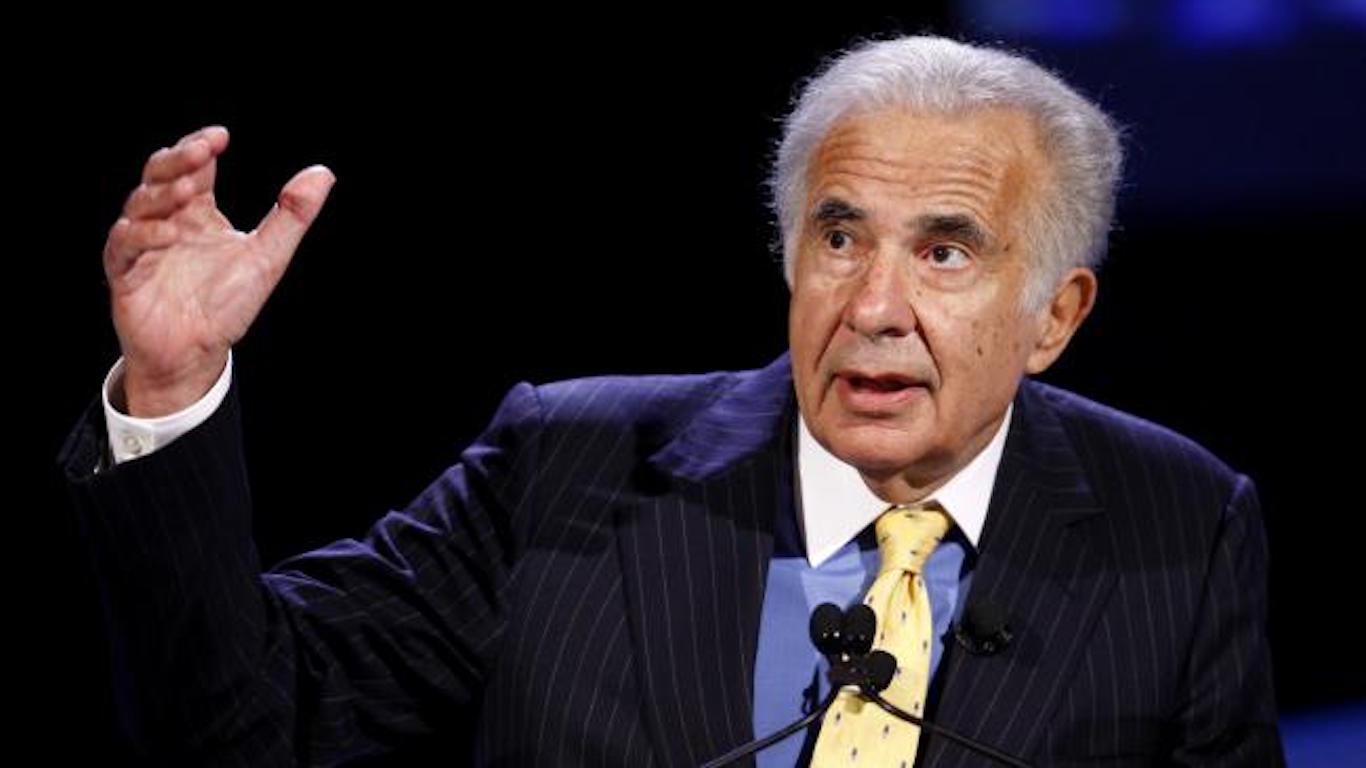
Carl Icahn Added Nearly 69 Million Shares of His Own Company Last Quarter
Carl Icahn keeps piling into his own holding company even as its units sink to multi-year lows, and the reasons behind his accumulation are far more complicated than a simple vote of confidence.

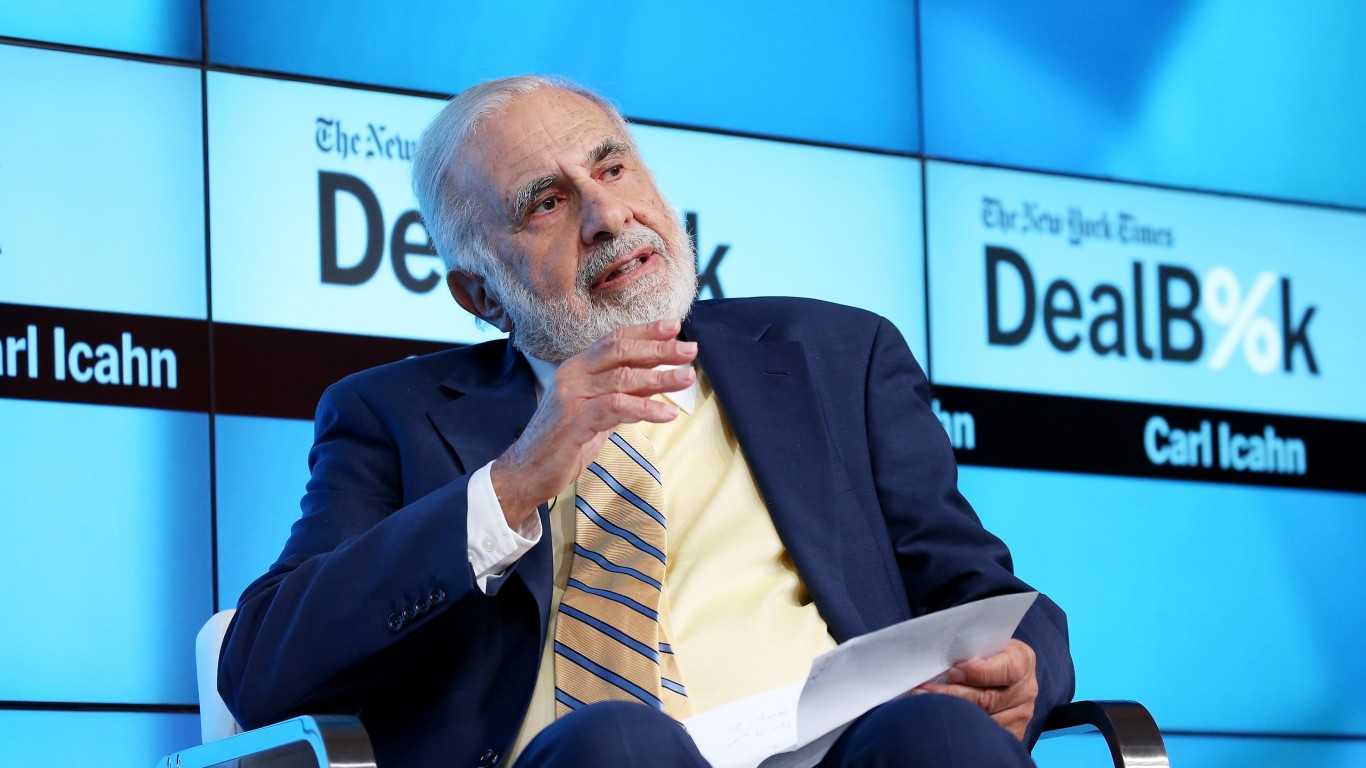
Carl Icahn kept doing what he has been doing all year: Buying his own holding company. A Form 4 dated June 25 disclosed the acquisition of another 36,456,030 depositary units of Icahn Enterprises (NASDAQ:IEP | IEP Price Prediction) at $7.2956 per unit. That followed an April 17 acquisition of 32,536,774 units at $7.67. Two consecutive quarters of large-block additions pushed his beneficial ownership from 124,334,891 units (18.56% of the class) on April 17 to 132,123,972 units (18.65%) reported on June 29.
Why an Insider Buying His Own Holding Company Reads Differently
Icahn Enterprises is a master limited partnership, and the controlling unitholder is the same person running the investment strategy. That changes how a retirement-focused reader should interpret “insider buying.” IEP pays a $0.50 per depositary unit quarterly distribution, declared Aug. 3, with a record date of Aug. 17 and payment on Sept. 23. Unitholders can elect cash or additional units, and the default election is additional units. Icahn’s unit count mechanically rises each quarter through that reinvestment. A quarterly filing does not break out how any specific block was obtained, so the accumulation reflects a mix of mechanisms rather than a clean open-market conviction trade.
The tension worth flagging: the share count rose sharply across the June quarter while the units traded in a narrow band. IEP is down nearly 7% year to date (YTD) to $6.96 as of midday Sept. 18, and over the five year years, the stock has fallen more than 86%. Growing unit count into a depressed price means the disclosed dollar value of the position barely moves even as the ownership stake expands. That is the concentration story in one sentence.

What Sits Underneath IEP, and What Got Trimmed
The anchor investment inside IEP is CVR Energy (NYSE:CVI), where Icahn holds 71,201,875 shares as of Feb. 24. CVR just posted adjusted Q2 EPS of 34 cents versus the 11-cent consensus on revenue of $2.738 billion, up 40.8% year over year, and the stock is up nearly 113% YTD to $53.56. Icahn’s stated view is that “CVR will eventually be on the list of undervalued assets that prove to be extremely profitable for us.” Accumulating IEP units is the levered way to express that call.
On the other side of the ledger, the JetBlue chapter closed. A Schedule 13D/A filed Aug. 20, reported 0% ownership of JetBlue Airways (NASDAQ:JBLU), down from 10,167,730 shares (2.73%) on June 9. No current American Electric Power (NASDAQ:AEP) position appears in the disclosed holdings data. Both exits simply cleared room in the portfolio rather than signaling a company-specific verdict.

Retail Take: What To Watch In The Next Filing
Following this trade means underwriting two things: the CVR refining thesis and the willingness to hold a highly concentrated MLP whose Q2 indicative NAV fell $765 million to roughly $2.60 billion after a $435 million mark-down on the CVI position. Extreme single-name concentration is a risk characteristic, and IEP wears it plainly. What to watch in the next filing is whether the unit count keeps climbing and whether the CVI stake stays intact. If both hold, the concentration is still increasing, and Icahn is still doubling down on himself.
Contact [email protected] for any questions or corrections.
Joel South covers large-cap stocks, dividend investing, and major market trends, with a focus on earnings analysis, valuation, and turning complex data into actionable insights for investors.
He brings more than 15 years of experience as an investor and financial journalist, including 12 years at The Motley Fool, where he served as an investment analyst, Bureau Chief, and later led the Fool.com investing news desk. He has also co-hosted an investing podcast and appeared across TV and radio discussing market trends.