3 Dividend Stocks Built for Retirement to Buy in September
Some dividend stocks merely survive downturns while others use them to pull ahead, and three names across healthcare, real estate, and banking are quietly doing exactly that heading into fall.

Retirement portfolios need income that shows up on time, grows faster than inflation, and does not blink during a downturn. The three names below cover three distinct roles: a healthcare Dividend King with an accelerating drug portfolio, a monthly-paying net-lease REIT, and a megabank with a payout ratio that leaves room to keep raising. Together they span sectors, payment cadences, and yield profiles, all built on cash flow. One anchor stat: Johnson & Johnson (NYSE:JNJ | JNJ Price Prediction) just marked its 64th consecutive year of dividend increases, a streak few companies on Earth can match.
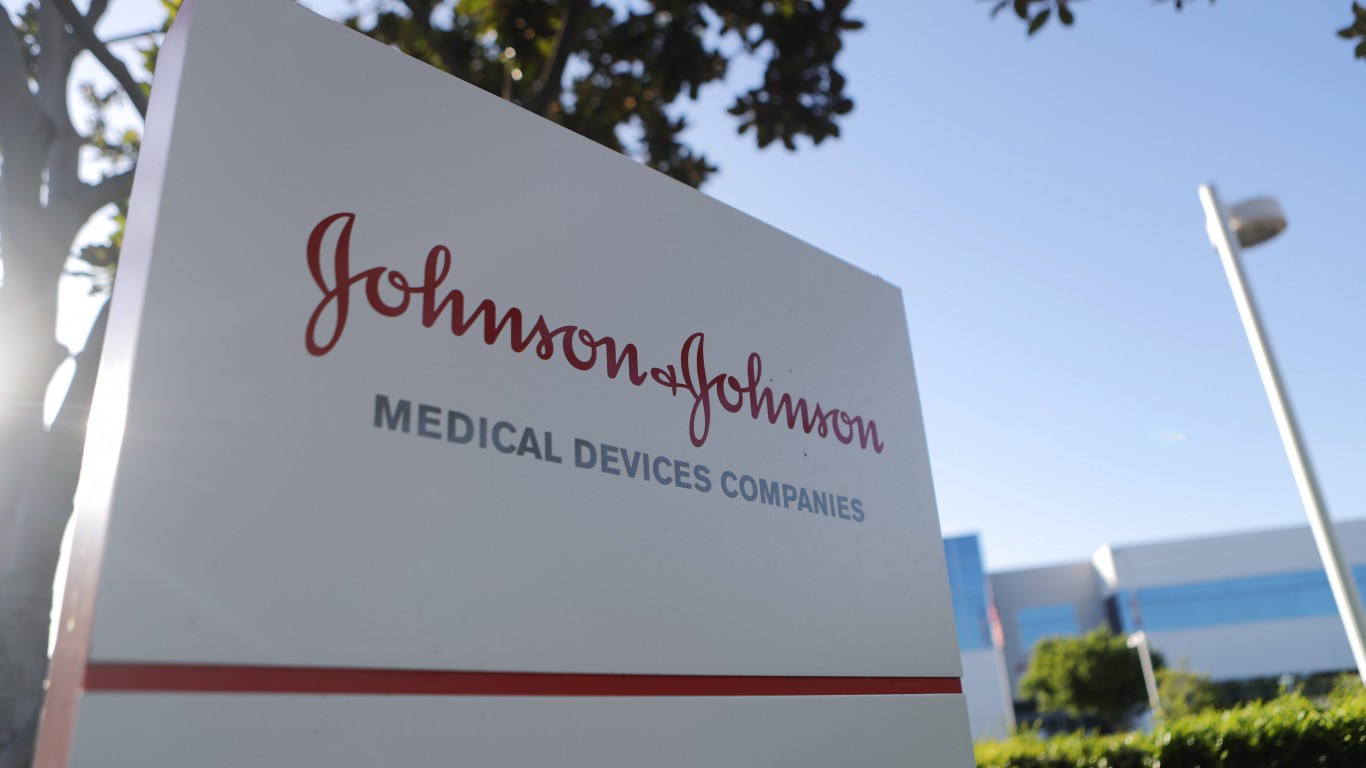
Johnson & Johnson
Johnson & Johnson pays a quarterly dividend of $1.34 per share, with an annualized forward payout of $5.36 against a recent price of $269.99. The dividend safety read is the strongest on this list. JNJ generated $19.7 billion in free cash flow in FY2025, and management guided full-year 2026 free cash flow to approaching $21 billion. The balance sheet holds roughly $21 billion in cash and marketable securities against $49 billion of debt, and the increase streak now stands at 64 consecutive years, cementing Dividend King status.
The bull case rests on accelerating Innovative Medicine: DARZALEX topped $4 billion in Q2 2026 sales, up 17.6%, TREMFYA reached $2 billion, up 71%, and CARVYKTI grew 47.7%. Management raised full-year 2026 sales guidance to a midpoint of $101.1 billion and adjusted operational EPS growth of 7.3%, with CEO Joaquin Duato reiterating a line of sight to "double-digit growth by the end of the decade". Shares have responded, up 32.56% year to date.
Risk: STELARA biosimilar erosion is real, with the drug down 59.7% to $656 million in Q1 2026, and litigation charges continue to bite the reported line.

Realty Income
Realty Income (NYSE:O) is the monthly cash-flow leg of the basket, yielding 5.45%, a high-yield entry point that clears most blue-chip alternatives (we rounded up seven of our favorite monthly payers in a free report you can grab here). The latest declared monthly dividend was $0.2715, payable October 15, 2026, marking the 136th common stock monthly dividend increase. For retirement accounts, the cadence matters: this REIT has now declared 670 consecutive monthly dividends and raised the payout 115 consecutive quarters.
Coverage is the right test for a REIT. Q2 2026 AFFO per share grew to $1.09, up 3.8%, and management raised full-year AFFO guidance to $4.44 to $4.45, roughly 4% growth at the midpoint. Portfolio occupancy sits at 98.8%, rent recapture ran at 102.7%, and the balance sheet carries a Fitch "A" rating with Stable Outlook. Management also raised 2026 investment volume guidance to $10 billion at a 7.3% initial cash yield, funded increasingly through private capital vehicles rather than public equity issuance.
Risk: Rates and tenant credit. Non-investment-grade tenants make up 65.7% of ABR, and the stock is down 9.59% over the past month as the rate backdrop shifted.
JPMorgan Chase
JPMorgan Chase (NYSE:JPM) just raised its quarterly common dividend to $1.65 per share, payable October 31, 2026, up from $1.50. On the Q2 2026 call, Jamie Dimon confirmed the CCAR-approved increase: "the Board intends to increase the quarterly dividend to $1.65 per share, effective in the third quarter." The annualized forward payout is now $6.60 against a recent price of $349.47.
The payout coverage story is the key retirement angle. Q2 2026 EPS came in at $7.70 (adjusted $6.14, up 13% YoY), with net income of $21.16 billion and ROTCE of 23% ex-gains. A dividend of $1.65 against quarterly EPS in that neighborhood leaves substantial room to keep raising. The fortress balance sheet backs it up: CET1 ratio of 14.3%, $1.5 trillion in cash and marketable securities, and a fresh $50 billion share repurchase authorization effective July 1, 2026. Commercial & Investment Bank revenue rose 27% to $24.85 billion, IB fees hit their highest level since 2021, and AWM assets under management reached $5.1 trillion, up 18% year-on-year.
Risk: Credit is normalizing. The card net charge-off rate ran at 3.33%, nonaccrual loans stand at $9.4 billion, and Dimon flagged geopolitical tensions, sticky inflation, large fiscal deficits, and elevated asset prices. Dimon himself warned on the call, "It’s getting close to as good as it gets. We just don’t know how long it’s going to last."

Putting the Basket Together
These three cover the retirement income triangle: JNJ delivers a six-decade increase streak with accelerating drug growth to fund the next raise, Realty Income delivers a monthly check backed by AFFO that keeps expanding, and JPMorgan delivers a fast-growing payout with capital coverage that most banks would envy. Different sectors, different cadences, different yield profiles, one shared characteristic: the cash to pay is already sitting on the income statement. For income investors sizing durable positions this fall, that combination is what a retirement sleeve should look like.
Contact [email protected] for any questions or corrections.
Joel South covers large-cap stocks, dividend investing, and major market trends, with a focus on earnings analysis, valuation, and turning complex data into actionable insights for investors.
He brings more than 15 years of experience as an investor and financial journalist, including 12 years at The Motley Fool, where he served as an investment analyst, Bureau Chief, and later led the Fool.com investing news desk. He has also co-hosted an investing podcast and appeared across TV and radio discussing market trends.