Kimberly-Clark’s 54-Year Dividend Streak Masks a Troubling Cash Flow Problem
Kimberly-Clark just logged 54 straight years of dividend raises, but a closer look at the cash flow statement raises an uncomfortable question about who is actually funding that growing payout.

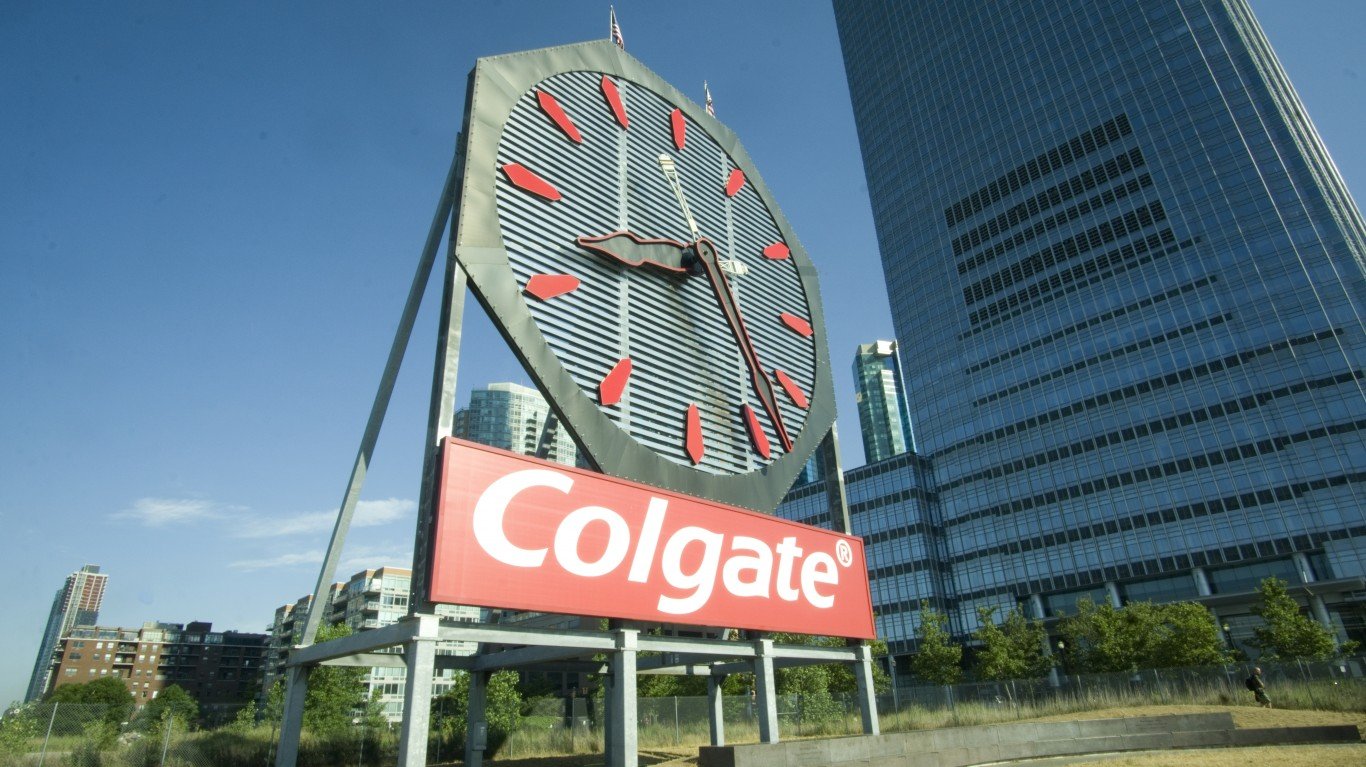
Kimberly-Clark‘s (NYSE:KMB | KMB Price Prediction) pitch to income investors is simple: buy a maker of diapers, tissue, and adult care products, collect a rising check, and sleep at night. The company just extended its raise streak to 54 consecutive years, cementing its Dividend King standing alongside household-products peers Procter & Gamble (NYSE:PG) and Colgate-Palmolive (NYSE:CL). The harder question for a retirement-focused holder of Kimberly-Clark is whether the operating business is still writing that check, or whether the balance sheet is quietly picking up the tab.
Yield Is Real, Coverage Is Tight

At $98.80, the stock trades at a 5.14% dividend yield, well above its usual range and reflecting a 16.18% one-year decline. The quarterly payout was raised to $1.28 in 2026 from $1.26 in 2025, for an annualized $5.12.
Now the arithmetic. In fiscal 2025 Kimberly-Clark generated $2.777 billion of operating cash flow against $1.138 billion of capex, leaving $1.639 billion of free cash flow. Dividends paid were $1.660 billion. Buybacks added another $141 million. Free cash flow did not cover the dividend in 2025, and it certainly did not cover the dividend plus repurchases.
That is a sharp change from prior years. Operating cash flow was $3.234 billion in 2024 and $3.542 billion in 2023, both comfortably above the payout. The 2025 squeeze reflects a 57.84% jump in capex tied to supply-chain restructuring, plus revenue distortion from divestitures.
Balance Sheet Is Doing More Work
At June 30, 2026, Kimberly-Clark held $956 million in cash against $6.517 billion of total debt and just $1.75 billion of shareholder equity. Return on equity of 104.9% looks flattering only because the equity base is thin. This is a levered staples business, and the pending $48.7 billion Kenvue acquisition, expected to close by year-end, will add more.
Second-Quarter Snapshot and the Peer Set

Q2 2026 delivered adjusted EPS of $2.12 against a $2.006 consensus, with revenue of $4.19 billion. Gross margin expanded 190 basis points to 38.8%, helped by a $45 million tariff refund and productivity of 6.4%. Reported net income of $345 million was down 32.22% year over year.
CEO Mike Hsu told investors the company is “addressing discrete headwinds that will moderate our growth and earnings potential in 2026” while positioning the base business for “sustainable growth in 2027 and beyond.” Those headwinds include a China social-media disinformation campaign on diapers, expected to be a 200 basis point second-half drag worth roughly $70 million of operating profit, the LA distribution center fire, and the exit from US private label diapers. Procter & Gamble and Colgate-Palmolive, the direct competitors in tissue, diapers, feminine care, and oral care, carry richer margins and stronger free cash flow conversion, which is one reason Kimberly-Clark trades at a forward P/E of 13 versus the higher multiples typical of that peer group.
Committed Read for Income Holders

The dividend is safe in the near term. The 2025 shortfall is real but explainable, management retains levers (productivity, pricing, tariff mitigation), and analysts hold a $116.33 target. Longer term, coverage rebuilds only if Kenvue synergies land, China stabilizes, and capex normalizes. Watch free cash flow in the next two reports. If operating cash flow stays below the payout beyond 2026, the 55th raise will start looking like a balance-sheet decision rather than a business one.
Contact [email protected] for any questions or corrections.
Chris Lange is a financial and geopolitical writer with more than a decade of experience covering a myriad of topics. He has published thousands of articles for 24/7 Wall St., with past coverage focused heavily on stocks, IPOs, healthcare, defense, global affairs, and technology.
His work has been quoted, or referenced by a number of outlets including Business Insider, USA Today, Yahoo Finance, MSN, The Motley Fool, and many other publications. A graduate of Southwestern University, he studied business with a focus on investments and has previous experience in banking and startups.
When not reading or writing the news, he is following his passion for Lacrosse, playing chess, or building solar projects with his dad.