Colgate-Palmolive Has Paid a Dividend Since 1895. Does That Streak Still Deserves Your Money?
Colgate-Palmolive has sent dividend checks without interruption since Grover Cleveland's second term, but a 130-year streak and a shrinking North American business now sit in uncomfortable tension with a premium valuation that leaves almost no room for error.

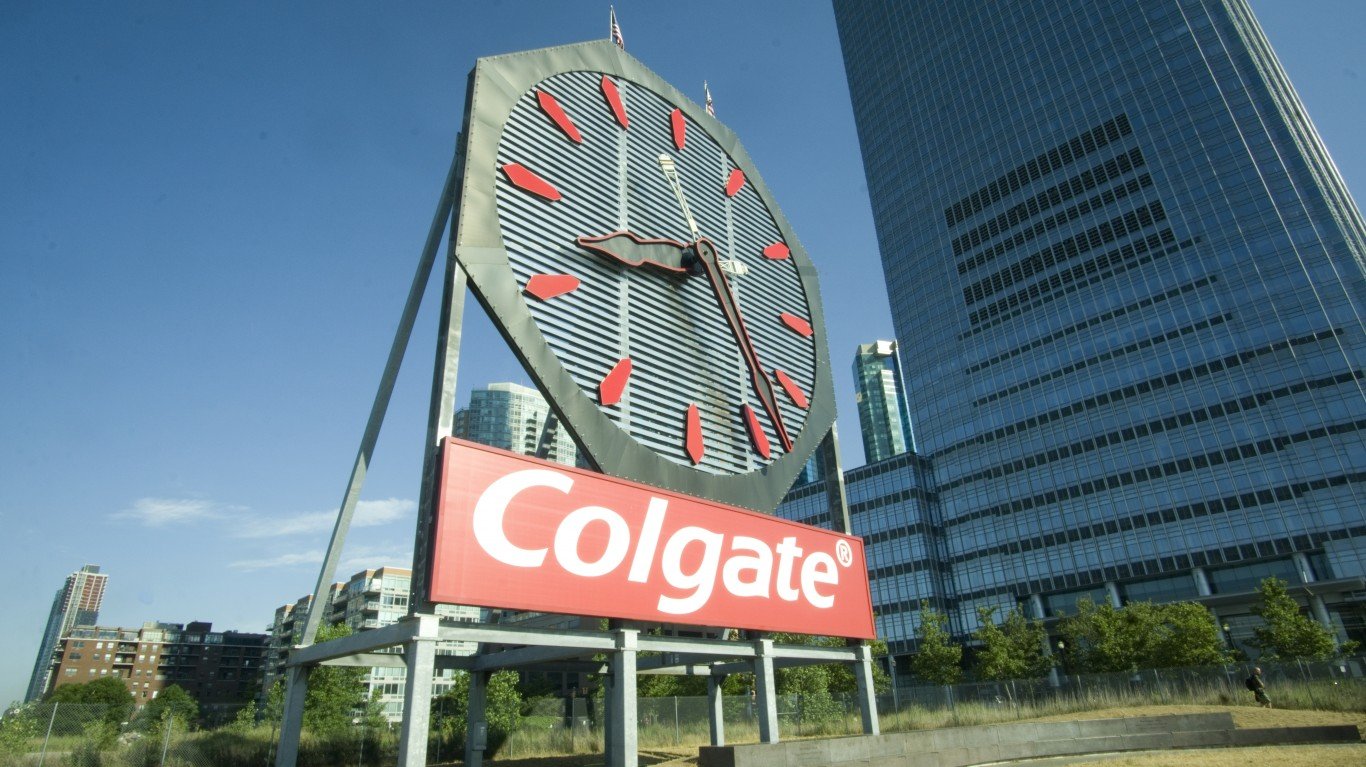
Few dividend records in American finance rival the one Colgate-Palmolive (NYSE:CL | CL Price Prediction) boasts. The company has paid a dividend continuously since 1895, and as of its Q4 2025 report, extended its streak of consecutive annual increases to 63 years. That places it in the tiny club of Dividend Kings, alongside peers like Procter & Gamble (NYSE:PG) and Kimberly-Clark (NYSE:KMB). A record like that is history, though, and history is not a forecast.
What the Cash Actually Says
The dividend itself is intact and growing. The current quarterly payout sits at 53 cents per share, up from 52 cents in early 2026, giving an annualized forward dividend of $2.12 per share. Its trailing 12-month dividend yield is 2.48%. Cash coverage is comfortable: full-year 2025 operating cash flow of $4.198 billion against dividend payout of $1.823 billion and CapEx of $564 million.
Colgate also returned $2.9 billion to shareholders in 2025 through dividends and buybacks, and management reiterated on the Q2 2026 call that “free cash flow up 18% and we’ve returned $1.4 billion to shareholders” in the first half alone.
Where the Growth Is (and Isn’t)

Growth is bifurcated. Latin America revenue jumped 13.7% in Q2 2026 and Asia Pacific rose 4.9%, but North America fell 3.0% with volume down 3.9%. CEO Noel Wallace acknowledged the softness plainly, telling analysts the U.S. business faces category softness, heightened competitive activity, retailer inventory reductions, and select price gaps versus competitors. That is where challenger brands and private label bite. Wallace framed the response this way:
“While we expect the volatile market conditions to continue in the balance of 2026, we are confident that the strength of our global portfolio and clear business strategy should enable us to deliver consistent, compounded earnings per share growth and drive long-term shareholder value.”
Global scale still matters. Colgate holds a 41.2% global toothpaste share, a moat P&G cannot easily attack and one Church & Dwight (NYSE:CHD) has never approached at the category level.
Valuation Problem: Priced for Perfection
A record this good is widely known and priced accordingly. Alpha Vantage shows a trailing PE of 34 and a forward PE of 21, with shares at $86.33 and a five-year total price gain of 26.79%. Analyst target sits at $98.80. For context, shares are up 11.26% year-to-date but off 5.22% over the past month as the market digested the North America drag. A 2.4% yield with mid-single-digit EPS growth is a reasonable retirement-income proposition, but it is not cheap relative to Colgate’s own history.

Does the Streak Still Deserve Capital?
The dividend is safe. Coverage is strong, the balance sheet supports it, and management raised Base Business EPS growth guidance to mid-single-digit in July. The harder question is total return at 21x forward earnings when North America is shrinking and China remains, as Wallace put it, a market down 1% to 2%.
Emerging market strength and the Hill’s therapeutic franchise are the two levers worth watching. If North America stabilizes by year-end and organic growth trends toward the upper end of the 1% to 4% organic sales guide, the multiple holds. If it does not, the yield alone will have to do the work, and dividend investors comparing CL to KMB or PG will find the case tighter than the 131-year record suggests (we ranked 10 Dividend Kings by valuation right now in a free report you can grab here).
Contact [email protected] for any questions or corrections.
Joel South covers large-cap stocks, dividend investing, and major market trends, with a focus on earnings analysis, valuation, and turning complex data into actionable insights for investors.
He brings more than 15 years of experience as an investor and financial journalist, including 12 years at The Motley Fool, where he served as an investment analyst, Bureau Chief, and later led the Fool.com investing news desk. He has also co-hosted an investing podcast and appeared across TV and radio discussing market trends.