Trump Wants to Ban Diesel Exports. Refiners Are Selling Off.
Trump floated banning US diesel exports and refiners immediately started selling off, but the gap between a presidential preference and a signed policy is where billions in market-leading gains now hang.


President Donald Trump, speaking on September 22, 2026, said, “I’ve said let’s not send out the diesel. We make a lot of diesel.” The Treasury secretary later confirmed the administration is studying a full or partial ban on US diesel exports, and a 90-day restriction was being prepared, a claim the White House then denied.
Valero Energy (NYSE:VLO | VLO Price Prediction) closed at $375.93, down 0.32% on the day and 6.8% for the week. Marathon Petroleum (NYSE:MPC) finished at $388.51, off 0.3% and down 6.17% for the week. Phillips 66 (NYSE:PSX) closed at $256.46, effectively flat and off 3.08% for the week. All three remain much higher for the year. The distinction matters because the policy remains only a proposal.
What Was Said, and What Was Not
The president stated a preference. The Treasury described a study. A reported 90-day ban surfaced and was denied. Nothing has been signed or scheduled.
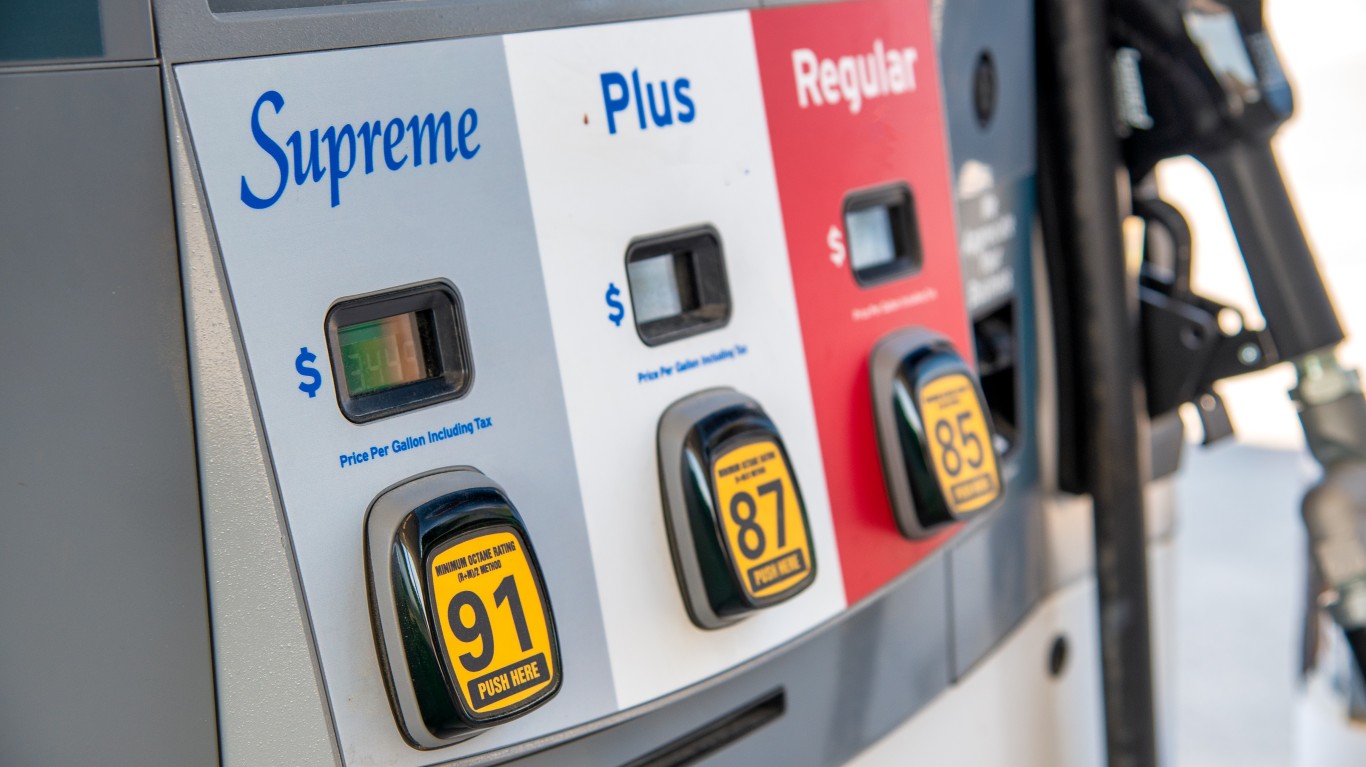
Retail gasoline is the political backdrop: $4.478 per gallon on September 21, up 10.6% in a month. That pressure keeps the option on the table.
WTI closed at $96.41 on September 22, after touching $107.02 on September 15. Elevated crude with tight product inventories makes a domestic-supply argument sound intuitive.
Why a Ban Would Hurt More Than It Helps
Gulf Coast refineries were built to serve export markets. If diesel cannot ship, runs decline, which cuts gasoline too, because you cannot choose which molecules to make from a barrel of crude.
Valero’s Gary Simmons said on the first-quarter 2026 call that “this is not demand destruction; this is insufficient supply to meet demand”. A ban attacks the supply side of the shortage driving prices.
Energy economist Philip Verleger warned a ban would produce “the same long-term effect as President Nixon’s soybean embargo”, meaning buyers permanently rerouted to other suppliers.
Read-Through for the Three Refiners
Valero is the most export-levered. Its Q2 2026 refining segment produced $4.5 billion of operating income on 3 million barrels per day of throughput, with US Gulf Coast ULS diesel margins of $43.52 per barrel versus $14.79 a year earlier. Its year-to-date gain of 134.35% is at risk.
Marathon runs the largest system. Q2 R&M adjusted EBITDA reached $6.66 billion at a $36.33 per barrel margin, and management flagged record diesel export volumes from Garyville and Galveston Bay. Shares are up 141.61% year to date.
Phillips 66 is the most diversified, with midstream targeting a $4.5 billion EBITDA run rate by year-end 2027. It is up 102.86% year to date.
Politics That Will Decide This
Sen. John Cornyn called a ban “a gimmick”, and Sen. Lisa Murkowski is opposed, while Sen. Dan Sullivan said “The cost of diesel is just too damn high” and Sens. Grassley and Thune are supportive.
American Petroleum Institute CEO Mike Sommers argued: “The answer is more supply and more flexibility.” Energy Secretary Chris Wright said, “you want to keep as much energy flowing as possible”, which reads as skeptical of restriction.
Distillate inventories are near five-year lows, while global refining capacity has closed.
However, that refining margin depends on the spread between crude and product, and policy risk on that spread is unhedgeable. A partial ban would force run cuts.
Watch the next presidential statement and any Federal Register notice. Until one appears, you cannot model this headline.
Contact [email protected] for any questions or corrections.
Omor Ibne Ehsan is a writer at 24/7 Wall St. He is a self-taught investor with a focus on growth, cyclical, and dividend equities that have strong fundamentals, value, and long-term potential. He also has an interest in high-risk, high-reward investments such as penny stocks.