Keurig Dr Pepper Beat PepsiCo Over the Past Year. Income Investors May See It Differently
One beverage stock surged 28% this past year while the other stumbled, but for retirees building income portfolios, the stock market left behind might actually hold the stronger dividend case.

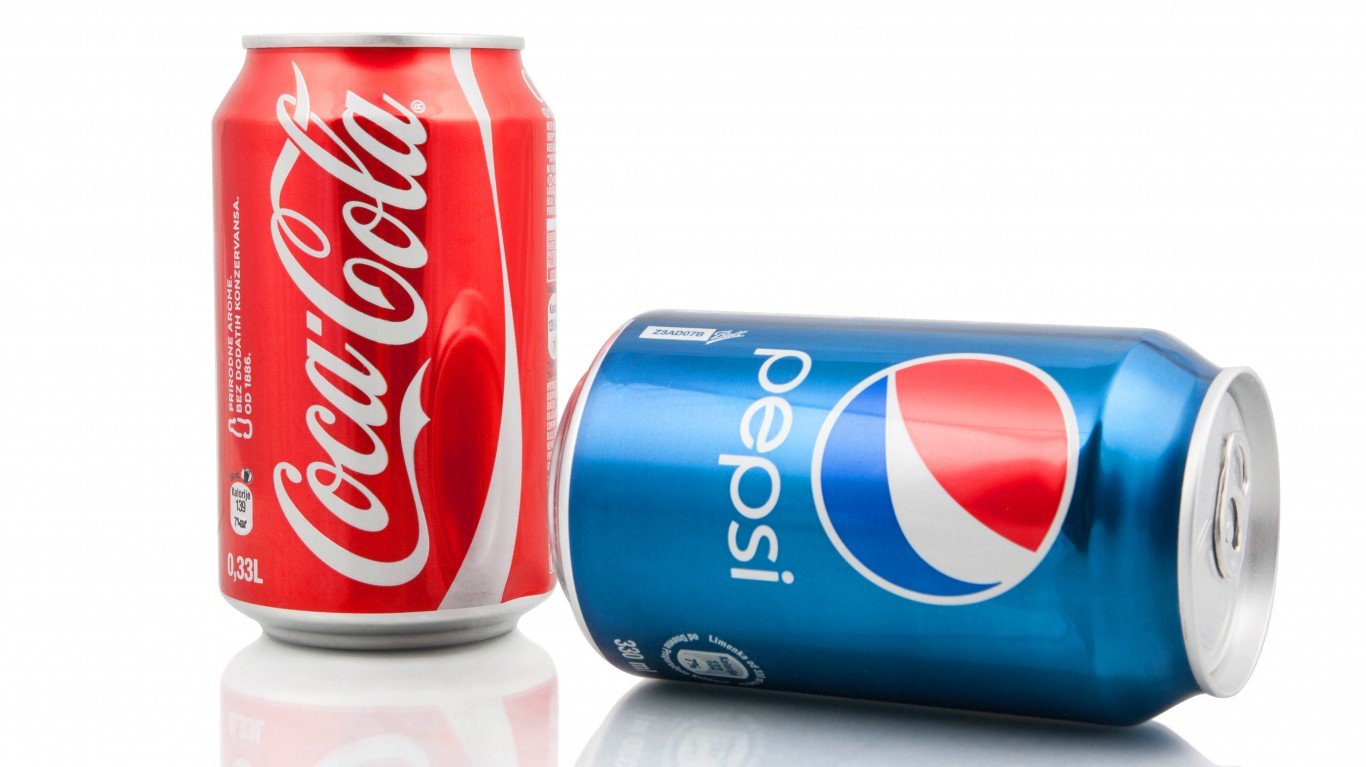
PepsiCo (NASDAQ:PEP | PEP Price Prediction) or Keurig Dr Pepper (NASDAQ:KDP): which beverage dividend makes the better holding for someone building a retirement portfolio right now? The market has spent the past year preferring Keurig Dr Pepper, whose shares rose 28.22% over one year while PepsiCo slipped 4.34%. On dividend quality, the picture runs the other way.
Yield and Payout Safety: PepsiCo Pays More and Covers It
PepsiCo yields 4.49% against 2.98% for Keurig Dr Pepper, so the PepsiCo holder collects much more income per dollar. Higher yield usually means higher risk. Here, the bigger check also comes with the better-documented coverage.
Free cash flow leads the safety read. PepsiCo’s free cash flow yield of 4.37% sits just above its 4.35% dividend yield, so cash generation covers the payout, though with a thin buffer. In 2025, the company produced $12.087 billion in operating cash flow, spent $4.415 billion on capital expenditures, and paid $7.638 billion in dividends. Against earnings, trailing EPS of $7.62 comfortably exceeds $5.75 in per-share dividends.

Keurig Dr Pepper’s trailing EPS of $0.99 barely clears its $0.92 dividend per share, and second-quarter GAAP EPS fell to $0.04 from $0.40 on $850 million in acquisition-related items. Verified free cash flow coverage for Keurig Dr Pepper is unavailable, a real blind spot for a leveraged payer. Winner: PepsiCo.

Dividend Growth and Track Record: 54 Years Versus a Stalled Raise
PepsiCo has raised its dividend for 54 consecutive years, earning Dividend Aristocrat status and clearing the 50-year bar we use to screen for Dividend Kings (we ranked ten of them by valuation in a free report). The latest increase lifted the annualized payout 4%, from $5.69 to $5.92, and the quarterly check has climbed from $0.13 in 1999 to $1.48. Management projects roughly $8.9 billion in 2026 shareholder returns, including $7.9 billion in dividends.
Keurig Dr Pepper took its current form in 2018. Its quarterly dividend sat at $0.15 through early 2021, then stepped to $0.1875 in 2021, $0.20 in 2022, $0.215 in 2023 and $0.23 in 2024. The September 2025 declaration held at $0.23, and the payout set for October 9, 2026 stays at $0.23. The raise schedule has stalled. Winner: PepsiCo.
Business Durability: Snacks Give PepsiCo a Second Cash Engine
PepsiCo sells Lay’s, Doritos, Cheetos and Quaker alongside Pepsi and Gatorade. That snack business broadens cash flow away from soda volumes, and it is carrying growth: second-quarter revenue reached $24.18 billion, up 6.4%, with LatAm Foods up 15% and Asia Pacific Foods up 12%. Net debt to EBITDA of 2.31 and interest coverage of 12.03 leave room to keep raising.
Both face soft North American demand. PepsiCo’s North America foods unit fell 2% and core operating margin contracted 40 bps. Keurig Dr Pepper’s U.S. Coffee sales dropped 3.2%, with volume/mix down 8.2%. The difference is the balance sheet: Keurig Dr Pepper carries about $30.4 billion in debt at 4.4x leverage after the JDE Peet’s deal, and its planned split into two companies, targeted for early 2027, could disrupt dividend continuity. Winner: PepsiCo.
Verdict: PepsiCo Is the Retiree’s Dividend
For an income investor at or near retirement, PepsiCo wins outright: higher yield, free cash flow coverage, a 54-year raise record and a broadens snacks-plus-drinks cash engine.
Keurig Dr Pepper’s case deserves a hearing. It trades at a forward P/E of 12 versus 15 for PepsiCo, guides to low-double-digit adjusted EPS growth, and its ten-year gain of 152.14% tops PepsiCo’s 63.09%. That profile suits a younger total-return investor who can stomach separation risk.
The flip condition: if Keurig Dr Pepper hits its 4.1x year-end leverage target and the post-split beverage company commits to restarting annual raises, the gap narrows sharply. Until then, keep an eye on PepsiCo’s free cash flow staying above its dividend. That thin margin is the one weak spot in an otherwise superior payout.
Contact [email protected] for any questions or corrections.
Chris Lange is a financial and geopolitical writer with more than a decade of experience covering a myriad of topics. He has published thousands of articles for 24/7 Wall St., with past coverage focused heavily on stocks, IPOs, healthcare, defense, global affairs, and technology.
His work has been quoted, or referenced by a number of outlets including Business Insider, USA Today, Yahoo Finance, MSN, The Motley Fool, and many other publications. A graduate of Southwestern University, he studied business with a focus on investments and has previous experience in banking and startups.
When not reading or writing the news, he is following his passion for Lacrosse, playing chess, or building solar projects with his dad.