Coca-Cola Has Raised Dividends for 63 Years. Can It Make It Another Decade?
Coca-Cola has handed income investors a bigger check every year for six decades, but last year its dividend bill outpaced its free cash flow by billions. Whether that gap signals trouble or a one-time blip could define the next ten…

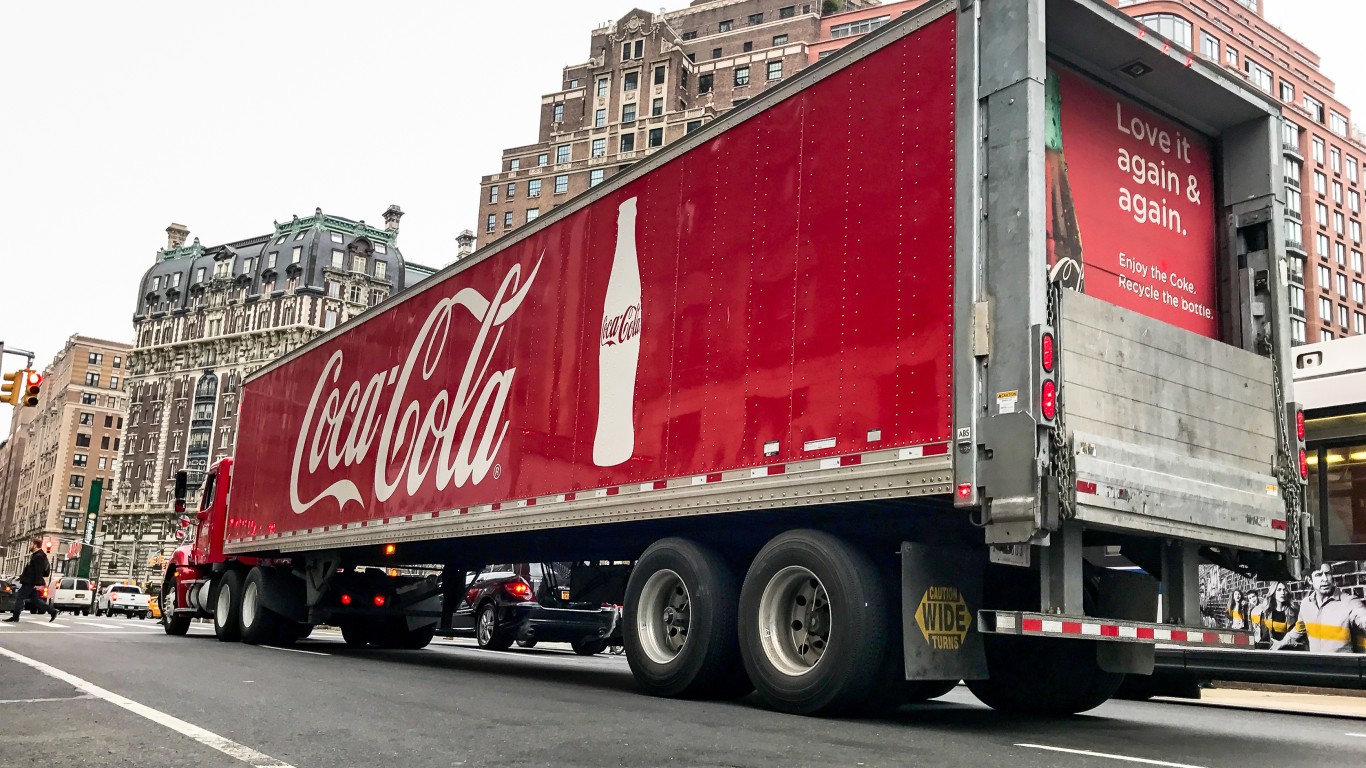
Coca-Cola (NYSE:KO | KO Price Prediction) marked its 63rd consecutive year of annual dividend increases in 2025. Its quarterly payment record backs that up: the per-share payout has stepped higher every year from $0.16 in 1999 to $0.53 in 2026. Income investors who already own the stock care less about the 2.27% yield than about whether the next decade of raises shows up. That depends on free cash flow, and the cash flow picture has improved in Coca-Cola’s favor in 2026.

Free Cash Flow Is Catching Back Up to the Payout
Last year looked weak on paper. Coca-Cola paid $8.8 billion in dividends but generated only $5.296 billion in free cash flow. Most of that gap came from a one-time fairlife contingent consideration payment, which management took out from its 2025 cash outlook.
For 2026, Coca-Cola raised its free cash flow guidance to about $12.4 billion. The 2025 dividend bill would use roughly 71% of that. First-half free cash flow came in at about $6.9 billion, with net debt at 1.4 times EBITDA, below the company’s 2x to 2.5x target. Chief financial officer John Murphy said:
“Given the momentum of our business and the strength of our balance sheet, we have increased flexibility and optionality to continue to both reinvest in our business and return capital to share owners.”
Earnings Are Growing Faster Than the Dividend
Earnings growth is outpacing dividend growth. The 2026 raise was about 3.9%, while management now guides comparable EPS up 9% to 10% from $3.00. The $2.12 forward dividend works out to about 64% of trailing EPS of $3.33. Second-quarter operating margin expanded to 34.9% from 34.1%. Murphy credited the shift to a lighter-asset model:

“The structural changes in our overall model becoming more asset-light has, as you know, been one of the primary drivers.”
Pricing, Volume and Currency Decide the Pace
Second-quarter unit case volume rose 5%, and Coca-Cola Zero Sugar grew 16%. Chief executive Henrique Braun described a squeezed consumer:
“The lower income continues to be pressured, and we’ve seen that it’s really about value, not only pricing.”
Several other factors can work against growth. Currency adds about 3% to 2026 EPS, and that boost can reverse. The fourth quarter has six fewer days than a year ago. The IRS tax case is also still pending, though Murphy said, “We continue to have confidence that we will ultimately prevail.”
How Coca-Cola Compares With PepsiCo and Keurig Dr Pepper
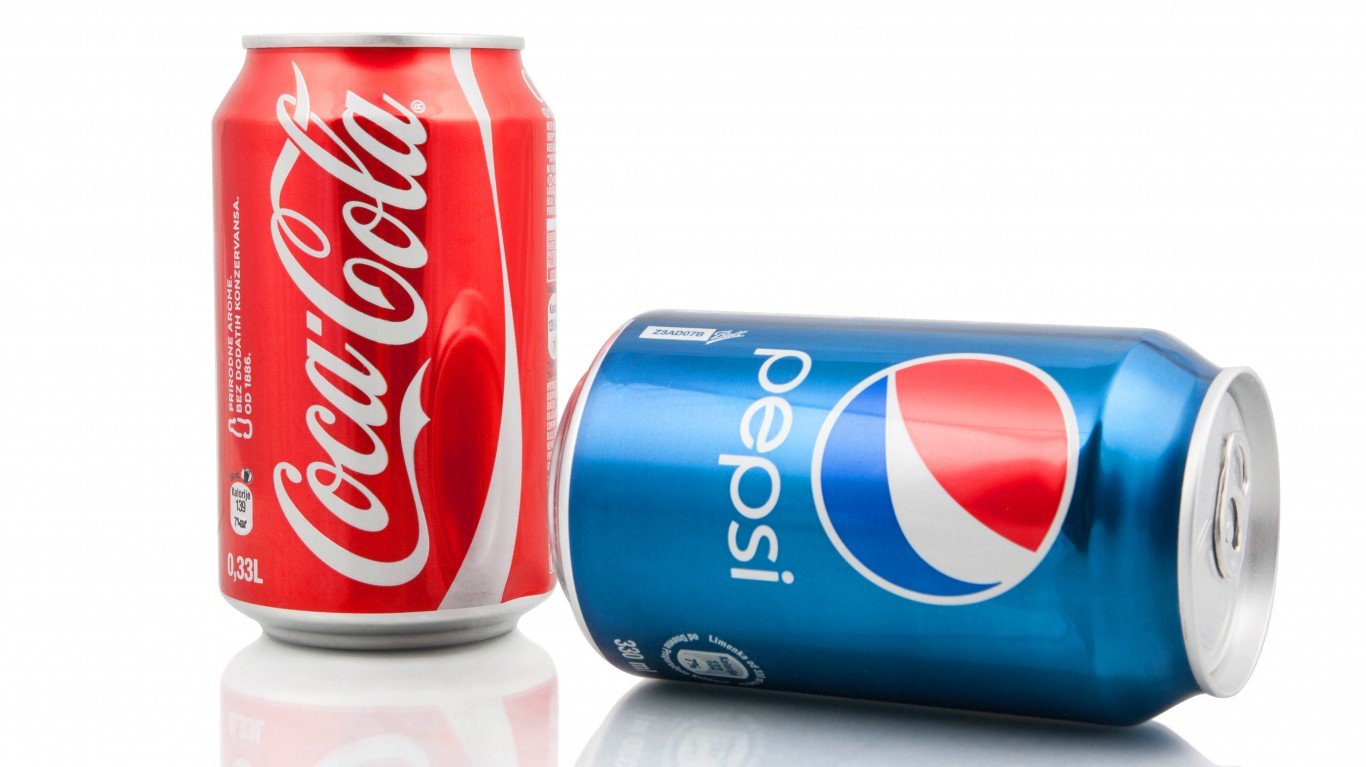
PepsiCo (NASDAQ:PEP) yields more, at 4.42%, and announced its 54th consecutive annual increase. But it cut its 2026 core EPS growth guidance to 2.5% to 3.5% as core operating margin contracted 35 basis points. Keurig Dr Pepper (NASDAQ:KDP) is carrying $30.4 billion in debt principal and 4.4x pro forma leverage after its JDE Peet’s deal, and it plans a separation in early 2027.

Coca-Cola’s main weakness is its price. At 29 times earnings, it costs more than PepsiCo at 21 times. Its shares are up 31.67% this year.
Verdict: Expect Steady Mid-Single-Digit Raises
Yes, Coca-Cola can keep raising its dividend, and it has more room to do so than either peer. EPS is growing at more than twice the rate of the most recent raise. Cash flow is recovering after the one-time fairlife payment, and leverage is below management’s own target. That supports raises around the recent 4% rate for years. Annual increases will likely stay in that range rather than speed up, so investors who want a higher starting yield are taking on more risk in PepsiCo’s payout. For current holders, a reversal of the currency boost is the main threat to watch.
Contact [email protected] for any questions or corrections.
Chris Lange is a financial and geopolitical writer with more than a decade of experience covering a myriad of topics. He has published thousands of articles for 24/7 Wall St., with past coverage focused heavily on stocks, IPOs, healthcare, defense, global affairs, and technology.
His work has been quoted, or referenced by a number of outlets including Business Insider, USA Today, Yahoo Finance, MSN, The Motley Fool, and many other publications. A graduate of Southwestern University, he studied business with a focus on investments and has previous experience in banking and startups.
When not reading or writing the news, he is following his passion for Lacrosse, playing chess, or building solar projects with his dad.