Snowflake Slides 4% on Proposed $3.5B Convertible Offering; Oracle Falls 3%, Datadog Drops 4%
Snowflake's massive convertible note proposal is rattling cloud stocks across the board, but the deal's unusual structure raises a question worth answering before assuming the worst about dilution.

This post may contain links from our sponsors and affiliates, and Flywheel Publishing may receive compensation for actions taken through them.

A $3.5 billion convertible note plan from Snowflake (NYSE:SNOW | SNOW Price Prediction) weighs on Snowflake stock. Even so, the data cloud company structured the deal specifically to limit the dilution sellers appear to be pricing in. Snowflake stock is at $321.65, down 4%, but still up 47.59% year to date.

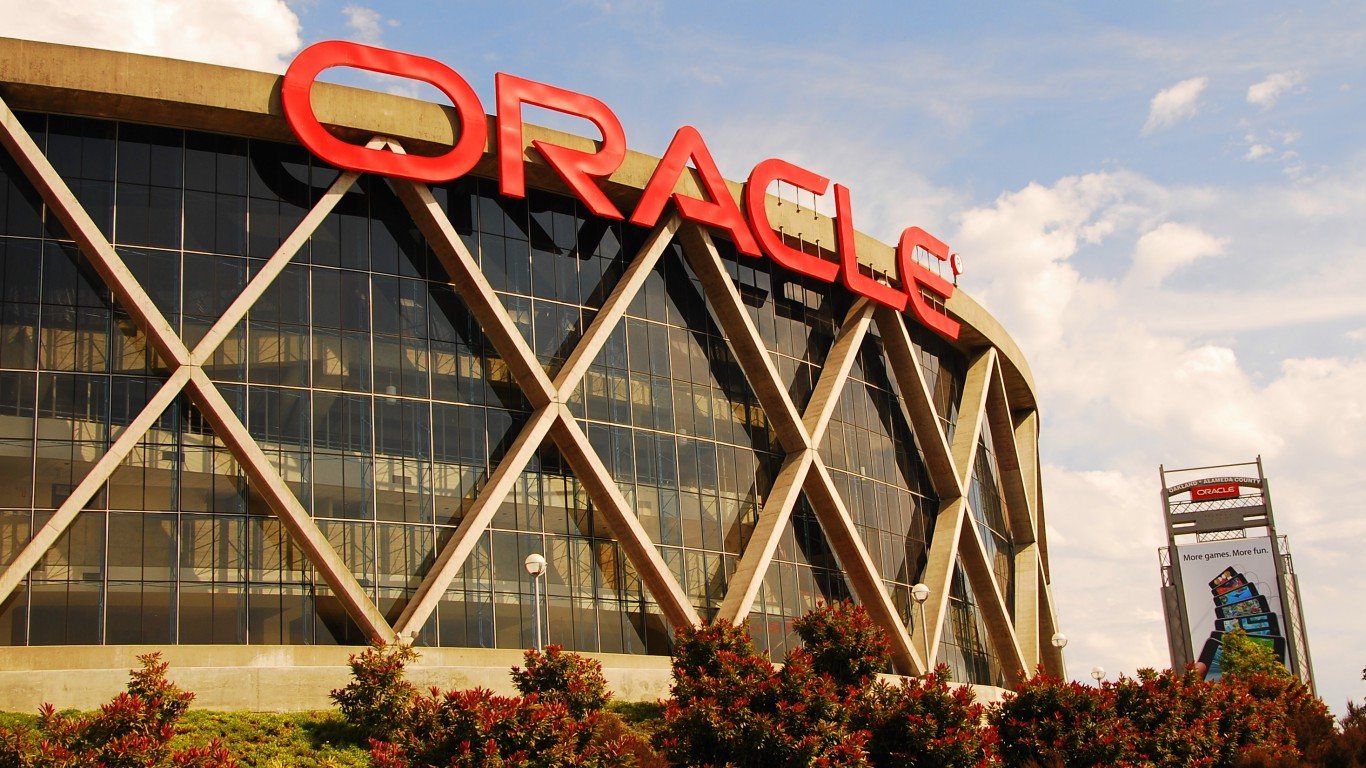
Selling is spreading across other highly valued cloud names that have no offering of their own. Oracle (NYSE:ORCL) stock trades at $132.45, down 3%, which places the database giant inside the same pullback. Similarly, Datadog (NASDAQ:DDOG) stock is at $257.85, down 4%, a drop roughly as steep as Snowflake’s slide.
The First Trust Cloud Computing ETF (NASDAQ:SKYY) is slipping 0.9%, a far softer decline than any of those three stocks. Large-cap tech is holding up slightly better, with the Invesco QQQ Trust (NASDAQ:QQQ) down 0.8%. That spread points to selling concentrated in high-multiple cloud names, with Snowflake’s financing news adding a company-specific push.
Convertible Notes Designed to Cap Dilution
Under the proposal, Snowflake intends to offer the convertible senior notes in a private placement to qualified institutional buyers, subject to market conditions. The offering from Snowflake comes in two tranches maturing later this decade, and the notes carry no regular interest.
Snowflake expects to use its net proceeds for capped call transactions. It will also buy back a portion of its existing convertible notes and allocate funds for general corporate purposes, which may include share buybacks and acquisitions or strategic investments. Those capped calls are privately negotiated and are generally expected to reduce potential dilution to Snowflake common stock when the notes convert, subject to a ceiling.
Weighing Dilution Against Balance Sheet Strength
Dilution risk is the first worry for Snowflake bears, since a convertible offering expands the potential share count. Convertible arbitrage desks also routinely short Snowflake stock while buying the notes, which adds mechanical selling pressure. That overhang lands on a company already leaning heavily on equity pay, with Snowflake recording $456 million in stock-based compensation in its most recent quarter.
A more constructive read on Snowflake centers on the deal’s structure. Notes that carry no regular interest push Snowflake’s existing maturities further out and leave the company with cash for buybacks and acquisitions, so its balance sheet could end up stronger than it started. Snowflake has already shown an appetite for returning capital, buy back $300 million of common stock during the six months ended July 31.
Operating momentum at Snowflake gives that view some weight. During the second quarter of fiscal 2027, the company grew its sales 35.1% year over year to $1.55 billion and lifted its full-year product revenue guidance to $6.07 billion. However, Snowflake still posted a net loss of $191.72 million for the period, which helps explain why fresh convertible paper draws scrutiny.

Cloud Peers Sink in Sympathy
Oracle and Datadog shares are falling hard even without company financing news, which frames Snowflake’s decline as one piece of a wider cloud pullback. These cloud infrastructure names belong to the same cohort. Their valuations lean heavily on growth expectations (riding a high-multiple move is fine as long as the exit is planned, and our free handbook covers both sides: here).
Datadog stock is still up 95.47% year to date, so the pullback cuts a large gain for one of the group’s strongest performers. By contrast, Oracle stock is down 31.46% year to date, and the latest drop compounds an already rough stretch.
Snowflake stands apart as the only one of the three with a company-specific financing catalyst, and convertible hedging can amplify moves in Snowflake shares, so that mix of sector drag and deal-related hedging could keep Snowflake stock more volatile than its cloud peers until the deal is finalized.
Balancing Risk and Opportunity in Snowflake
Investors may want to keep an eye on Snowflake stock once the offering prices, since the final terms and the capped call ceiling shape how much hedging pressure remains. Snowflake’s liquidity also matters, and the company finished the period with $4.3 billion in cash and investments.
Given the offering overhang, anyone considering Snowflake should keep their position moderate and add to it gradually. Shareholders who already own SNOW stock should weigh their exposure to other cloud names too, since Oracle and Datadog are slipping alongside Snowflake. Pairing their Snowflake stake with their broader cloud exposure through the First Trust Cloud Computing ETF could cushion the hit from single-company financing news.
Traders could watch for signs that Oracle and Datadog stock stabilize, since a firmer peer group could help separate Snowflake’s deal-driven selling from the wider cloud drag. Solid growth gives Snowflake’s bull case real ground, and the final pricing of the offering could shape the next leg for SNOW stock.
Contact [email protected] for any questions or corrections.
David Moadel is financial writer specializing in stocks, ETFs, options, precious metals, and Bitcoin. David has written well over 1,000 articles for leading online publications, helping investors understand markets, income strategies, and risk.His work has appeared in The Motley Fool, InvestorPlace, U.S. News & World Report, TipRanks, ValueWalk, Benzinga, Market Realist, TalkMarkets, Finmasters, 24/7 Wall St., and others.With a master’s degree in education, David has taught at the elementary, high school, and college levels. That teaching background shapes his writing style: clear, educational, and practical. David has also built a loyal social-media audience by providing trustworthy financial content on YouTube, X/Twitter, and StockTwits.