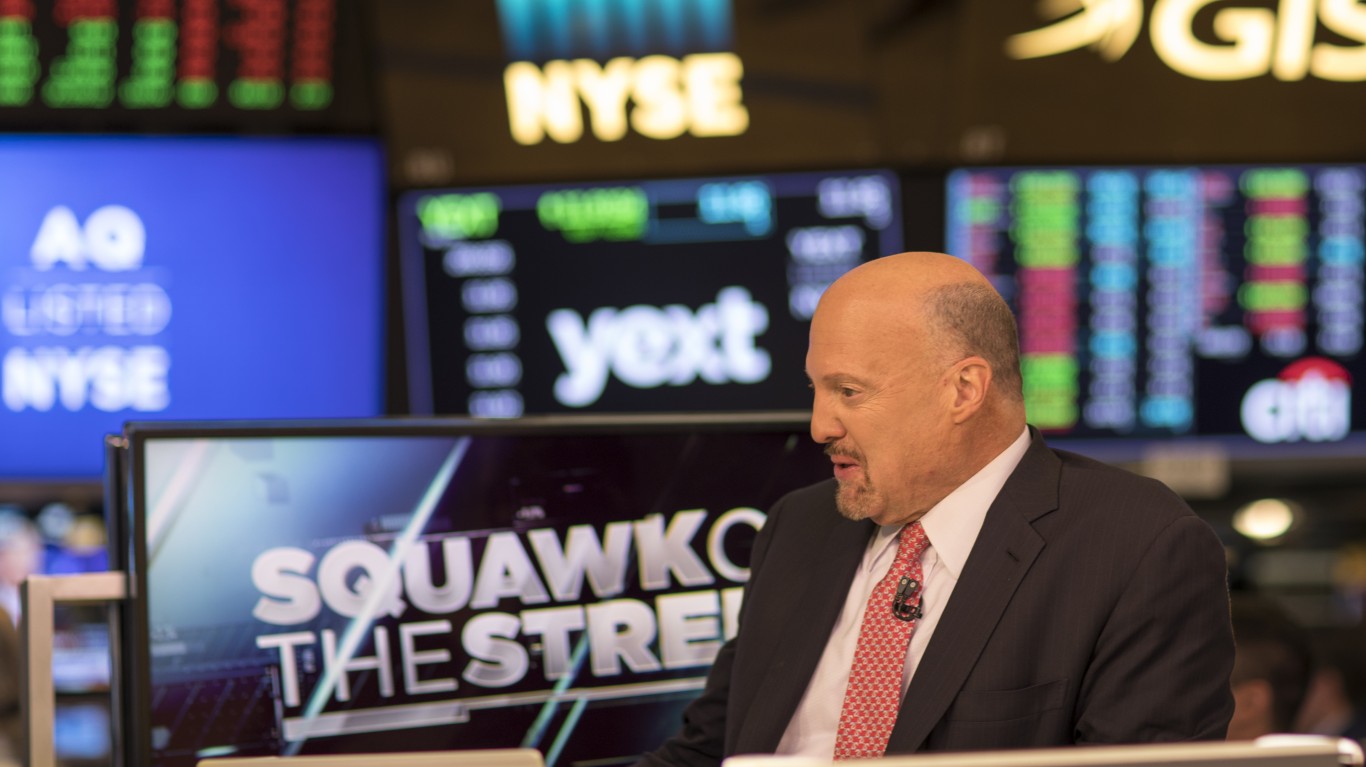
Jim Cramer Admits He Can No Longer Call PepsiCo a Growth Company
Jim Cramer built a bullish case for PepsiCo over two months, convinced investors had a rare entry point into a great American growth company. Then one morning he went on air and said four words that changed everything.


On August 26, 2026, Jim Cramer told viewers that PepsiCo’s “accidentally high 4% yield” was a Eureka moment worth doing homework on. Back on July 6, he said the drop to a yield north of 4% gave investors “a terrific place to start a position” ahead of the second-quarter report. This morning, he walked the argument back on air.
In his CNBC Mad Dash segment, Cramer called PepsiCo (NASDAQ:PEP | PEP Price Prediction) “a great American growth company. Always has,” then added, “I can’t call it that anymore. I’m devastated by this.” The trigger was Deutsche Bank moving the stock from buy to hold because “the turnaround is taking longer.” TD Cowen also cut its price target on affordability concerns the same morning.
Price Action Delivered the Verdict First

Shares fell 9.4% in the month since the Eureka call, slipping from $140.68 to $127.46, after a 52-week low on September 16. The stock is down 8.49% year to date and 2.83% over five years, even as the ten-year chart shows a 61.61% gain. That split tells the story: the compounding happened last decade, and the past five years have gone flat.
Growth Numbers Behind Cramer’s Reversal

The second-quarter earnings release filed with the SEC showed revenue of $24.181 billion, up 6.4%. Organic growth was only 2.4%, with foreign exchange adding 2.2 percentage points and acquisitions 1.8 percentage points. Core operating margin contracted 40 basis points, and full-year 2025 operating income fell 19.57%.
| Q2 2026 Segment | Revenue | Growth |
|---|---|---|
| Foods North America | $6.368B | -2% |
| Beverages North America | $7.243B | +7% |
| EMEA | $4.983B | +10% |
| Latin America Foods | $2.940B | +15% |
| Asia Pacific Foods | $1.124B | +12% |
Guidance calls for 2-4% organic revenue growth and 4-6% core constant currency EPS growth. On the July call, CFO Steve Schmidt said EPS “may be towards the low end” of that range. CEO Ramon Laguarta said “the consumer is worse than what we had anticipated and driven mainly by gas prices.” Those are mature-company numbers.
International Is Carrying the Load
Laguarta said the international business “is going to cross $40 billion in this year,” and Schmidt said international operating margin rose “by a full point” in the quarter. Frito-Lay’s home market remains the drag. Until North American snacks rose again, the overall growth rate stays anchored in low single digits.
Dividend Holds Firm While Growth Stalls
Cramer drew a clear line: “I don’t mean to suggest these guys will cut the dividend. They got great cash flow.” PepsiCo raised its payout for a 54th consecutive year, and the $1.48 quarterly dividend pays on September 30. Planned 2026 cash returns total $8.9 billion, including $7.9 billion in dividends. Five decades of straight raises puts PepsiCo in rare company, and we ordered ten of those 50-year stocks by valuation in a free Dividend Kings report. We also covered how PepsiCo’s payout record stacks up against a frozen-dividend rival in our look at the Dividend Aristocrat that widened the gap. At about 21x earnings and a 4.35% yield, the stock now trades as an income vehicle.
Sector Headwinds Could Extend the Wait
Cramer linked PepsiCo to two recent downgrades of Nike (NYSE:NKE), promotion-heavy pressure, and inflation that has lasted longer than expected, asking whether the group had become “the worst single group in America.”

Here’s what to watch next quarter. If Foods North America returns to revenue growth and the second-half price investments Laguarta said were “solved” lift volume, the growth label could return. If gas prices keep pressuring convenience stores and EPS lands at the low end, investors should value PepsiCo on yield and cash flow alone.
Contact [email protected] for any questions or corrections.
Joel South covers large-cap stocks, dividend investing, and major market trends, with a focus on earnings analysis, valuation, and turning complex data into actionable insights for investors.
He brings more than 15 years of experience as an investor and financial journalist, including 12 years at The Motley Fool, where he served as an investment analyst, Bureau Chief, and later led the Fool.com investing news desk. He has also co-hosted an investing podcast and appeared across TV and radio discussing market trends.