Merck Turned $1,000 Into $3,395 in a Decade but the Real Story Happened in the Last Year
Merck spent most of a decade trailing the S&P 500, then something unusual happened in a single year that changed the entire math. Whether that burst signals a new chapter or a one-time event comes down to a drug patent…

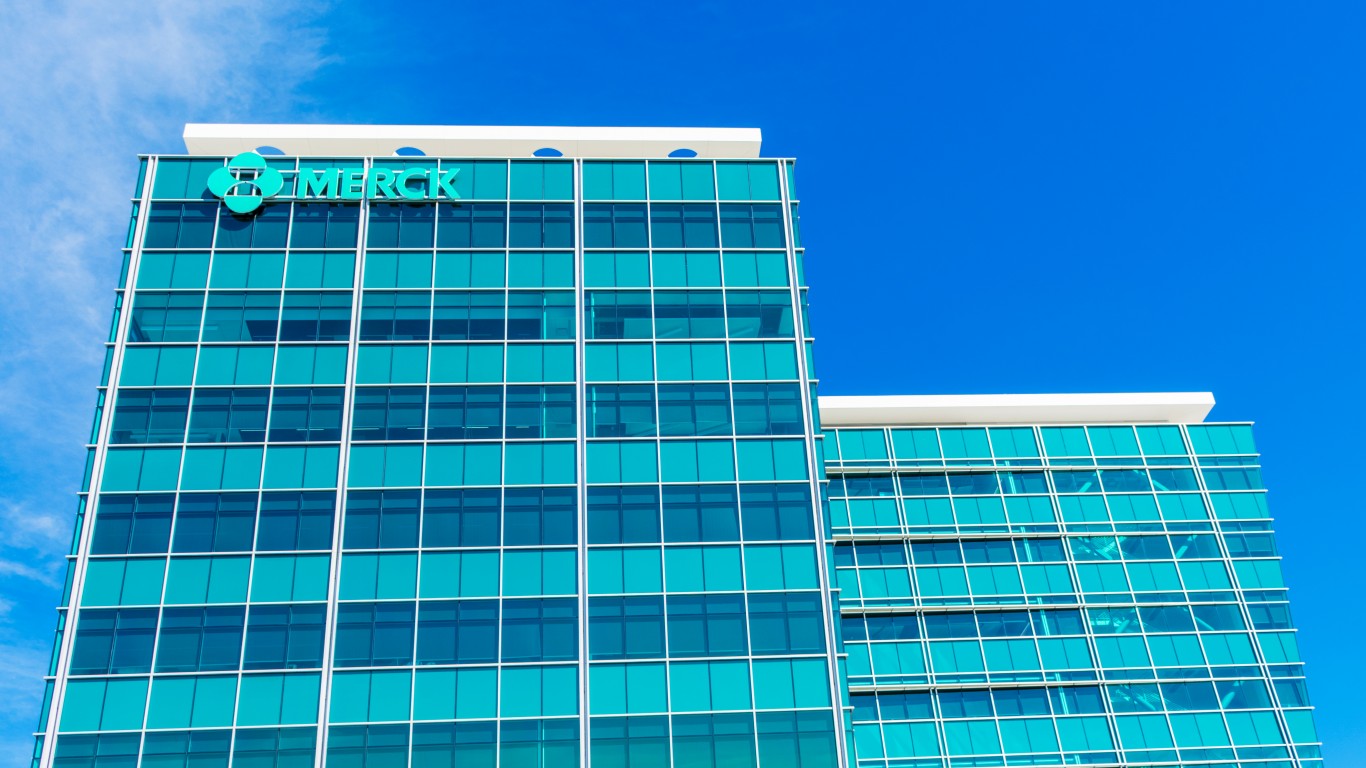
Anyone who put $1,000 into Merck (NYSE:MRK | MRK Price Prediction) ten years ago is sitting on a 239.48% gain in share price alone. The drama is recent. The stock rose 95.25% over the past year and 44.50% year to date, moves that look nothing like a typical pharma year. At $149.00, shares have traveled most of the way from a 52-week low of $79.67 toward a high of $156.00.

Keytruda Built Merck, and Now Merck Is Buying Its Next Act
Merck is a large-cap drugmaker anchored by Keytruda, a cancer immunotherapy that has expanded from metastatic disease into 13 earlier-stage indications. In the second quarter of 2026, the Keytruda family grew 4% to $8.4 billion of $16.6 billion in total revenue. Annual revenue rose from $39.498 billion in 2015 to $64.926 billion in 2025.
Some products stumbled. Gardasil sales in China fell to zero in 2025, and full-year Gardasil sales declined 39%. Merck responded by buying Verona Pharma (about $10 billion), Cidara (about $9.2 billion) and Terns. Pulmonary hypertension drug Winrevair grew 88% to $525 million in Q1 2026.
Merck Trailed the S&P 500 for a Decade, Then Lapped It
10-Year Return
- Initial Investment: $1,000
- Price Return: 239.48%
- S&P 500 (same period): 254.29%
5-Year Return
- Initial Investment: $1,000
- Price Return: 131.14%
- S&P 500 (same period): 76.39%
1-Year Return
- Initial Investment: $1,000
- Price Return: 95.25%
- S&P 500 (same period): 15.79%
Over ten years, Merck slightly fell behind the index on price. The five-year and one-year windows flip that decisively. Timing mattered: shares traded at $78.93 at the July 2025 earnings filing and $127.69 by August 2026. Selling during that slump meant missing much of the decade’s return.
Rising Dividends Did Quiet Work
Merck pays $0.85 quarterly, up from $0.81 before its latest raise, for an annualized $3.40. In 2016 the payout was $0.46, with no cuts in the history since. Reinvested, those checks make the real decade better than the price figure implies (if a rising payout on a blue-chip is the kind of position you build a portfolio around, we ranked ten of the longest dividend-growth streaks by valuation in a free Dividend Kings report).
Why the 119x Trailing P/E Misleads
The trailing P/E is 119 on trailing EPS of just $1.25. Acquisition charges distort it: a $9 billion Cidara charge pushed Q1 2026 EPS to -$1.28, and Q2 EPS came in at -$0.13. The forward P/E of 15 better reflects earnings power.

I’d Hold Through Merck’s Hill
Merck would get my $1,000 today if Keytruda Qlex ($463 million in quarterly sales) and the pipeline, including positive Phase 3 data for sac-TMT, replace Keytruda revenue as patents expire. CEO Rob Davis calls that period “more of a hill than a cliff.”

The stock is a pass for me if early 2026’s three failed Phase 3 oncology results signal a pattern, or if roughly $14.8 billion in acquisition charges buys less growth than promised.
At 15x forward earnings, I lean toward owning it. The decade’s lesson: much of the gain arrived in one short burst, which rewards holding through slow years rather than trading around them.
Contact [email protected] for any questions or corrections.
Chris Lange is a financial and geopolitical writer with more than a decade of experience covering a myriad of topics. He has published thousands of articles for 24/7 Wall St., with past coverage focused heavily on stocks, IPOs, healthcare, defense, global affairs, and technology.
His work has been quoted, or referenced by a number of outlets including Business Insider, USA Today, Yahoo Finance, MSN, The Motley Fool, and many other publications. A graduate of Southwestern University, he studied business with a focus on investments and has previous experience in banking and startups.
When not reading or writing the news, he is following his passion for Lacrosse, playing chess, or building solar projects with his dad.