Why Retirees Are Choosing This $100.8 Billion ETF Over Individual Dividend Stocks
SCHD's 100-stock structure and rock-bottom fees make it a retiree favorite, but a closer look at its top four holdings reveals one company sitting on a patent cliff that could quietly reshape its income story after 2028.

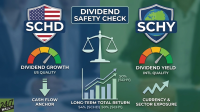
Schwab U.S. Dividend Equity ETF (NYSEARCA:SCHD) sits at the center of income-focused portfolios for a reason. SCHD tracks the Dow Jones U.S. Dividend 100 Index, screening for companies with at least 10 years of dividend payments, strong cash-flow-to-debt ratios, and consistent dividend growth. The fund currently offers a 3.2% dividend yield on $1.05 in annual distributions per share, backed by a 55% payout ratio at the fund level.
How SCHD Generates Its Income
Cost drag is minimal, as SCHD charges a 0.06% expense ratio against roughly $100.8 billion in assets, leaving nearly all of the underlying dividend stream intact for shareholders.
Evaluating the Top Holdings
- Coca-Cola (NYSE:KO | KO Price Prediction) anchors the safety case. The company just raised its quarterly payout to $0.53 from $0.51, extending a 63-year streak of annual increases. FY2026 guidance calls for roughly $12.2 billion in free cash flow against $8.8 billion in dividends paid in 2025, leaving a meaningful cushion. Coca-Cola’s 28% net margin and 43% return on equity show a business that funds its dividend from operations, not balance-sheet stretching.
- Chevron (NYSE:CVX) raised its quarterly dividend to $1.78, its 39th consecutive annual increase. Q1 2026 free cash flow ran negative on timing effects, but FY2025 delivered $16.6 billion in free cash flow against a dividend load well under half that figure. The 3.8% yield is real, but energy-sector cyclicality means CVX’s payout is durable across cycles while still exposed to oil-price swings.
- Merck (NYSE:MRK) warrants the closest look. Merck lifted its quarterly dividend to $0.85 from $0.81, and the current payout is easily covered by earnings. The complication is structural. KEYTRUDA generates roughly half of pharma revenue and faces a late-decade patent cliff, and Merck has taken on $14.8 billion in combined acquisition charges for Cidara and Terns to diversify. The dividend is safe today; the pipeline transition determines whether growth continues past 2028.
- Lockheed Martin (NYSE:LMT) raised its quarterly dividend to $3.45, supported by a record $194 billion backlog. Q1 2026 free cash flow was negative on working-capital timing, but FY2026 guidance calls for $6.5 to $6.8 billion in free cash flow. Program-execution charges on F-16 and classified work are the recurring risk, but multi-year revenue visibility from the backlog is why the dividend keeps rising.
Total Return Context
Total return matters as much as yield here. SCHD trades at about $33, up 21% year to date and roughly 26% over the past year, with a 55% five-year gain. That total return context matters because the 10-year Treasury is near 4.6% and Fed funds are at 3.75%, both of which yield more than SCHD’s 3.2% payout in cash terms. Investors are accepting a lower current yield in exchange for dividend growth and equity appreciation, and historical numbers show that trade has worked.
The Verdict
Contact [email protected] for any questions or corrections.
David Beren has been a Flywheel Publishing contributor since 2022. Writing for 24/7 Wall St. since 2023, David loves to write about topics of all shapes and sizes. As a technology expert, David focuses heavily on consumer electronics brands, automobiles, and general technology. He has previously written for LifeWire, formerly About.com. As a part-time freelance writer, David’s “day job” has been working on and leading social media for multiple Fortune 100 brands. David loves the flexibility of this field and its ability to reach customers exactly where they like to spend their time. Additionally, David previously published his own blog, TmoNews.com, which reached 3 million readers in its first year. In addition to freelance and social media work, David loves to spend time with his family and children and relive the glory days of video game consoles by playing any retro game console he can get his hands on.