Micron’s Memory Supercycle Is Built for the Long Haul
AI runs on memory, and one overlooked U.S. chipmaker just signed contracts that could make its notorious boom-and-bust cycle a thing of the past. The numbers behind those deals tell a story most investors are sleeping on.

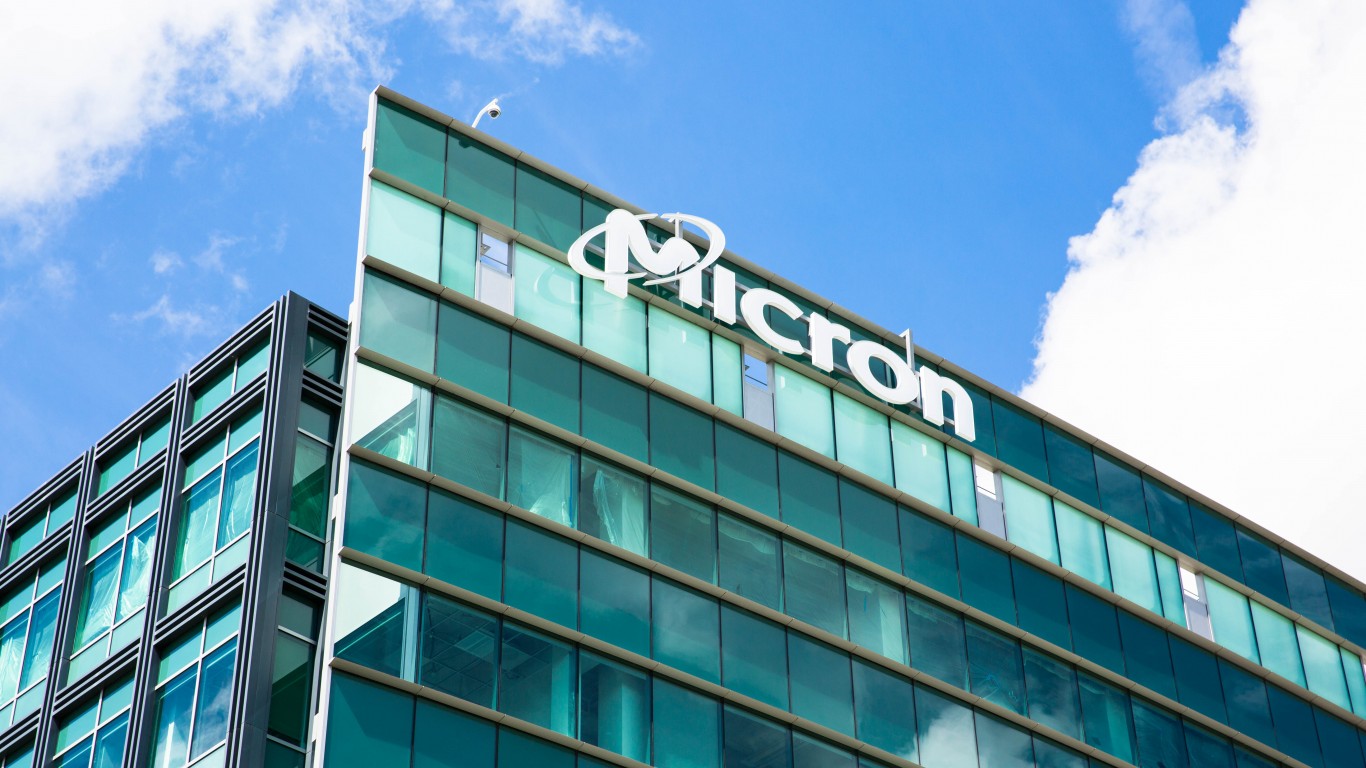
I continue building my Micron (NASDAQ:MU | MU Price Prediction) position because AI runs on memory, and Micron is the only U.S.-based memory manufacturer. It sells into a market where management says “DRAM and NAND industry demand continues to significantly exceed industry supply.”
Locked-In Contracts Change the Memory Playbook
Memory used to be a boom-and-bust trade. Strategic Customer Agreements changed that. Micron has signed 16 of them, mostly running from calendar 2026 through the end of calendar 2030 as “take-or-pay agreements with binding commitments to purchase specific volumes”. Fourteen deals carry about $100 billion in revenue at minimum prices. Customers backed them with $22 billion in deposits. Management says the floor price still produces gross margins “well above our peak quarterly margins in any past cycle.”
Earnings Are Compounding at a Pace I Can’t Ignore
Quarterly revenue rose from $11.315 billion in fiscal Q4 2025 to $41.46 billion in fiscal Q3 2026. Non-GAAP EPS jumped from $3.03 to $25.11, the 7th consecutive EPS beat. GAAP gross margin reached 84.6%, versus 37.7% a year earlier. Fiscal Q4 guidance: $50.0B ± $1.0B in revenue and $31.00 ± $1.00 in non-GAAP EPS.
Cheap Earnings Backed by a Strong Balance Sheet
Micron trades at about 7x forward earnings despite the growth. The company ended the quarter with $24.4 billion in net cash and $5.7 billion of debt, winning a credit upgrade to BBB+. Free cash flow hit $18.3 billion in one quarter. The board raised the dividend 30% to $0.15/qtr. Management plans to increase capital returns starting December 9, 2026 and intends to “return 100% of our excess cash to shareholders” over time.
Why My Money Goes Here Instead of NVIDIA or SanDisk
Shares of NVIDIA (NASDAQ:NVDA) trade at about 25x forward earnings, more than three times Micron’s multiple. SanDisk (NASDAQ:SNDK) is cheaper at 8x but makes only NAND and pays no dividend. Micron’s DRAM makes up 76% of revenue, with trailing revenue of $90.27 billion versus SanDisk’s $20.25 billion.
Cyclical Scars That Could Reopen
Fiscal 2023 left damage. Micron posted gross profit of -$1.416 billion and an operating loss of $5.745 billion. Capital spending for fiscal 2026 will be around $27 billion, and management expects industry supply to improve gradually in 2028. If AI spending stalls while new fabs come online, pricing could fall quickly.
My position stays, and I continue adding, because this downturn would hit a different company. The take-or-pay contracts, customer deposits, and net cash give Micron cushions it lacked in 2023.
Reasons I’m Still Adding
Management expects conditions tight beyond calendar 2027. The Idaho ID1 fab is on track for first wafer output by mid-calendar 2027. Micron expects “a sustained substantial multi-decade memory demand cycle to begin in the latter part of this decade.” I will judge the next fiscal Q4 release against the approximately 86% gross margin guide and look for progress on new contracts.
Customers have committed to buying Micron’s memory through 2030, and I expect to keep buying the stock for at least as long.
Contact [email protected] for any questions or corrections.
Alex Sirois is a financial writer with experience spanning both retail and institutional investing. He has written for InvestorPlace and held roles at BNY Mellon and Bernstein, giving him a perspective that bridges Main Street portfolios and Wall Street analysis.
Alex holds an MBA from George Washington University and has built his career across multiple industries, including e-commerce, education, and translation — a breadth of experience that informs how he breaks down complex financial topics for everyday investors. His writing is conversational, actionable, and grounded in long-term, buy-and-hold investing principles.
At 247 Wall St., Alex focuses on delivering analysis that is both accessible and useful, with a clear emphasis on helping readers make more informed decisions with their money.