Royal Caribbean Is Down Sharply From Its High. Deutsche Bank Says It’s Time to Buy
Two Wall Street analysts just upgraded Royal Caribbean after a brutal selloff, but the bear case involves Caribbean crowding, a surprise resort acquisition, and oil prices that could invalidate the entire thesis.

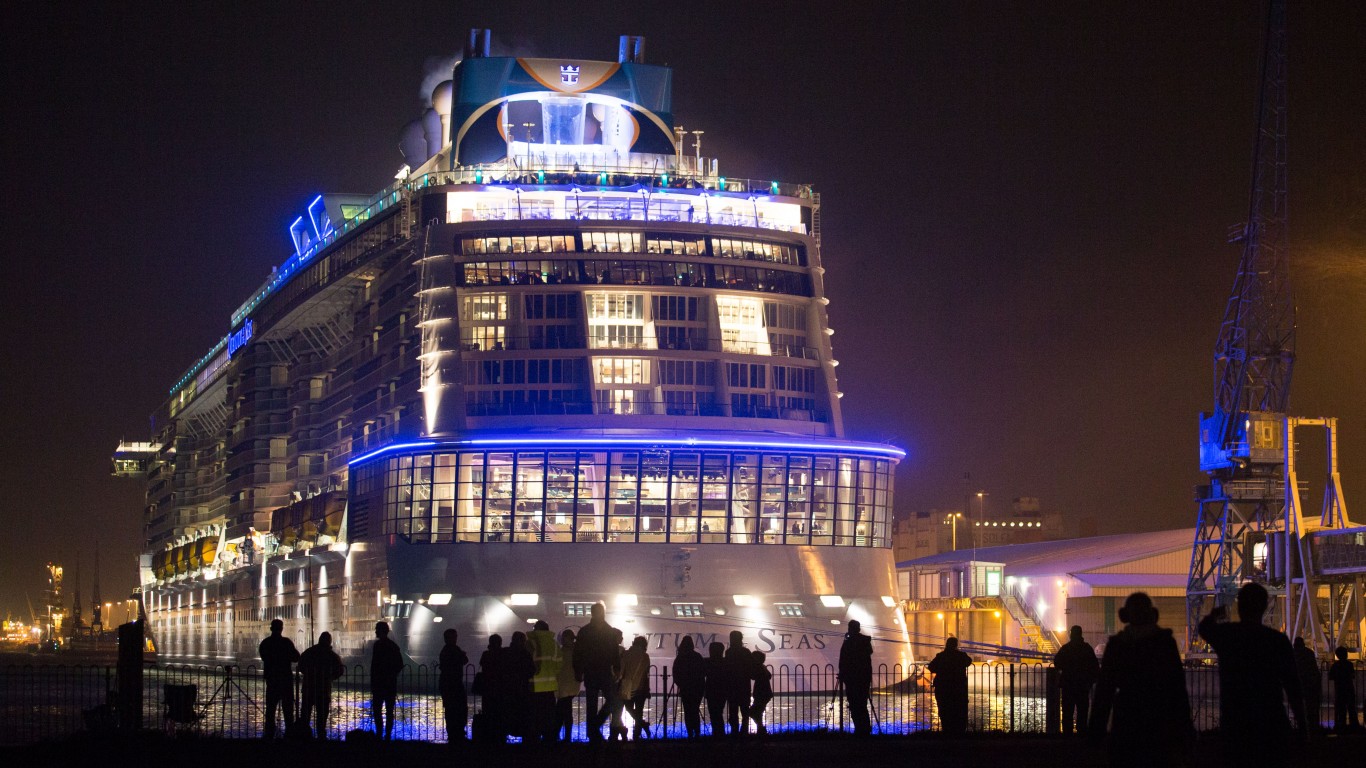
Two Wall Street firms upgraded Royal Caribbean (NYSE:RCL | RCL Price Prediction) to Buy on Monday. Deutsche Bank analyst Chris Woronka and BofA Securities analyst Andrew Didora are essentially buying the dip, with both leaving their price targets unchanged as the stock’s recent selloff made their existing fundamental theses more attractive.
Shares currently trade at $242.69, against an average price target of $347.60. The stock closed 31.9% below its 52-week intraday high of $356.39, and its highest close in that window was lower, at about $342.
Woronka said the stock’s 26% decline since early August, with the S&P 500 flat, “provides considerably more favorable risk/reward from current levels.”
A sentiment derating and an earnings derating look identical on a chart, but only the first rebounds once the fear passes, and that distinction shapes how to read the recent pullback and the upgrades that followed.
Royal Caribbean Slid While the Market Stalled
Royal Caribbean fell 12.66% over the past month while the S&P 500 slipped 0.49%. Year to date, the stock is down 11.57% against a 12.27% gain for the index.
Sellers cited rising oil and doubts about how long yield growth can last. Yield is revenue per available passenger cruise day, which shows whether ships are filling at higher prices.
The oil scare had a real basis, because WTI crude rose from $69.74 in early July to a peak of $107.02 before easing to $96.41.
Ocean cruise peers fell alongside it. Carnival (NYSE:CCL) is down 26.34% this year, and Norwegian Cruise Line Holdings (NYSE:NCLH) is down 35.89%.
Fuel Is Too Small a Cost to Explain This Slide
Woronka estimates fuel accounts for about 7% of revenue for Royal Caribbean, even at today’s oil prices. Didora adds that more than 50% of the company’s 2027 fuel is already hedged.
A cost that small, partly locked in, leaves the market’s questions about demand as the more likely driver of a selloff this large.
Didora’s card data addresses that question, with BofA showing cruise spending up 17% in July and 14.1% in August. Consumers kept spending on cruises through the summer.
Management described its book position as “in line with prior years at record pricing for both 2026 and 2027.”
Guidance Fell on Fuel, Then Recovered on Demand
Royal Caribbean Group earned $15.64 per share on an adjusted basis in 2025, up 33%, and initially guided 2026 to $17.70 to $18.10.
Royal Caribbean Group cut that range to $17.10 to $17.50 after the first quarter. Jason Liberty tied the cut to fuel costs of “roughly $0.62 per share this year.”
A quarter later, Royal Caribbean Group topped expectations with adjusted EPS of $4.21 on $4.8 billion in revenue, then raised guidance to $17.73 to $17.87. That puts the range back inside the original one.
Fuel stayed expensive over that stretch, so the recovery came from demand. Management also said, “We don’t plan for perfection,” which suggests the new range leaves room for error.
Caribbean Crowding and Sandals Anchor the Bear Case
The Caribbean is 57% of Royal Caribbean’s capacity this year. Carnival’s management said Caribbean capacity outside Carnival grew 27% over two years, which pressures pricing where Royal Caribbean is strongest.
Shares fell sharply after the Sandals Resorts deal was announced. Royal Caribbean’s edge comes from ships and private destinations, so buying land-based resorts raises a capital-allocation question worth pressing.
Liberty said, “Our flywheel is accelerating,”. Management also granted the Middle East conflict “has modestly weighed on bookings.” Both statements hold only if the weakness stays limited to Mediterranean sailings.
Should You Buy or Sell RCL Stock
At roughly 13 times forward earnings with a 2.47% dividend yield, Royal Caribbean is priced for a demand problem the card data and guidance history don’t show.
Chris Woronka’s target is $299, and Andrew Didora’s is $330, both below consensus, and any target is an estimate that can miss.


Carnival reports before the open today, and Deutsche Bank flagged it as a possible group catalyst. Royal Caribbean’s own report is scheduled for late October, though the company hasn’t confirmed it.
The call is wrong if Carnival signals softer 2027 pricing. It is also wrong if Royal Caribbean drops its “record pricing” language on bookings, or if crude tops its recent $107.02 peak. Any of those would mean the market read demand correctly.
Regardless, I would avoid buying RCL stock as long as fuel prices stay high and interest rates seem poised to drift upwards.
Contact [email protected] for any questions or corrections.
Omor Ibne Ehsan is a writer at 24/7 Wall St. He is a self-taught investor with a focus on growth, cyclical, and dividend equities that have strong fundamentals, value, and long-term potential. He also has an interest in high-risk, high-reward investments such as penny stocks.