Carnival Just Dropped 20% in a Month. Is It Time to Sell?
Carnival stock has shed a fifth of its value in a single month, but the selloff may have nothing to do with Carnival itself. Before you act, the real culprit behind the plunge changes everything about what comes next.

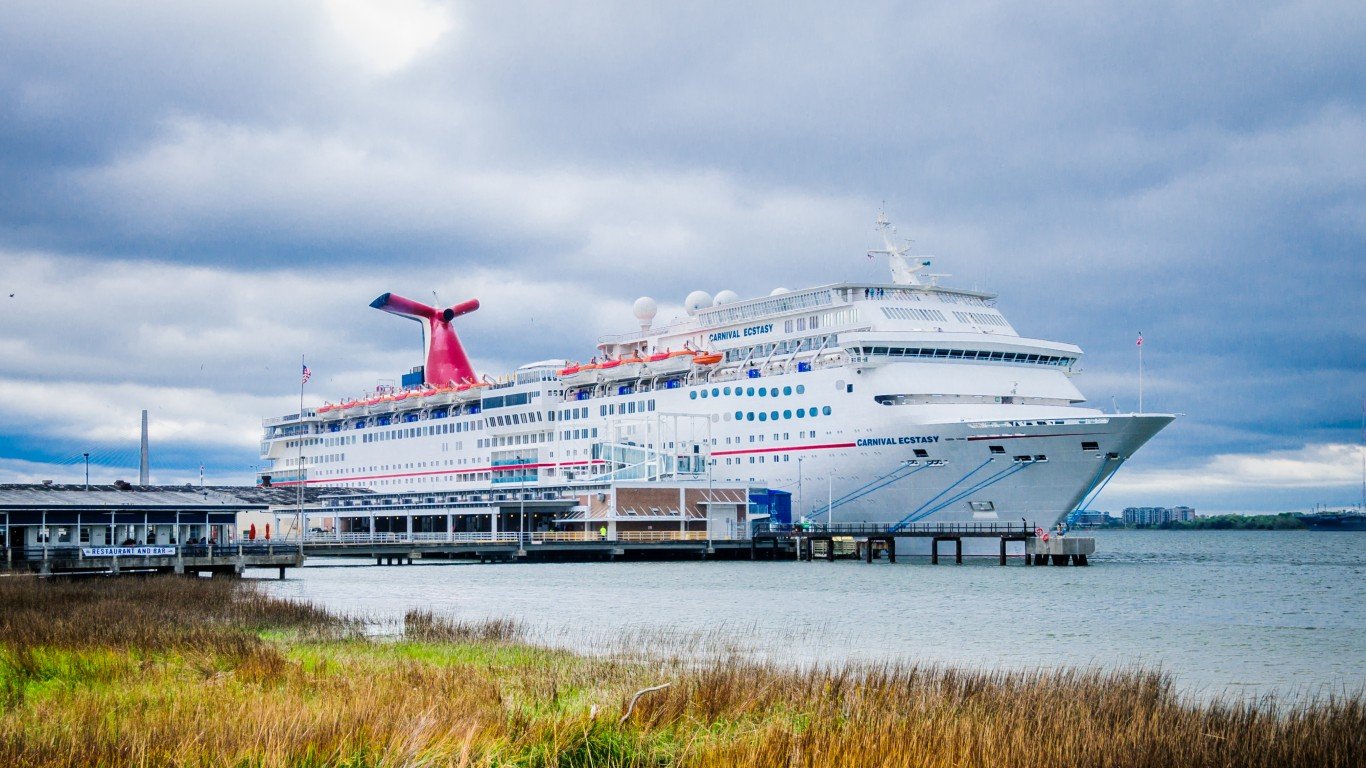
Shares of Carnival (NYSE:CCL | CCL Price Prediction) are down 2% to $22.28 Thursday afternoon, capping a punishing stretch in which the stock has slid 20% over the past month. That drawdown puts the title’s question squarely in front of holders: sell here, or wait it out?

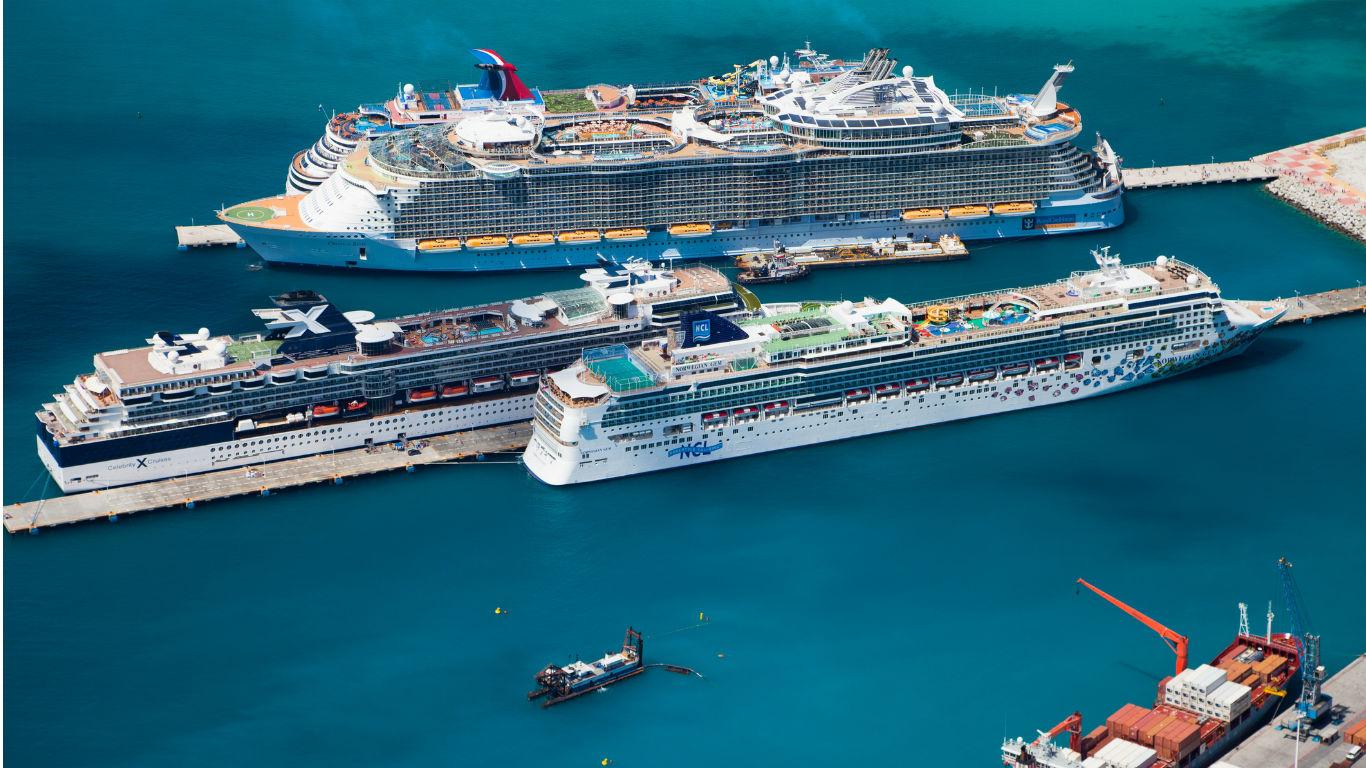
Answering it starts with the peers. Royal Caribbean (NYSE:RCL) stock is down 16% over the same window to $257.26, and Norwegian Cruise Line Holdings (NYSE:NCLH) stock has fallen 22% to $14.46 during the past month. Three cruise names moving together in the same direction rarely reflects an individual company’s execution, and no Carnival-specific announcement explains a drop of this size.
The one-month decline compounds a rough year. Carnival is down 26% year to date (YTD) and off 28% over the past 12 months, so the recent slide sits inside a broader downtrend.
Fuel Is Doing the Damage
Over the identical month, the Energy Select Sector SPDR ETF (NYSEARCA:XLE) rose 8%. Fuel is the largest variable cost in operating a cruise ship, and a rally in energy names directly undercuts the assumption that fuel costs would ease into year-end. That’s the mechanism behind a same-window divergence: as the WTI crude oil price climbs, operator margins get squeezed and the equity gets marked down.
Furthermore, the SPDR S&P 500 ETF Trust (NYSEARCA:SPY) slipped just 2% over the past month. So, the damage is concentrated in the operators while the wider tape held firm, which is what a sector-specific cost shock tends to look like on a screen.
WTI crude oil sits at $101.67 per barrel, and retail gasoline above $4 per gallon reinforces the same pressure on the wider transport complex. That pressure works through the entire leisure travel industry, from cruise operators to airlines to gasoline pumps.
Bull Case Rests on Recent Results

Carnival’s Q2 FY2026 earnings release on June 23 came in strong. Its adjusted EPS of $0.41 beat consensus, revenue of $6.66 billion rose 5.3% year over year (YoY), and adjusted net income climbed more than 20% YoY to $569 million despite the fuel headwind.
Weinstein highlighted a “twelfth consecutive quarter of record net yields” and said Carnival was “93 percent booked for the year” at historically high prices. Customer deposits at Carnival hit a record $9 billion, and the full-year adjusted EPS guide sits at $2.22 with adjusted EBITDA of $7.11 billion.
Beyond the quarter itself, Carnival framed the long-term setup around its PROPEL plan, targeting return on invested capital above 16% and more than 50% adjusted EPS growth by 2029. Demand for 2027 and beyond is running ahead of prior-year levels, with European bookings for 2027 up in the mid-teens percentages at higher prices.
Bear Case Sits on the Cost Side
Carnival’s fuel bill ran nearly 30% above last year in Q2 2026, and current crude keeps that headwind alive into the second half. Layer in $24.9 billion of total debt, and every unexpected dollar of cost hits equity holders harder than at a lightly levered peer.
Weakening consumer sentiment adds another wrinkle to the demand backdrop. The University of Michigan index sits at 55.2, still below the 60 threshold the survey flags as recessionary, which helps explain why Carnival’s own commentary has cited “historically low consumer sentiment” as a headwind on discretionary leisure spending.
Norwegian’s July guidance cut has also colored sentiment across the group. NCLH lowered full-year adjusted EPS guidance to roughly $1.50 and now expects Q3 2026 net yield to decline 8.9% in constant currency. Royal Caribbean, by contrast, raised its full-year adjusted EPS range to $17.73 to $17.87, underscoring how differently the group’s execution is being read.
What to Watch Next
Carnival’s Q3 FY2026 earnings release hasn’t landed yet, and that report will be the next real data point for judging whether pricing integrity is holding through the second half. Investors may want to keep an eye on whether crude eases back toward the moderate range, since that’s the swing factor separating a fuel-driven pullback from a fundamental repricing of the business.
The setup cuts both ways for Carnival stock. Fuel is variable and can reverse, but it sits entirely outside management’s control, so position sizing on your cruise exposure should reflect that risk rather than assume a quick bounce off these levels. The answer to the hold-or-sell question ultimately depends on how much oil-price volatility your CCL stock allocation can absorb.
Contact [email protected] for any questions or corrections.
David Moadel is financial writer specializing in stocks, ETFs, options, precious metals, and Bitcoin. David has written well over 1,000 articles for leading online publications, helping investors understand markets, income strategies, and risk.His work has appeared in The Motley Fool, InvestorPlace, U.S. News & World Report, TipRanks, ValueWalk, Benzinga, Market Realist, TalkMarkets, Finmasters, 24/7 Wall St., and others.With a master’s degree in education, David has taught at the elementary, high school, and college levels. That teaching background shapes his writing style: clear, educational, and practical. David has also built a loyal social-media audience by providing trustworthy financial content on YouTube, X/Twitter, and StockTwits.