3 Defense Stocks That Are Starting October Below Their 52-Week Highs
Defense budgets are surging toward record levels, yet three of America's biggest contractors enter October trading nowhere near their peaks. One of them just posted the largest earnings beat of the group, and the market still walked away unimpressed.

This post may contain links from our sponsors and affiliates, and Flywheel Publishing may receive compensation for actions taken through them.

Defense budgets are expanding, yet three of the largest U.S. defense contractors enter October well below their 52-week highs. The FY 2027 investment request by the Department of War totals $756.8 billion, including $52.9 billion for Critical Munitions and $87.2 billion for Sea Power investments. Share prices have moved in the opposite direction, and that gap creates a research opportunity.
These three companies beat second-quarter earnings estimates and raised full-year guidance. We ranked them on beat magnitude, revenue growth, guidance raises, backlog, free cash flow momentum, and whether each pullback reflects a fixable problem or a structural one. Each trades below its 52-week high as of September 30.
#3: L3Harris Technologies Waits on a Delayed Missile IPO
L3Harris Technologies (NYSE:LHX | LHX Price Prediction) traded around $236.79 on Oct. 1, against a 52-week high of $374.59, down 22.23% year to date (YTD). It operates as both a prime and a supplier, building space sensors, radios, and electronic warfare systems while acting as the only company currently producing PAC-3 solid rocket motors at scale.
Operations look healthy. EPS of $3.13 beat the $2.83 estimate for a fifth consecutive beat. Revenue rose 8.4% and free cash flow increased 39.7% to $771 million. A seven-year THAAD and PAC-3 framework represents approximately $12 billion of future production revenue.
The pullback has specific causes: Management pushed the missile IPO to mid-2027, saying “Market conditions have evolved and do not reflect the tremendous value we are building.” Multiple law firms announced investor investigations in September. At 24x trailing earnings, L3Harris carries the highest multiple of the group, while missile revenue accelerates across the 2027, 2028 and 2029 timeline. The weakness looks temporary, but the return window is long.
#2: Northrop Grumman Pairs Record Backlog With Isolated Charges
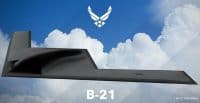
Northrop Grumman (NYSE:NOC) traded around $484.13 on Oct. 1, far below its $767.12 high and near its $476.85 low. Shares fell 5% over the past week. This prime carries clear program concentration in the B-21 bomber and Sentinel ICBM.
EPS of $7.68 beat the $6.82 estimate, and backlog hit a record $104.69 billion on $20 billion of net awards, including $7.6 billion for Sentinel. Free cash flow rose 53.5%, and adjusted EPS guidance moved to $28.60 to $29.10.
The misses matter: Operating income fell 23.1% on unfavorable adjustments of $68 million on the Stand-in Attack Weapon and $91 million on GEM 63XL. A tax rate of 6.3%, down from 17.7%, flattered the bottom line. Management granted “we are not done with the qualification. Until we are, there is risk.” Those problems sit outside B-21 and Sentinel, which supports a temporary read. At 16x trailing earnings, the Air Force decision on a larger B-21 program, expected by year end, is the next catalyst.
#1: Huntington Ingalls Industries Posts the Biggest Beat at the Lowest Multiple
Huntington Ingalls Industries (NYSE:HII) traded around $270.18 on Oct. 1 versus a $455.9 high, the steepest YTD decline of the group at 22.75%. As the nation’s largest military shipbuilder, building carriers, submarines, destroyers and amphibious ships, it carries the greatest concentration risk: The Navy is effectively its customer base.
EPS of $5.27 beat the $3.82 estimate by 38.02%. Revenue grew 10.9%, operating margin expanded 86 bps, and shipbuilding guidance rose to $10.2 billion to $10.4 billion from $9.7 billion to $9.9 billion. Backlog stands at $57.3 billion.
Weak spots remain: Free cash flow was negative $150 million on seasonality, Mission Technologies slipped 3.9%, and Ingalls started slowly on labor. Those are execution issues with visible fixes: HII hired over 3,500 shipbuilders and improved throughput 12% YTD. At 15x trailing earnings, analysts target $367.25.
Why Huntington Ingalls Leads This October Defense Watchlist
We set out to separate real problems from temporary ones, and the ranking follows that test. Huntington Ingalls combines the largest beat, the fastest growth, and the lowest multiple, with risks tied to labor that management is actively fixing. If Ingalls throughput stalls, guidance comes under pressure, making the 15% full-year throughput goal worth monitoring. Northrop ranks second because its charges sit in smaller programs, though the B-21 decision carries weight. L3Harris ranks third because its missile value comes later and costs more today. We see Huntington Ingalls offering the best fundamental case of these three pullbacks heading into the fourth quarter.
Contact [email protected] for any questions or corrections.
Joel South covers large-cap stocks, dividend investing, and major market trends, with a focus on earnings analysis, valuation, and turning complex data into actionable insights for investors.
He brings more than 15 years of experience as an investor and financial journalist, including 12 years at The Motley Fool, where he served as an investment analyst, Bureau Chief, and later led the Fool.com investing news desk. He has also co-hosted an investing podcast and appeared across TV and radio discussing market trends.