Vail Resorts’ 6.47% Dividend Faces Weather Risk as Free Cash Flow Falls Short
Vail Resorts is paying shareholders a 6.47% dividend while borrowing money to do it, and management is betting everything on normal snowfall to avoid a repeat of what the CEO called the worst weather the company has ever faced.

This post may contain links from our sponsors and affiliates, and Flywheel Publishing may receive compensation for actions taken through them.
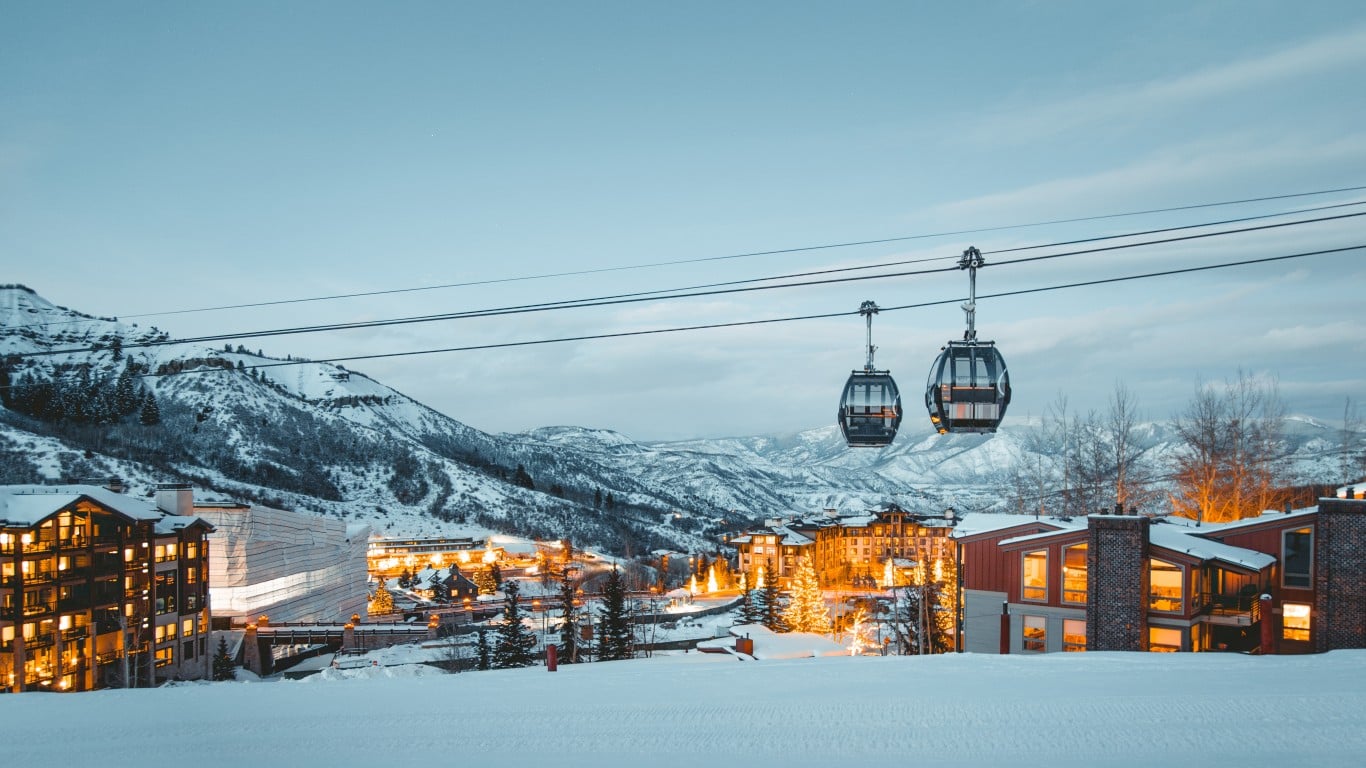
Vail Resorts (NYSE:MTN | MTN Price Prediction) declared a quarterly dividend of $2.22 per share, payable October 27, 2026. The annualized payout of $8.88 yields 6.47% at $140.50 per share. The problem: free cash flow did not cover the dividend.

How Season Passes Turn Snowfall Risk Into Prepaid Cash
Vail sells Epic Passes months before the ski lifts open, collecting cash before snow conditions are known. Pass revenue rose 3.9% despite visitation falling 13.4%. In the third quarter, ski lifts revenue dropped 5.3% while visits declined 15.5%.
“Our advance commitment model provided considerable stability and strong cost discipline kept us on track to exceed our resource efficiency transformation plan savings for the year.”
CEO Rob Katz also described the weather the company faced:
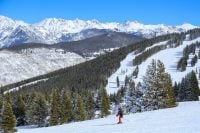
“Conditions were particularly severe in the Rockies, where snowfall and snowpack were at or near historic lows and significantly below prior record-low seasons, resulting in the most difficult weather environment we have ever experienced.”
A Record-Bad Winter Opened a Coverage Gap
Operating cash flow was $479.6 million. Capital spending amounted $231.6 million, leaving roughly $248.0 million in free cash flow to cover $317.1 million in dividends, a payout of roughly 128% of free cash flow. Fiscal 2025 coverage was about 103%. The dividend was also about 216% of GAAP EPS of $4.12.
The balance sheet covered the shortfall. Cash fell from $440M to $231M. Net leverage rose to 3.9x from 3.0x in the first quarter, and interest expense went up to $205.6 million.
Management Says Even the Low End Covers the Payout
CFO Angela Korch spoke directly to coverage:
“Even at the low end of our fiscal 2027 guidance range, we expect to generate positive free cash flow after continuing to fund our capital program and dividend.”
Guidance calls for Resort EBITDA of $805M to $865M assuming normal weather conditions. Early demand is weaker: pass units are down about 12% and pass dollars down about 6%. Katz acknowledged the risk: “Last season was a true anomaly and it certainly creates risk heading into next season.”
How Six Flags and Host Hotels Show What Is at Stake
Six Flags (NYSE:FUN) also runs a weather-exposed season-pass business. It carries roughly $4.9 billion in net debt, and its CEO, John Reilly, has made reducing that debt the priority:
“Reducing leverage and restoring financial flexibility are essential to creating sustainable shareholder value.”
Host Hotels & Resorts (NASDAQ:HST) serves the same wealthy travelers but has no snow risk. It pays a $0.20 regular quarterly dividend, has an investment-grade balance sheet and added a $0.72 special payout after selling assets. Vail sits between the two. Its business model is stronger than Six Flags’, but its balance sheet gives it much less buffer than Host’s.
Verdict: Safe Through One More Bad Winter, Broken by a Second
The dividend is safe for fiscal 2027. Katz bought nearly $5 million of stock this year, and management expects leverage to fall to about 3.5 times. History shows the board will act under pressure, though. Payments stopped between March 2020 and October 2021. One condition would break this payout: a second straight below-normal snow season that drives Resort EBITDA below $805M. With only $231M of cash left, another year of borrowing to pay the dividend would not hold up.
Contact [email protected] for any questions or corrections.
Chris Lange is a financial and geopolitical writer with more than a decade of experience covering a myriad of topics. He has published thousands of articles for 24/7 Wall St., with past coverage focused heavily on stocks, IPOs, healthcare, defense, global affairs, and technology.
His work has been quoted, or referenced by a number of outlets including Business Insider, USA Today, Yahoo Finance, MSN, The Motley Fool, and many other publications. A graduate of Southwestern University, he studied business with a focus on investments and has previous experience in banking and startups.
When not reading or writing the news, he is following his passion for Lacrosse, playing chess, or building solar projects with his dad.