3 Overlooked Packaging Stocks With Businesses and Dividends That Never Really Stop
Most investors chase sector trends and miss the companies quietly running through every downturn because the products they make get thrown away and repurchased on a weekly cycle. Three packaging stocks have built dividend records on exactly that pattern, and…

This post may contain links from our sponsors and affiliates, and Flywheel Publishing may receive compensation for actions taken through them.
Almost everything a consumer buys comes inside something, and that something gets thrown away and bought again. Demand for packaging follows how much people eat, drink and wash. Excitement about the economy has little to do with it, so these businesses keep running through downturns while nobody talks about them. Packaging Corp of America (NYSE:PKG | PKG Price Prediction) shows what the slow version of that looks like: its stock has returned 279% over the ten years ending October 2, 2026, while paying a quarterly dividend in every quarter of its record since 2003. We look at three packaging companies, what each one actually makes, and where each one can go wrong.
Ball Corporation: Aluminum Cans That Get Bought Again Every Week
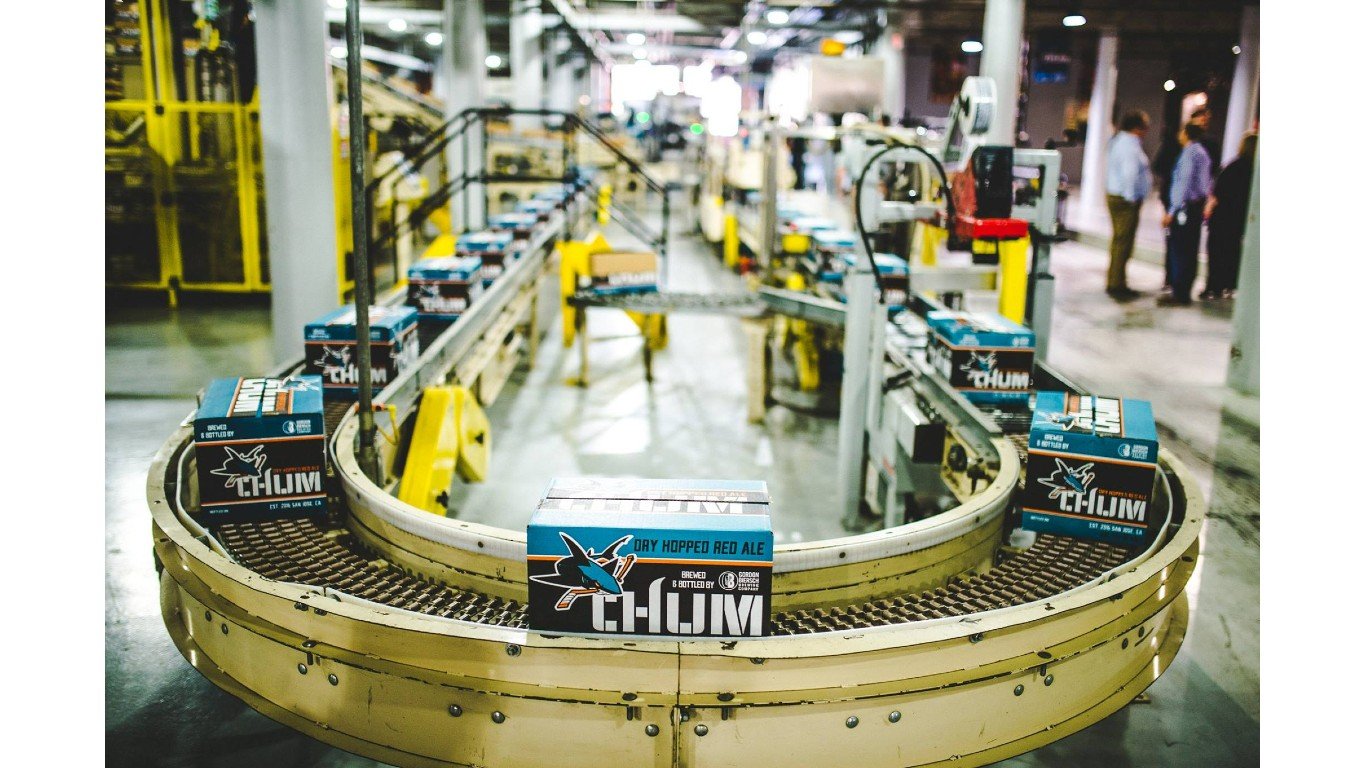
Ball Corporation (NYSE:BALL) makes aluminum beverage cans. Soft drink companies, beer makers and sparkling water brands buy them by the billion, fill them and ship them to stores. Ball sold its aerospace business and now makes almost nothing but cans, plus a small aerosol line that brought in $158M of revenue in the second quarter. In 2021, Ball shipped roughly 54 billion beverage containers in North and Central America, which the company put at about 41% of that market.
The best recent test was the 2020 downturn. Bars and stadiums closed, but people kept drinking at home, and the company said the “unprecedented surge in demand” that began that year caused shortages of some canned beverages. Ball kept its quarterly dividend at $0.15 from 2020 through late 2021 and then raised it to $0.20, where it has stayed for every payment since February 2022.
Ball’s margins are protected by its contracts. Its customer contracts include an aluminum price pass-through mechanism, so swings in metal costs mostly go to the buyer. Second-quarter revenue came in at $3.997B, up 20.4% from a year earlier, on aluminum packaging shipments that grew 4.3%. Comparable diluted EPS was $1.03, ahead of the $0.9878 estimate. Management confirmed full-year guidance for free cash flow above $900M and at least $800M returned to shareholders.
The stock has been less steady than the business. Shares rose 56.74% over ten years but are down 32.4% over five, and the yield is a low 1.41%. Shares trade at about 13 times forward earnings.
Risk: customer concentration. A small group of large global beverage brands buys most of Ball’s cans. They negotiate hard and can shift volume between suppliers when contracts come up for renewal. Ball is also absorbing higher plant start-up costs in North and Central America. Those costs pay off only if the big customers fill the new capacity.
Packaging Corp of America: Brown Boxes and a Long Dividend Record
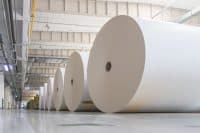
Packaging Corp makes containerboard, the stiff brown paper inside shipping boxes, at its own mills. It then turns that paper into corrugated boxes for food processors, beverage makers, manufacturers and retailers. It is the third-largest US producer of containerboard and corrugated boxes. Packaging made up $2.3113B of second-quarter sales, and paper only $157.3M.
Its dividend record shows how the business has held up in past downturns, and it includes a weak spot. During the 2008 to 2009 recession, the quarterly dividend went from $0.30 in 2008 to $0.15 in 2009. Box demand falls when industrial activity falls. The 2020 shock went differently. The payout stayed at $0.79 through every quarter of 2020 and rose to $1.00 with the December 2020 payment. It held at $1.25 from mid-2022 through late 2025 and is now $1.50.
PKG’s pricing power shows up in actual price increases. The company put through two sequential containerboard price increases in 2026, and those increases are the main reason its third-quarter guidance calls for adjusted EPS of $2.91, up from $2.35 in the second quarter. The trailing operating margin is 13.1%. The stock has gained 91.54% over five years. The yield is 2.29%, a supporting feature of the investment case.
Risk: the lag between rising costs and higher prices. Costs show up right away, and price increases take time to reach customers. Second-quarter GAAP net income fell to $192.1M from $241.5M on higher freight, corporate expenses and weak price and mix. Management also highlighted rising recycled fiber, chemical and electricity costs. Interest expense rose to $32.6M on acquisition debt, so the integration has to work.
Amcor: Pouches, Bottles and a Balance Sheet Worth Watching
Amcor (NYSE:AMCR) makes flexible packaging, meaning the films, pouches and wrappers used for snacks, coffee, cheese and medical supplies. Since buying Berry Global, it also makes rigid plastic bottles, containers and closures. Its customers sell food, beverage, healthcare, personal care and home care products. Amcor trades on the NYSE, so a US investor buys it the same way as the other two names here. The foreign-domiciled plc has operations in 40+ countries, so currency swings flow through its results.
Medical packaging and grocery basics get bought in every economy. Amcor paid its quarterly dividend at $0.115 through 2020 and raised it to $0.1175 in November 2020. It has kept paying through the Berry integration and now pays $0.65 a quarter. Margins are moving the right way: fourth-quarter adjusted EBIT margin was 13.1%, up from 12.0% a year earlier, helped by about $100M of merger synergies in the quarter. Fiscal 2026 revenue reached $23.506B, with free cash flow of $1.303B.
The yield is 6.21%, the highest of the three, and it calls for caution. Net debt stood at $12.9B at fiscal year-end, and guidance for the six-month transition period ending in December puts leverage at 3.5x to 3.6x. Shareholders have waited a long time for a return: shares are down 7.51% over five years and up 6.51% since June 2019.
Risk: raw material and energy costs. Amcor makes its products from plastic resins and films, and it reported unprecedented input cost inflation along with supply disruptions tied to conflict in the Middle East. During the year, management cut free cash flow guidance from $1.8-1.9B to $1.5-1.6B. Volumes were also softer in healthcare and nutrition.
Quiet Holdings for a Durable Core
These businesses stay out of the headlines while they keep generating cash. Packaging Corp of America has the best record of the three, though its 2009 dividend cut shows it is still tied to the economic cycle. Ball has the most reliable demand and contracts that pass metal costs to customers, but its stock has fell behind. Amcor needs the most patience while it pays down Berry debt, and over time its cash flow will show whether the larger company was worth building. Dull, dividend-paying compounders like these are the backbone of a portfolio built to live off the checks instead of selling shares, which is the whole idea behind our free dividend ladder guide.
Contact [email protected] for any questions or corrections.
Chris Lange is a financial and geopolitical writer with more than a decade of experience covering a myriad of topics. He has published thousands of articles for 24/7 Wall St., with past coverage focused heavily on stocks, IPOs, healthcare, defense, global affairs, and technology.
His work has been quoted, or referenced by a number of outlets including Business Insider, USA Today, Yahoo Finance, MSN, The Motley Fool, and many other publications. A graduate of Southwestern University, he studied business with a focus on investments and has previous experience in banking and startups.
When not reading or writing the news, he is following his passion for Lacrosse, playing chess, or building solar projects with his dad.