In 1939, As War Broke Out In Europe, He Told His Broker: ‘Buy Me $100 Of Everything Below $1 A Share.’ Over The Next 7 Decades, John Templeton’s Philosophy That ‘The Time Of Maximum Pessimism Is The Best Time To Buy’ Made Him One Of The Wealthiest Men In The World.
When war panic drove most investors to the exits in 1939, a 26-year-old made a single unconventional bet that would define a century of investing wisdom. The logic behind his trade still challenges everything most people believe about risk.

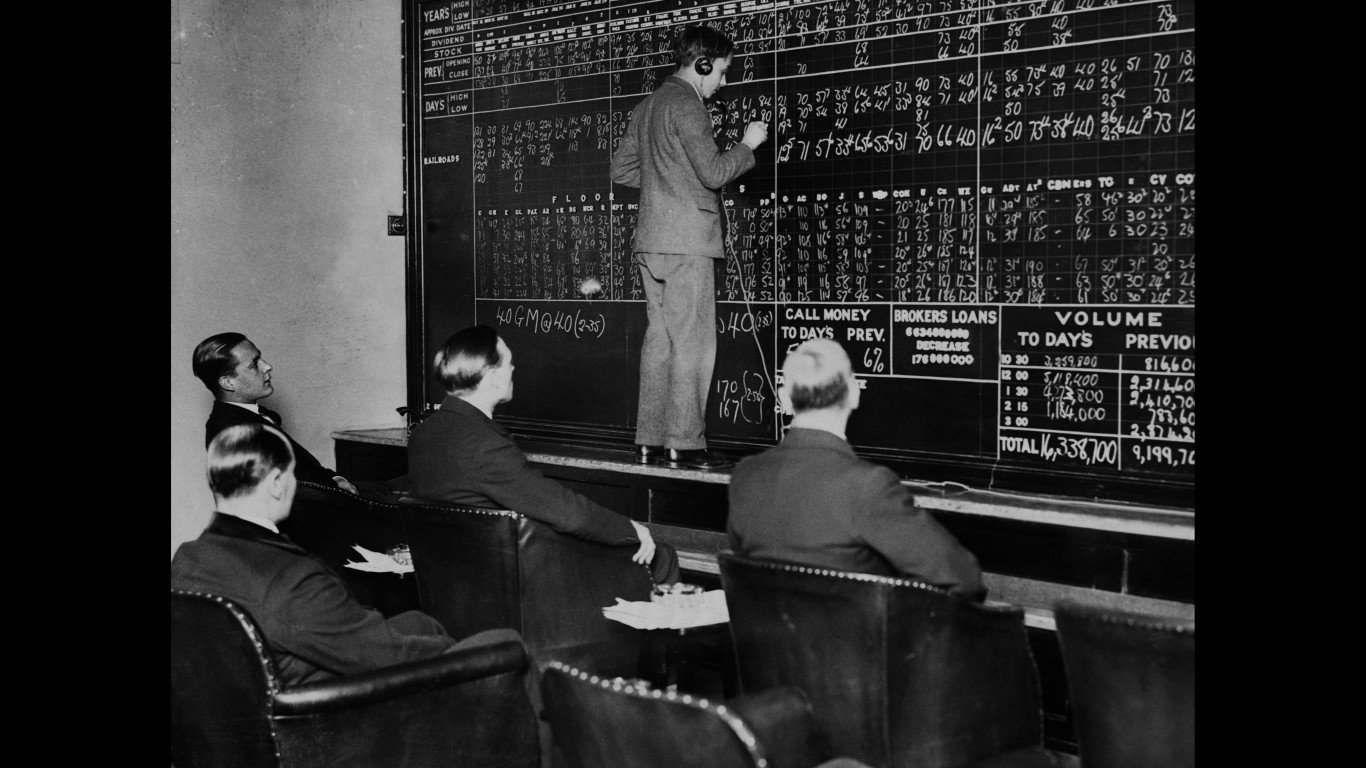
In 1939, As World War II broke out in Europe. A 26-year-old investor borrowed $10,000 from his former boss at Fenner & Beane, according to kingswell.io. He then sent his broker and order “Buy me $100 of everything below $1 a share.”
How a Basket of Near-Wrecks Paid Off
He ended up with stakes in 104 companies on the NYSE and AMEX. Hedgefundalpha.com says 34 of the companies were already nearly bankrupt. Equal positions in every name under a dollar meant no single failure could sink him.
Kingswell.io reports that four years later he sold the portfolio for $40,000, a $30,000 profit, and that only 4 positions turned out worthless.
Wiley notes the Dow was barely higher by September 1943 than in September 1939, and most of these distressed stocks didn’t bottom and recover until 1941. His gain came from the securities he picked and from the fact that most of the nearly bankrupt companies he bought survived.
John Templeton Turned One Trade Into a Legend
That investor was John Templeton. He founded the Templeton Growth Fund in 1954, which grew into one of the world’s largest international funds. He sold the fund family to the Franklin Group in 1992 for $440 million, when the funds held $22 billion. Money magazine called him “arguably the greatest global stock picker of the century” in 1999, according to The Washington Post.
Templeton’s most famous quote appeared in 1994, when he was in his eighties: “Bull markets are born on pessimism, grow on skepticism, mature on optimism, and die on euphoria. The time of maximum pessimism is the best time to buy, and the time of maximum optimism is the best time to sell.”
Templeton died July 8, 2008, at age 95, of pneumonia in Nassau, Bahamas, according to The Washington Post.
Lessons That Transfer, and One That Stays in 1939
Three ideas still hold up. Buy when sentiment is at its worst, size positions so no single failure matters, and hold long enough for a thesis to play out. The instruction to buy everything below a dollar belongs to his era, when it meant distressed industrials listed on major exchanges, whereas securities trading below a dollar today are a very different and far more hazardous market, and nothing here supports buying them.
Contact [email protected] for any questions or corrections.
AJ spent 10 years writing about financial markets at The Motley Fool. His coverage centers on technology stocks and the broader macroeconomic trends, from interest rates to geopolitics, that shape where markets are headed next. AJ is drawn to the stories where big-picture economics and individual companies collide.