Broadcom Owns the Backstage; AMD Fights for the Spotlight
Broadcom quietly powers the AI chips hyperscalers brand as their own, while AMD wages a public battle against Nvidia with full server racks and a valuation that leaves no room for error. One company dominates by staying invisible; the other…

This post may contain links from our sponsors and affiliates, and Flywheel Publishing may receive compensation for actions taken through them.

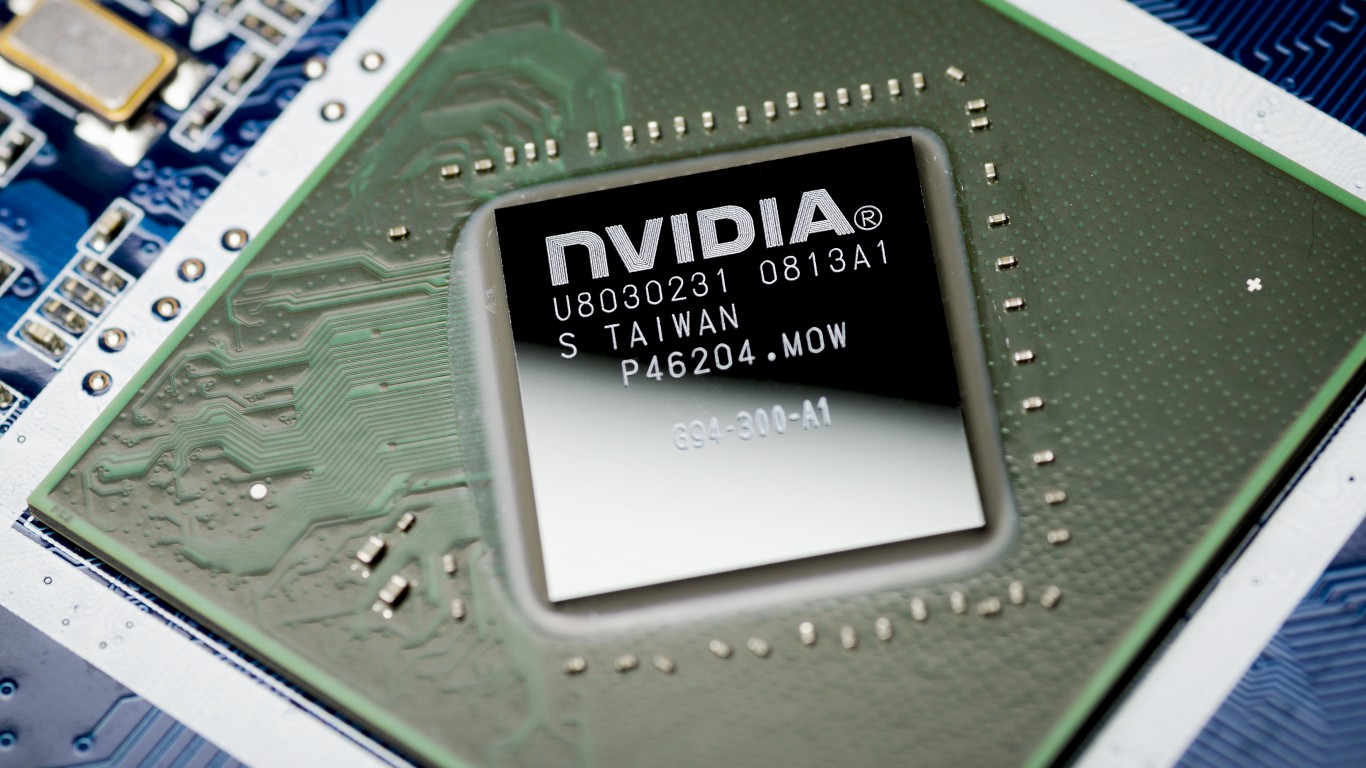
Broadcom (NASDAQ:AVGO | AVGO Price Prediction) and AMD (NASDAQ:AMD) both beat expectations on AI data center demand. Broadcom designs custom chips that hyperscalers use under their own names. AMD sells its own Instinct GPUs and EPYC CPUs and competes openly with NVIDIA (NASDAQ:NVDA).
Custom Chips Carry Broadcom While Data Center Doubles at AMD
Broadcom’s fiscal Q3 revenue rose 85.5% to $29.59B. AI semiconductor revenue reached $16.70B, up 221%, so the supplier that works behind the scenes now drives most of the growth. Custom XPUs made up 73% of AI revenue. Alphabet (NASDAQ:GOOGL) unit Google is receiving TPU v8i production shipments, OpenAI’s first-generation Jalapeno accelerator is shipping, and Broadcom expects to deliver three generations of MTIA accelerators to Meta Platforms (NASDAQ:META) by the end of 2027.
AMD’s Q2 revenue rose 50.1% to $11.54B. Data Center sales jumped 107% to $6.72B, or 58% of revenue, which makes AI the core of the business. Gaming fell 31% to $779M as the console cycle aged. Broadcom has no consumer drag like that.
| Driver | Broadcom | AMD |
|---|---|---|
| Growth engine | Custom XPUs and Ethernet networking | EPYC CPUs and Instinct GPUs |
| Cushion | VMware software, 94% gross margin | Ryzen client chips, up 23% |
| Weak spot | Gross margin forecast to about 73% | Gaming down 31% |
Co-Designer for Hyperscalers vs. Merchant Challenger to Nvidia
Broadcom CEO Hock Tan put it bluntly: “When you co-develop a chip that is optimized for your particular LLM workloads, you will outperform any GPU.” He also claimed custom XPUs run at “half the cost of a GPU.” That sales talk takes aim at AMD and Nvidia alike.
AMD’s answer is full server racks. Its Helios system combines Venice CPUs, MI450 GPUs, and Pensando networking, and AMD says it delivers up to 30% more tokens per dollar than competing systems. OpenAI, Anthropic, and Meta buy from both companies. The frontier AI labs are spreading their orders across suppliers.
Helios Ramp and Broadcom’s Supply Chain Will Set the Pace
AMD forecast Q3 revenue to about $13B, and Lisa Su called Q3 “the very beginning of the ramp” for Helios. The key question is whether Helios sales spread beyond a few anchor customers ordering at gigawatt scale. Broadcom forecast Q4 AI revenue to $21.7B, up 236%. Its gross margin guidance of about 73% compares with 78% a year ago, likely because custom XPUs now make up a larger share of sales. Tan says demand tops the outlook. Still, land, power, and substrate supply decide when that capacity actually ships.
Broadcom’s Cash Flow Edge Meets AMD’s Valuation Risk
AMD is up 203.24% year to date versus 9.18% for Broadcom, and AMD trades at a P/E near 245. A valuation that high means AMD can barely afford a stumble on Helios. Broadcom generated $13.66B of free cash flow, or 46% of revenue, against AMD’s $1.56B. That cash flow plus customer contracts spanning several chip generations gives Broadcom steadier fundamentals. AMD offers more direct exposure to the fight for GPU market share. That comparison would shift if Helios ships broadly in early 2027 while Broadcom’s margins keep slipping.
Contact [email protected] for any questions or corrections.
Alex Sirois is a financial writer with experience spanning both retail and institutional investing. He has written for InvestorPlace and held roles at BNY Mellon and Bernstein, giving him a perspective that bridges Main Street portfolios and Wall Street analysis.
Alex holds an MBA from George Washington University and has built his career across multiple industries, including e-commerce, education, and translation — a breadth of experience that informs how he breaks down complex financial topics for everyday investors. His writing is conversational, actionable, and grounded in long-term, buy-and-hold investing principles.
At 247 Wall St., Alex focuses on delivering analysis that is both accessible and useful, with a clear emphasis on helping readers make more informed decisions with their money.