FICO Is Cutting 15% of Its Workforce After Losing More Than Half Its Value
A single regulatory decision stripped FICO of the status that made its mortgage score virtually mandatory for lenders, and now the company is cutting hundreds of jobs while its stock sits near a price that one analyst just called a…

This post may contain links from our sponsors and affiliates, and Flywheel Publishing may receive compensation for actions taken through them.
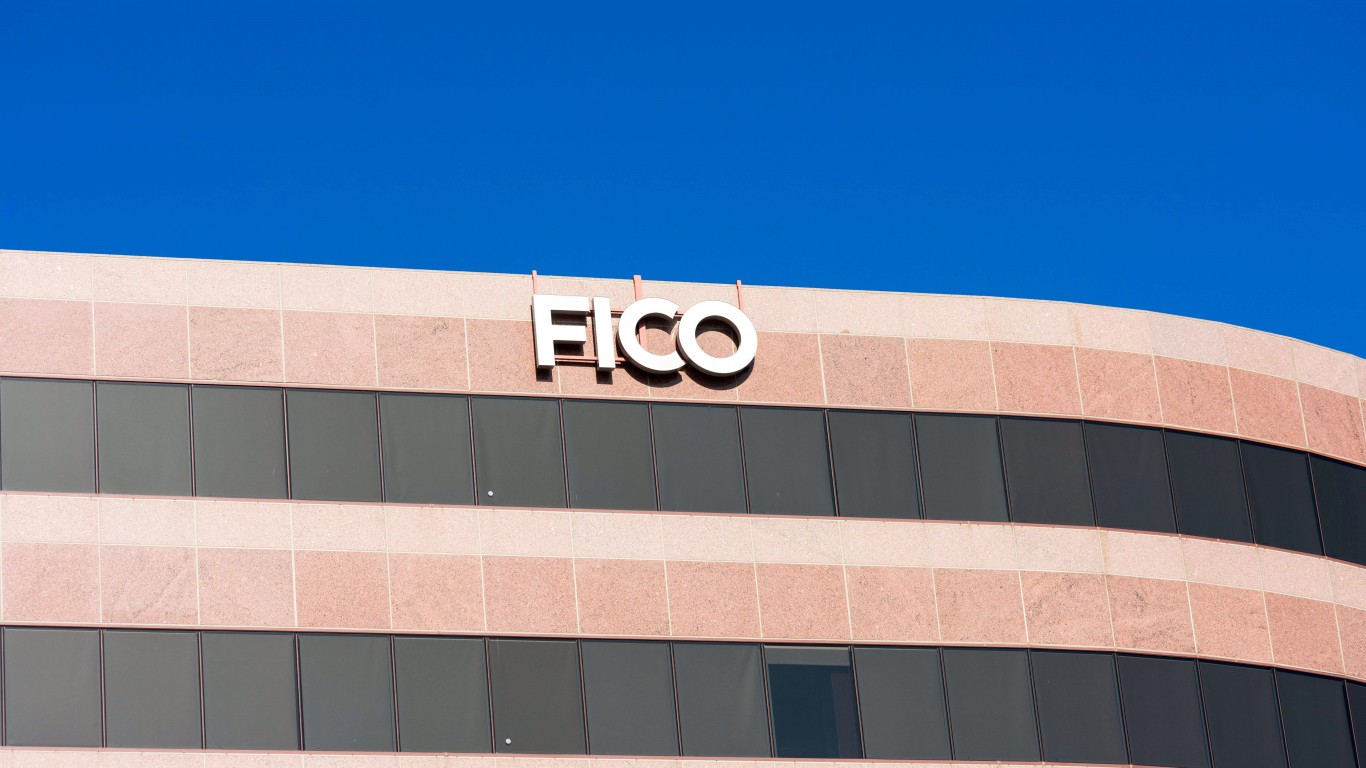
Fair Isaac (NYSE:FICO | FICO Price Prediction) closed at $695.46, while the average Wall Street price target is $1,194.42, meaning about 71.7% upside. Most of that consensus, however, was built before one regulatory decision changed how the company’s main product gets sold.

Fair Isaac is eliminating approximately 15% of its workforce. Against a September 2025 headcount of 3,811, that means roughly 570 jobs.
The filing lists four drivers: fewer management layers, a simpler structure, better processes and tools, and AI-driven product development. Fair Isaac expects about $27.0 million of pre-tax severance in its fiscal fourth quarter of 2026. The plan should be substantially complete by the end of fiscal third quarter 2027.
Shares are down about 58% this year despite latest-quarter revenue up 26%. That operating record looks poor against a price that suggests a broken franchise.
Washington Ended FICO’s Exclusive Spot on the Mortgage Pricing Grid
On September 29, the stock fell 26.52% in one session, from $840.89 to $617.87. The housing regulator had weighed in. Fannie Mae and Freddie Mac would use “ONE PRICING GRID with VantageScore joining the existing FICO Classic pricing grid.”
A pricing grid is the table the two agencies use to set loan fees by credit score band, and being the only score on it made FICO effectively mandatory for lenders selling mortgages.
That status was worth more than any edge in predictive accuracy, because switching scores meant repricing loans, and a shared grid removes most of that switching cost.
A Price War Built on a $0.99 Score
The same day, Rocket Companies (NYSE:RKT) said Rocket Mortgage would default to VantageScore 4.0, priced at $0.99 through 2028. FICO’s 2026 pricing is $10 per score, or $4.95 plus a per-loan fee.
Last quarter, mortgage origination revenue rose 97% while volumes grew at a low single-digit rate. That growth came from pricing power, driven by being required.
Bank of America (NYSE:BAC) downgraded the stock to Neutral from Buy and cut its target to $700 from $1,400. Halving a target in one move suggests the analyst rebuilt the valuation around lower mortgage pricing.
Results That Still Reflect the Old Rules
Fiscal third quarter 2026 revenue was $674.2 million, up 26%. Scores revenue rose 41% to $458.9 million, and GAAP earnings per share were $10.45.
Those results came from a regime that is ending, and July’s full-year guidance precedes the September changes and should not be read as current.
The franchise still wins important customers. Fair Isaac said so. United Wholesale Mortgage, owned by UWM Holdings (NYSE:UWMC), will use FICO scores on all credit pulls in its broker channel.
Management argued in July that lenders were adding VantageScore alongside FICO pulls. That claim now needs fresh evidence.
Shares Have Already Reached the Downgraded Target
FICO’s market value is about $15.02 billion after a 0.85% gain on the day. Shares trade about 63% below the 52-week high of $1,886.28 and not far above the $586.05 low.
The stock has bounced about 17% from its September 30 close of $592.47, which puts it almost exactly at the downgraded $700 target. That leaves little upside against the most recent major analyst target.
Consensus rests on four Strong Buy, eight Buy, seven Hold and two Sell ratings, but much precedes the rule change. At about 16 times forward earnings, the stock looks cheap only if estimates hold up despite lower mortgage pricing.

What Could Decide FICO’s Next Move
The bearish case looks stronger because the score is unlikely to keep full pricing power as one option among several. Mortgage origination was 62% of Scores’ revenue last quarter, so concessions land on the most profitable business.
Total debt reached $5.58 billion, much of it funding buybacks at an average of $1,149 per share. By comparison, savings from a restructuring that carries $27.0 million in severance costs look small next to repricing the core product.
TransUnion (NYSE:TRU) looks better placed for this shift. It co-owns VantageScore and sells the underlying credit file, so it earns revenue regardless of which score a lender pulls.
My view would change if the next earnings report shows Scores pricing holding up. Wider lender adoption of VantageScore beyond Rocket would strengthen the bearish case.
Contact [email protected] for any questions or corrections.
Omor Ibne Ehsan is a writer at 24/7 Wall St. He is a self-taught investor with a focus on growth, cyclical, and dividend equities that have strong fundamentals, value, and long-term potential. He also has an interest in high-risk, high-reward investments such as penny stocks.