Is General Mills a Dividend Stock Worth Owning or a Value Trap?
General Mills has paid dividends for 127 consecutive years and now yields over 7%, yet the stock sits near decade lows while profits shrink and debt climbs. Whether that yield is a reward or a warning depends on a few…


General Mills (NYSE:GIS | GIS Price Prediction) trades at $32.17, down 27.47% this year. The 7.62% yield on a $2.44 annual dividend draws income investors. Operating trends are weaker.

Cheap Against Its Own History, Fairly Priced Against Peers
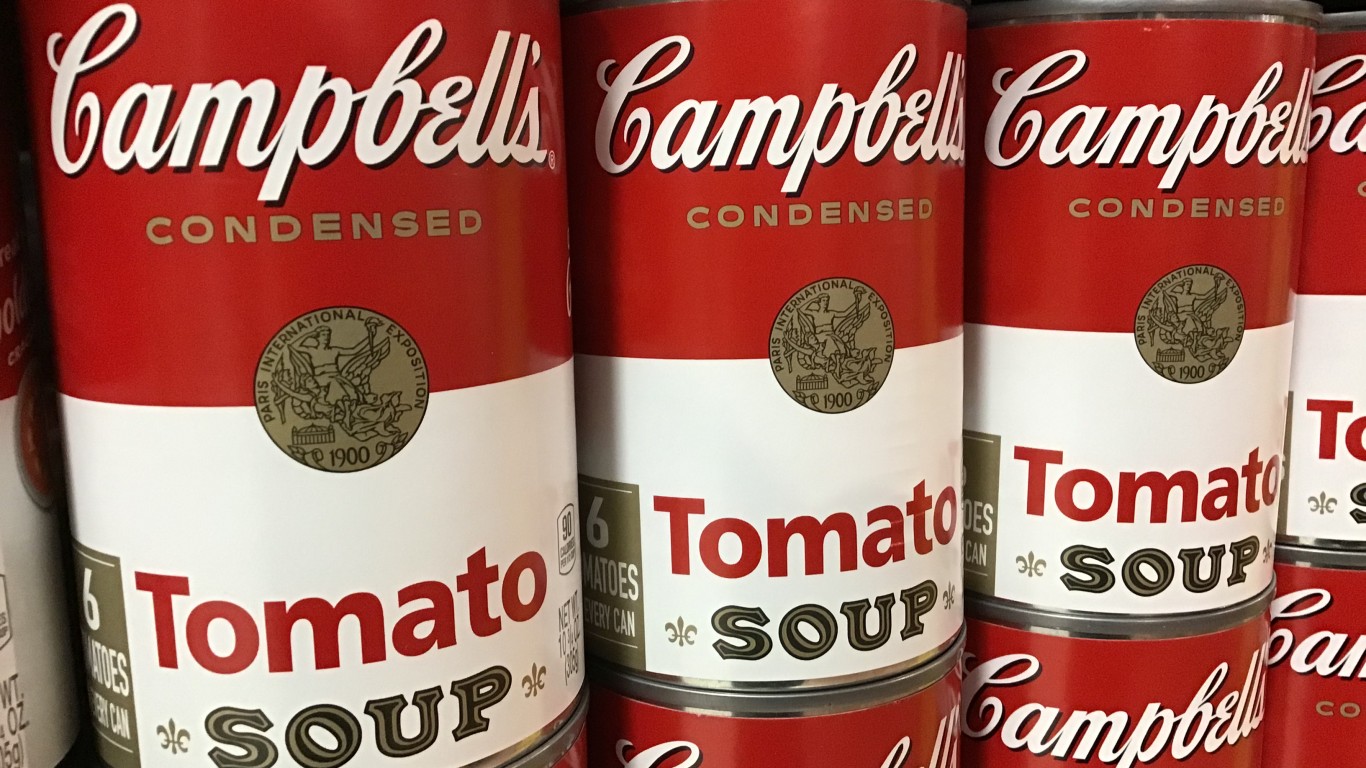
Shares are 25.04% lower than ten years ago and 37.11% below five years ago. At a forward P/E of 12, the market prices General Mills as a shrinking business. Peers trade similarly: Kraft Heinz (NASDAQ:KHC) at 11x forward earnings and 7.12% yield, Campbell’s (NASDAQ:CPB) at 12x and 7.95% yield.
On EV/EBITDA, General Mills is most expensive at 21.2 versus Kraft Heinz at 13.07 and Campbell’s at 10.13. Management said net debt is “just a touch” over four times EBITDA, against a three times target. Analysts are mixed: 12 holds, 3 strong buys, 1 buy, 4 sells, with an average target of $37.

Pricing Power Went Into Price Cuts
Fiscal 2026 saw price cuts. Revenue fell 5.45% to $18.42B. A $1.75B write-down, largely tied to Blue Buffalo, pushed the company to a net loss of $87.6M. CEO Jeff Harmening framed it as a reset:

“With our price investment work behind us, our focus in fiscal 2027 is to improve our topline growth by driving a step change in the remarkability of our brands.”
The reset has not yet paid off. In fiscal Q1 2027, organic sales were essentially flat and adjusted gross margin fell 90 bps to 33.3%. COO Dana McNabb described the pricing approach:
“We will lean on mix. That’s the primary lever we want to use, but we’ll also continue to evaluate both trade and list pricing going forward.”
Management said stressed middle- and lower-income households keep waiting for products to go on sale. That behavior favors store brands, which appeal to shoppers who prioritize price over the label. Fruit snacks grew about 13%, but smaller rebel brands captured much of that growth. Management’s verdict: “We need to up our game there.”
Share Losses Are Narrowing, Pet Is Still Leaking
Some trends improve. Cereal’s share decline narrowed from 0.9 to 0.1. New products now represent 5% of net sales, up from 3%. Pet remains weak. Cat food rose double digits, but dog food fell high-single digits, with Wilderness falling faster.
Guidance Locks In Another Down Year
Fiscal 2027 guidance calls for adjusted EPS of $3.00 to $3.20, down from $3.55. Adjusted operating profit is expected to fall 13% to 8% in constant currency. The $750M savings target has to offset input-cost inflation running toward the top of a 4% to 5% range. CFO Kofi Bruce called the cost program “the primary bulwark against inflationary pressures.”
Guided EPS covers the $0.61 quarterly dividend, flat since June 2025. Buybacks fell to $500M from $1.2B.
Verdict: A Value Trap for Anyone Expecting a Rebound
General Mills is a value trap. The company reports 127 consecutive years of continuous dividends, and the payout looks secure. But the yield compensates for falling profits, a frozen dividend, contracting buybacks, and above-target leverage. Kraft Heinz and Campbell’s offer similar yields at lower debt-adjusted valuations. Watch whether organic sales turn positive, the Wilderness pet line steadies, and leverage falls. Until all three improve, the yield remains the stock’s main source of support.
Dividend-heavy consumer staples with 100+ year payout runs are exactly the kind of names we screened for in a free Dividend Kings report, which ranks ten of them by valuation here: free report.
Contact [email protected] for any questions or corrections.
Chris Lange is a financial and geopolitical writer with more than a decade of experience covering a myriad of topics. He has published thousands of articles for 24/7 Wall St., with past coverage focused heavily on stocks, IPOs, healthcare, defense, global affairs, and technology.
His work has been quoted, or referenced by a number of outlets including Business Insider, USA Today, Yahoo Finance, MSN, The Motley Fool, and many other publications. A graduate of Southwestern University, he studied business with a focus on investments and has previous experience in banking and startups.
When not reading or writing the news, he is following his passion for Lacrosse, playing chess, or building solar projects with his dad.