Campbell’s Slashes Dividend 36% to Combat Debt From Rao’s Acquisition
Campbell's just made its most painful dividend decision in over two decades, and the debt load behind it raises a bigger question about whether even the new, smaller payout can survive what's coming in 2027.

This post may contain links from our sponsors and affiliates, and Flywheel Publishing may receive compensation for actions taken through them.
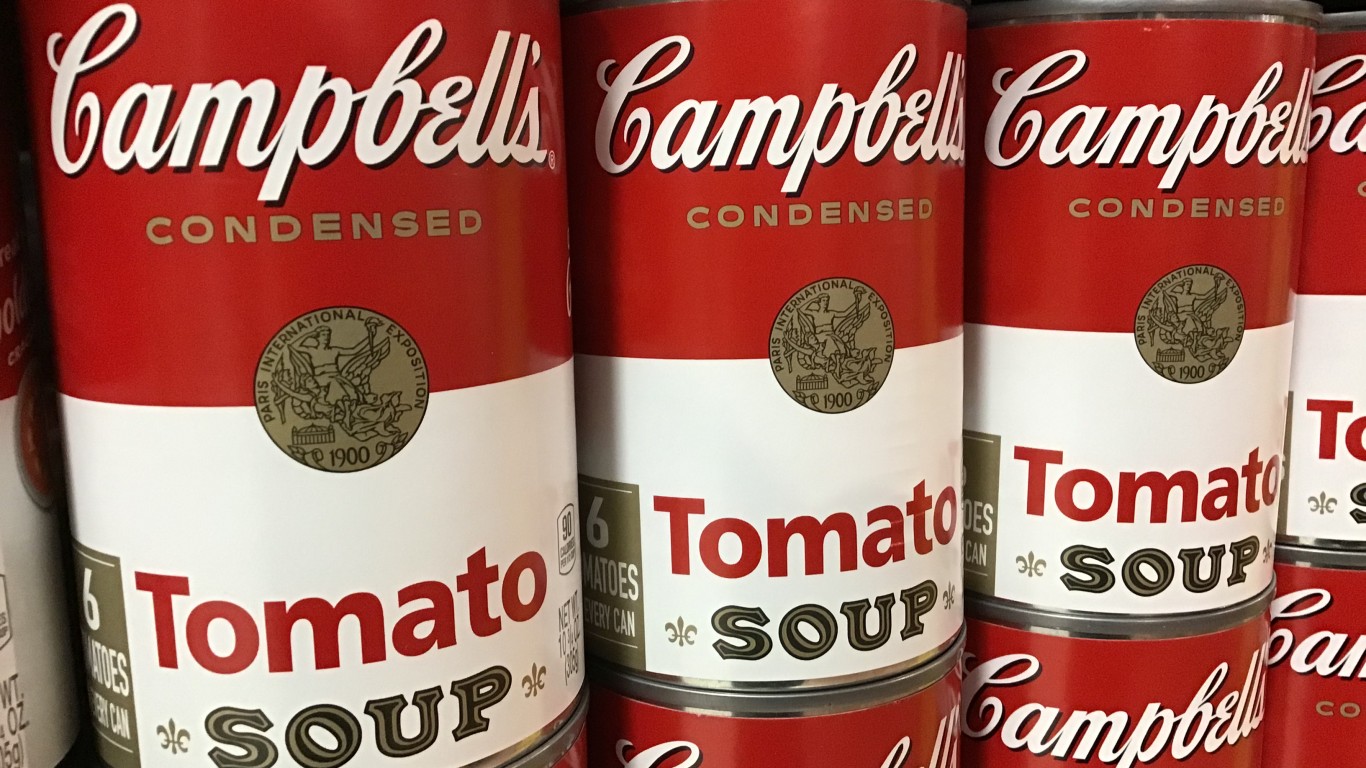
Campbell’s (NASDAQ:CPB | CPB Price Prediction) cut its quarterly dividend 36% from $0.39 to $0.25 per share on September 3, 2026 to pay down debt faster. The new $1.00 annualized payout yields about 5.3%. The stock is down 35.08% over the past year. The real question is whether the smaller payout will hold.

Chief Executive Mick Beekhuizen addressed the cut directly on the earnings call:
“Reducing the dividend is obviously a difficult decision, but it’s an unfortunately necessary decision that we needed to take.”
Smaller Dividend Is Much Easier to Cover
In fiscal 2026, Campbell’s generated $1.039 billion in operating cash flow and spent $361 million on capital expenditures, leaving about $678 million of free cash flow. Dividends took $470 million, or roughly 69% of it, leaving little for debt reduction.

At the new rate, the dividend costs about $298 million per year, roughly 44% of last year’s free cash flow. Management expects fiscal 2027 adjusted EPS of $1.65 to $1.80, so the dividend would take between 56% and 61% of earnings. In the fourth quarter, operating cash flow was only $200 million while capex was $291 million.
Acquisition Debt Forced the Cut
Total debt reached $7.137 billion at fiscal year-end, up from $4.689 billion in fiscal 2023 before the Sovos (Rao’s) acquisition. Debt stands at about 4.4 times EBITDA of $1.62 billion. The company holds just $394 million in cash. Bills due within a year total $3.336 billion, more than the $2.72 billion of current assets. CFO Todd Cunfer said fiscal 2027 interest expense will rise about $25 million. A $500 million bond comes due in March, and a second La Regina payment is due May 4, 2027.
Snacks Are Shrinking While Soup Holds Up
In the fourth quarter, Meals & Beverages increased organic sales 3% while Snacks fell 6% with operating earnings down 34%. Management expects fiscal 2027 organic sales to fall 4% to 2%. Campbell’s raised prices on about 60% of its portfolio and plans for elasticity of 1.5 times, expecting lower volume.
“We need to protect those margins. We need to take some unfortunate pricing activities to make the math work on our P&L.”
Other packaged food companies face similar pressure. General Mills (NYSE:GIS) yields 7.58% with trailing EPS of -$1.64. Kraft Heinz (NASDAQ:KHC) yields 7.33% with trailing EPS of -$2.89 and cut its dividend in 2019. Both still pay yields above 7% while reporting GAAP losses. Campbell’s has adjusted its payout to match its finances.
Verdict: Safe at $0.25, but Don’t Count on Raises
The new dividend is safe, using well under half of last year’s free cash flow. Raises are unlikely until debt goes down and everything settles. The quarterly payment reached $0.39 in January 2025, but that progress is gone. Watch adjusted EPS against the $1.65 bottom of guidance. Inflation at 5% to 6% and weakening Snacks could pressure earnings below that floor, threatening safety.
Contact [email protected] for any questions or corrections.
Chris Lange is a financial and geopolitical writer with more than a decade of experience covering a myriad of topics. He has published thousands of articles for 24/7 Wall St., with past coverage focused heavily on stocks, IPOs, healthcare, defense, global affairs, and technology.
His work has been quoted, or referenced by a number of outlets including Business Insider, USA Today, Yahoo Finance, MSN, The Motley Fool, and many other publications. A graduate of Southwestern University, he studied business with a focus on investments and has previous experience in banking and startups.
When not reading or writing the news, he is following his passion for Lacrosse, playing chess, or building solar projects with his dad.