Cramer Says the Snack Business Is Bad. Mondelez and Smucker Did Not Get the Message.
Jim Cramer called Campbell's snack quarter a nightmare and warned the whole category is broken, but two other packaged food giants reported something very different this week and raised their dividends to prove it.

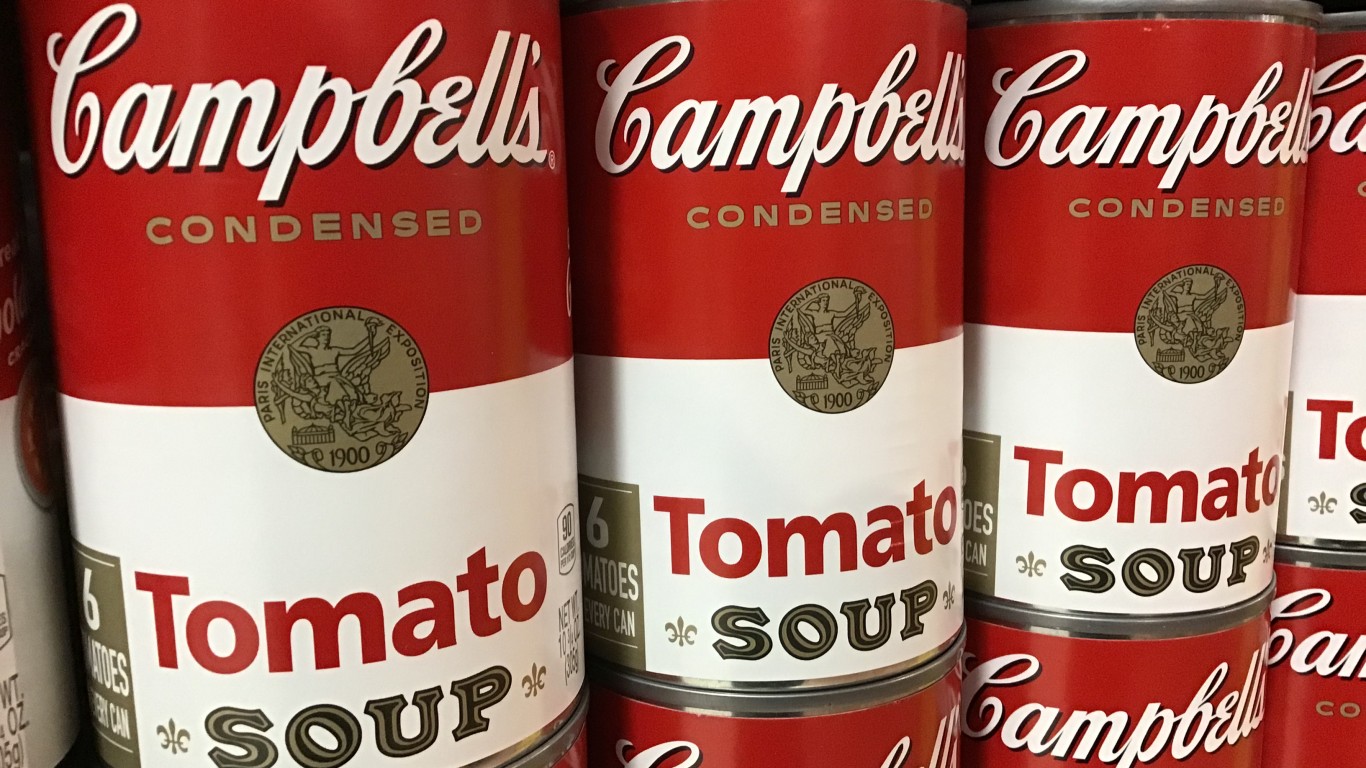
Campbell’s (NASDAQ:CPB | CPB Price Prediction) declared a new quarterly dividend of $0.25 per share on September 3, 2026, down from the prior rate of $0.39 per share that had been paid across the preceding quarters. For income-focused shareholders, that is the headline. A dividend cut from a shelf-stable food company signals that management would rather retain cash to pay down debt than defend a payout it has grown comfortable with. Campbell’s said the reset is designed to accelerate debt reduction and strengthen the balance sheet.
Jim Cramer put it in less measured terms on his CNBC Mad Dash segment. His verdict on the quarter: “This is a nightmare. … This is a nightmare situation.” That framing is fair for Campbell’s but should not be taken as a verdict on packaged food in general.
Campbell’s: The Numbers Behind Cramer’s Verdict
Campbell’s reported fiscal Q4 2026 with adjusted EPS of $0.39 on net sales of $2.14 billion, down 7.9% year over year. The GAAP line was a loss of $0.23 per share after $117 million in trademark impairment charges on Cape Cod and Kettle Brand and $75 million in restructuring. The 8-K filing shows the Snacks segment carried the pain: revenue of $950 million, organic sales down 6%, and segment operating earnings down 34%.

Cramer flagged the breadth of the damage: “The snack business is bad. The soup business is bad. I don’t even know what to say.” He added, “This is a brand that should have just gone away. And yet we all know it. We all know Campbell’s.” On the payout, Cramer confirmed the mechanical read: “Okay, it was a bad quarter and they’re slashing the dividend.” Cramer’s concern extended beyond one name. In the same segment he noted, “Tyson down six. They do cut the guide on this. Collapse in beef keeps coming back to beef.”
The price action confirms it. Campbell’s stock is down 20.6% year to date and 34.4% over one year, closing at $22.13. The Wall Street Journal reported the company is cutting 13% of its salaried workforce as part of the turnaround. Management has also outlined a $500 million enterprise cost savings program through FY2030 and guided FY2027 adjusted EPS to $1.65 to $1.80.
Mondelez: The Snack Story Cramer Did Not Tell
Mondelez (NASDAQ:MDLZ) is the global pure-play snack company behind Oreo, Ritz, Milka, Cadbury, and Toblerone. Q2 2026 delivered adjusted EPS of $0.73 vs. $0.68 consensus on revenue of $9.36 billion, up 4.1%. Management raised FY2026 organic revenue growth guidance to at least 2% and hiked the dividend 4%. CEO Dirk Van de Put told investors emerging-market snacking is “a very structural situation. It’s not cyclical.”

Shares are up 14.2% year to date, ahead of the 13.2% gain in the S&P 500 ETF. One caveat: the one-year figure is just 0.2% higher. Cocoa costs remain a swing factor.
J.M. Smucker: The Strongest Legacy Food Name
J.M. Smucker (NYSE:SJM) sells into the same American grocery aisles as Campbell’s, with Folgers, Dunkin’, Café Bustelo, Jif, Uncrustables, Smucker’s, Milk-Bone, and Hostess. Q1 FY2027 adjusted EPS was $3.24, compared with a $2.22 consensus, on revenue of $2.22 billion, aided by roughly $115 million in tariff refunds. Management raised FY2027 adjusted EPS guidance to $10.50 to $11.00 and lifted the quarterly dividend to $1.12.
The stock is up 31.4% year to date and 14.7% over one year, and it advanced 9.4% in the past month. The soft spot inside the portfolio is Sweet Baked Snacks (Hostess), where revenue fell 7% to $236.5 million, so the snack-weakness thesis has a landing spot even at a winning name.
Packaged Food Is Splitting, Not Sinking
Organic sales strip out the effects of acquisitions, divestitures and currency, so the number reflects volume and price on the products a company actually still sells. On that basis, Campbell’s Snacks fell 6% while Mondelez raised its full-year organic revenue outlook. The category is being repriced downward for companies losing shelf momentum, and rewarded for those with pricing power, innovation, and coffee or global exposure. Uncrustables at Smucker and Oreo internationally do not care what happened to Kettle Brand.
For an income-focused investor who already owns a legacy shelf-brand name, the Campbell’s dividend reset is the signal that matters. Management confidence is now aimed at the balance sheet, not the payout. Campbell’s telegraphed most of the warning signs before the cut arrived (the same red flags we walked through in a free dividend trap guide). The category still has payers doing the opposite: Mondelez and Smucker each raised its dividend. The lesson from this week is to examine which company you hold, not to write off the entire category.
Contact [email protected] for any questions or corrections.
Trey has been an editor and author at 24/7 Wall St. for more than a decade, where he has published thousands of articles analyzing corporate earnings, dividend stocks, short interest, insider buying, private equity, and market trends. His comprehensive coverage spans the full spectrum of financial markets, from blue-chip stalwarts to emerging growth companies.
Beyond 24/7 Wall St., Trey has created and edited financial content for Benzinga and AOL's BloggingStocks, contributing additional hundreds of articles to the investment community.
Trey's editorial expertise extends across multiple publishing environments. He served as production editor at Dearborn Financial Publishing and development editor at Kaplan, where he helped shape financial education materials. Earlier in his career, he worked as a writer-producer at SVE. His freelance editing portfolio includes work for prestigious clients such as Sage Publications, Rand McNally, the Institute for Supply Management, the American Library Association, Eggplant Literary Productions, and Spiegel.
Outside of financial journalism, Trey writes fiction and has been an active member of the writing community for years, moderating workshop sessions at regional conventions.