Two REITs Yield Over 4%. One Is a Dividend Machine, the Other Is a Gamble
Two REITs sit within a half-point of each other on yield, but one funds its dividend from locked-in contracts while the other depends on a commodity market that nobody can predict. Choosing the wrong one could quietly wreck a retirement…

This post may contain links from our sponsors and affiliates, and Flywheel Publishing may receive compensation for actions taken through them.
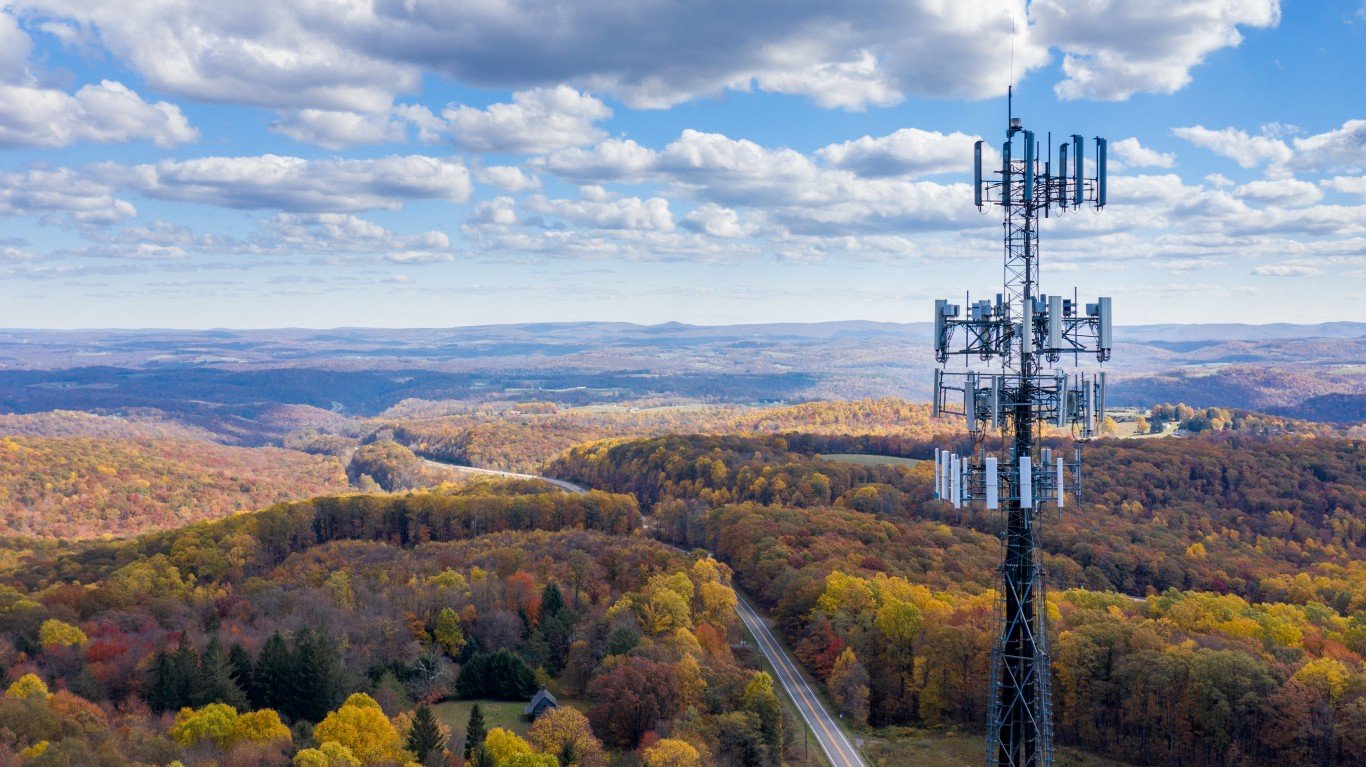
American Tower (NYSE:AMT) or Weyerhaeuser (NYSE:WY): which REIT dividend better suits an investor saving for retirement? For income, would you rather be paid from long contracts with built-in rent increases, or from a commodity whose price nobody can predict? The two yields are close, at 4.24% for American Tower and 4.52% for Weyerhaeuser, so the headline number tells you very little about the difference between them.
Where the Cash Comes From Decides Everything Else
American Tower leases space on cell towers to wireless carriers and runs CoreSite data centers. Those tenants sign multiyear leases with annual increases. As a result, Q2 2026 revenue rose 4.7% YoY to $2.75B even after $63M in DISH cancellations. CoreSite adds growth on top. Data center revenue grew 13.4% to $297M. Management raised its full-year data center outlook to approximately 15% growth, saying “nine of the top 10 AI companies” are deployed in its facilities.
Weyerhaeuser owns timberland and mills, and its customers pay market prices for logs, lumber and OSB. Lumber realizations fell 11% QoQ in Q3 2025, then rose 13% QoQ in Q1 2026. The company’s CFO said a $10 change in commodity prices translates to approximately $50 million of annual EBITDA. Management described housing as “largely stuck in second gear” and called OSB “a slog.” Winner: American Tower.
Payout Coverage Shows Which Dividend Can Keep Rising
For REITs, the right coverage gauge is adjusted funds from operations (AFFO), which adds back non-cash depreciation and deducts recurring capital spending. American Tower guides 2026 AFFO to $11.00 to $11.17 per share against an annualized dividend of $7.16, a payout of roughly 64% to 65%. The quarterly dividend rose from $1.62 in 2024 to $1.70 in 2025 to $1.79 in 2026. Management calls a growing dividend “first and foremost” in capital allocation, and net leverage of 4.9x sits inside its 3 to 5 times target.
Weyerhaeuser pays a $0.21 quarterly base, or $0.84 annualized, under a base-plus-variable framework built around adjusted funds available for distribution (FAD). The variable piece is unpredictable: $1.45 in February 2022, $0.90 in February 2023, and only $0.14 in February 2024. Coverage is thin. Operating cash flow of $562 million in 2025 fell short of $606 million in dividends, and Q4 2025 operating cash flow was negative $114 million. Winner: American Tower.
Weyerhaeuser Trades at the Deeper Discount to Its Own History
Weyerhaeuser at $18.61 sits just above its 52-week low of $18.25 and well under its 200-day average of $24.11. Shares are down 19.35% this year and 11.64% over ten years, and they trade at 1.642 times book. The trailing P/E of 29 looks rich only because earnings sit near a cyclical low: FY2025 EPS was $0.20.
American Tower at $166.18 trades between a 52-week range of $158.35 to $192.15, below its 200-day average of $176.73, at a trailing P/E of 23. Shares are down 25.37% over five years while the quarterly dividend rose from $1.31 in September 2021 to $1.79. That stock is cheap, but Weyerhaeuser is priced closer to the bottom of its range. Winner: Weyerhaeuser.
Verdict: American Tower Earns the Retirement Slot
American Tower wins for the retirement-focused income investor. Its payout is funded by rising contracted rent. It is covered by AFFO with room to spare, and raised year after year (the kind of never-sell-a-share income stream we built a free dividend ladder guide around, here). Management also called 2026 a “trough” for AFFO growth before a return to the “mid to high single-digit range,”. So the income stream should keep growing.
Weyerhaeuser could become the better choice if mortgage rates fall from the mid 6% range and lumber and OSB prices recover together, which would restore cash flow and revive variable dividends from a low share price. Until that happens, its dividend depends on a housing cycle that management can’t control, so watch American Tower’s Q3 report for confirmation that AFFO growth is turning higher heading into 2027.
Contact [email protected] for any questions or corrections.
Chris Lange is a financial and geopolitical writer with more than a decade of experience covering a myriad of topics. He has published thousands of articles for 24/7 Wall St., with past coverage focused heavily on stocks, IPOs, healthcare, defense, global affairs, and technology.
His work has been quoted, or referenced by a number of outlets including Business Insider, USA Today, Yahoo Finance, MSN, The Motley Fool, and many other publications. A graduate of Southwestern University, he studied business with a focus on investments and has previous experience in banking and startups.
When not reading or writing the news, he is following his passion for Lacrosse, playing chess, or building solar projects with his dad.