Jim Cramer Calls the Chip Trade Broken, but Semiconductors Are Still Up 62% in 2026
Jim Cramer declared chips a broken trade and software the new king of AI, but the numbers behind his argument depend entirely on where you start the clock. One hedge fund collapse, two ETFs, and a very convenient start date…


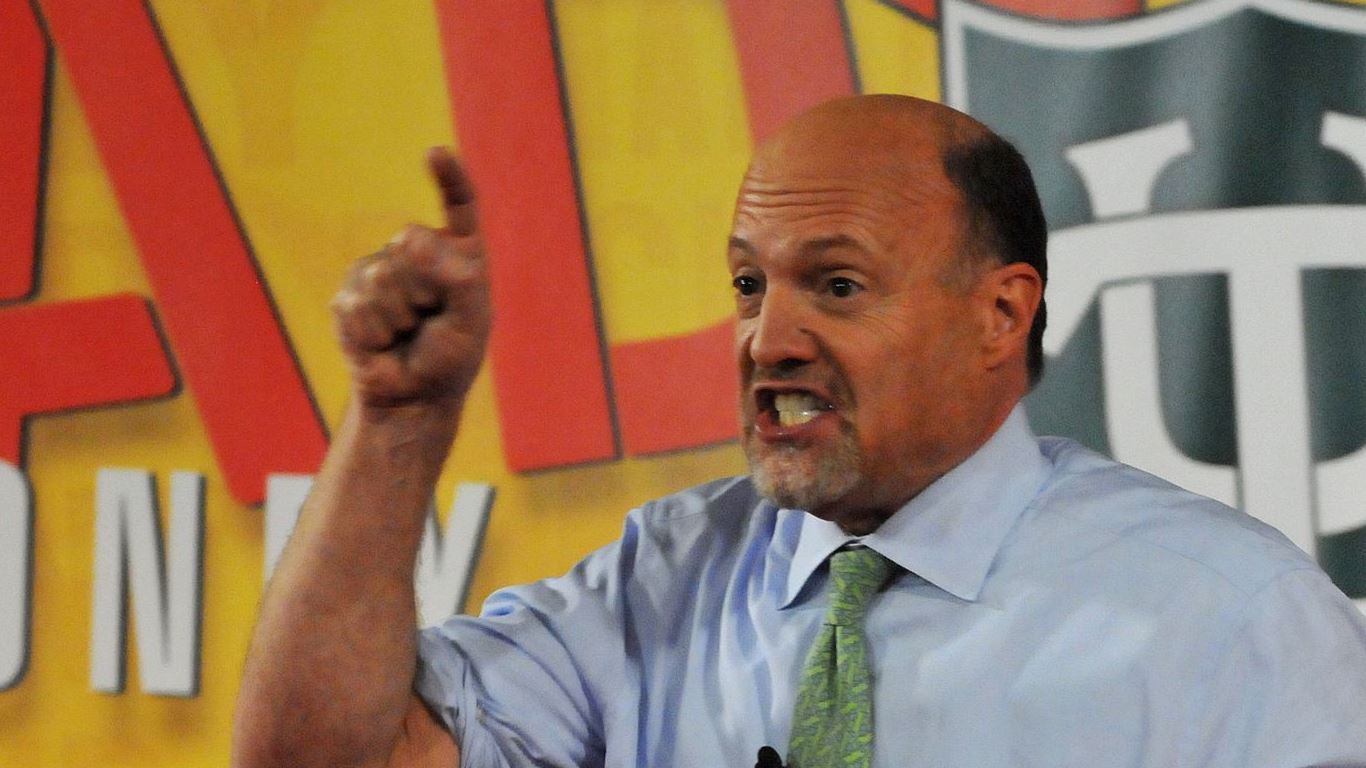
On the October 12 episode of Mad Money, Jim Cramer said leadership in the artificial intelligence trade has moved out of chips and back into software: “Software is once again king while hardware has reverted to pawn.” In his view, the software rally since the end of June marks a real change in which part of AI leads the market. Both groups traded lower before the open Tuesday morning.
Cramer used two funds to make his case. The VanEck Semiconductor ETF (NASDAQ:SMH) holds chip designers, manufacturers, and equipment makers. As of June 30, its largest positions were the industry’s biggest chipmakers. The iShares Expanded Tech-Software Sector ETF (CBOE:IGV) holds software companies and charges an expense ratio of 0.38%. Many 401(k) investors own one or both of these holdings through tech or growth funds.
He Is Right About His Window
Cramer said that since the end of June, the software fund was up 23%. In the same remarks, Cramer put the chip fund down 10%. The actual figures from June 30 through October 13 were close: the software fund rose 22.4% and the chip fund fell 11.1%. If anything, he slightly understated how much chips have declined. Microsoft (NASDAQ:MSFT | MSFT Price Prediction) rose 45.4% from June 30 to October 12, which also fits his software-first story.
Then Zoom Out
Over a longer stretch, the ranking flips. From December 31, 2025, through October 13, the chip fund gained 61.9% while the software fund gained 5.0%. From October 10, 2025, through October 13, 2026, the chip fund rose 79.8% and the software fund fell 1.0%.
The choice of start date drives the entire argument. Begin the count at a summer peak in chips, and software looks dominant. Begin it in January, and chips still lead by a wide margin. The summer move is best understood as a giveback within a rally that semiconductors still lead.
Hedge Fund Blowup Behind the Rotation
Cramer blames part of the rotation on the collapse of the Situational Awareness hedge fund. He said: “His biggest positions, Bloom Energy, SanDisk, Micron, had run too much and succumbed to profit taking.” Cramer claimed the fund lost 67% of its money in July. That figure comes solely from his account and has not been independently confirmed.
When a fund holding a concentrated set of popular AI hardware stocks has to sell quickly, prices can fall whether or not the businesses have changed. From June 30 to October 12, Micron Technology (NASDAQ: MU) fell 14.3%, SanDisk (NASDAQ: SNDK) pulled back 34.6%, and Bloom Energy (NYSE:BE) fell 13.35%.
The operating numbers point the other way. Micron reported fiscal fourth-quarter revenue of $54.2 billion and guided to $61.5 billion, plus or minus $1.5 billion, for the current quarter. It says more than 75% of its calendar 2027 output is already committed. SanDisk guided to $10.30 billion to $10.80 billion in revenue, and Bloom raised its 2026 revenue outlook to $3.9 billion to $4.2 billion. Some of the pressure has a different source: a report that Chinese rival CXMT is developing a new chip weighed on Micron on Monday.
A Bullish Counterweight on Bloomberg
On the same afternoon, a guest strategist on Bloomberg Businessweek said the opposite: “Not complacency. What I see is too many people worried about what might happen. Data center demand might collapse, the borrowing that the hyperscalers have been doing… none of that looks like it’s likely to happen.” Microsoft, the biggest name in software, supports that view. The company spent $115.95 billion on capital expenditures in fiscal 2026, and CFO Amy Hood said on its July earnings call that “demand continues to exceed available supply.”
That spending has to land somewhere, which is why we pulled together seven suppliers behind the AI expansion, from power to cooling to networking, in a free report you can grab here.
What Settles the Debate
The summer decline looks like a forced-selling event layered on top of fundamentals that are still improving. Microsoft is the test to watch. It guided Azure growth to about 45% in constant currency for its fiscal first quarter and said fiscal 2027 capex will grow. If Microsoft misses that pace or cuts its spending plan, Cramer’s call gains real support. If both hold, chip spending stays intact, making software’s reign as “king” short-lived.
Contact [email protected] for any questions or corrections.
Trey has been an editor and author at 24/7 Wall St. for more than a decade, where he has published thousands of articles analyzing corporate earnings, dividend stocks, short interest, insider buying, private equity, and market trends. His comprehensive coverage spans the full spectrum of financial markets, from blue-chip stalwarts to emerging growth companies.
Beyond 24/7 Wall St., Trey has created and edited financial content for Benzinga and AOL's BloggingStocks, contributing additional hundreds of articles to the investment community.
Trey's editorial expertise extends across multiple publishing environments. He served as production editor at Dearborn Financial Publishing and development editor at Kaplan, where he helped shape financial education materials. Earlier in his career, he worked as a writer-producer at SVE. His freelance editing portfolio includes work for prestigious clients such as Sage Publications, Rand McNally, the Institute for Supply Management, the American Library Association, Eggplant Literary Productions, and Spiegel.
Outside of financial journalism, Trey writes fiction and has been an active member of the writing community for years, moderating workshop sessions at regional conventions.