AI Isn’t Coming for American Jobs Someday. The Fed Says It’s Already Happening.
The Federal Reserve's latest economic assessment reveals something investors and workers were not supposed to see this soon: AI is already reshaping who gets hired and who never does, and the consequences for household spending could unravel the very profits…

For years, artificial intelligence has been sold as the next great productivity revolution. Businesses would produce more with fewer resources, profits would rise, and the economy would benefit from a technological leap comparable to the arrival of the internet. Investors poured money into companies building the infrastructure to make it happen.
But there’s another side to that equation. When businesses can produce more without adding workers, the productivity gains Wall Street celebrates may come at the expense of American paychecks. The Federal Reserve’s latest assessment of economic conditions suggests that trade-off is no longer theoretical. It’s already influencing hiring decisions across the country.
The Fed Finds AI Is Already Changing Employment
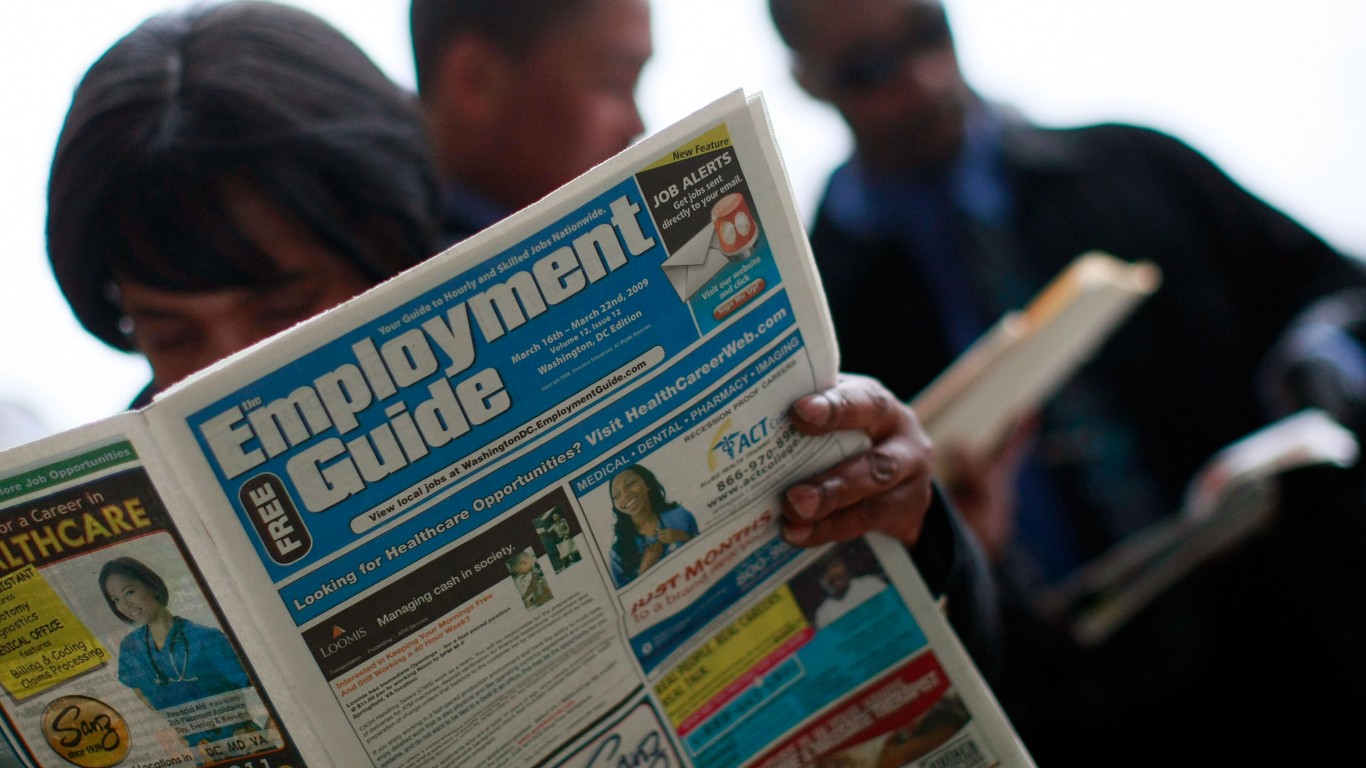
The Federal Reserve’s October 2026 Beige Book offers one of the clearest indications yet that artificial intelligence is affecting American jobs.
In five of the Fed’s 12 districts, businesses reported using AI-related productivity improvements to reduce staffing through attrition, delay hiring, or anticipate needing fewer workers.
That’s roughly 42% of Federal Reserve districts reporting some form of AI-related labor restraint.
Importantly, the Beige Book doesn’t say AI caused widespread layoffs in five districts. Some businesses are simply leaving positions vacant when employees depart. Others are postponing new hires because existing workers can accomplish more with AI tools.
For employees, however, the symantics between losing an existing job and never getting hired for a new one can become increasingly important when searching for work.
The Federal Reserve’s findings also suggest that AI’s impact may be showing up in hiring decisions before it becomes obvious in unemployment figures. The warning comes as AI was cited as a factor in more than 120,000 announced job cuts through September, according to figures discussed in a recent report on the growing impact of automation.
The implications reach beyond the technology industry. Minneapolis Fed contacts reported that AI wasn’t necessarily triggering layoffs but was suppressing new job creation. Meanwhile, a Dallas staffing company reported using AI agents to conduct more than 180 hours of interviews in just two days, leaving employees to review the results.
Wall Street’s AI Productivity Boom Has a Cost
For shareholders, reducing labor expenses can improve profit margins. A company that handles more customer requests, processes more transactions, or writes more software without expanding payroll can potentially earn more on each dollar of revenue.
That helps explain why the technology industry is pouring hundreds of billions of dollars into AI infrastructure.
Goldman Sachs estimated that Amazon (NASDAQ:AMZN | AMZN Price Prediction), Microsoft (NASDAQ:MSFT), Alphabet (NASDAQ:GOOGL), and Meta Platforms (NASDAQ:META) were collectively on pace to spend approximately $757 billion on capital expenditures in 2026.
The spending creates demand for Nvidia (NASDAQ:NVDA) processors, data centers, and electricity, but Amazon and Meta are also pursuing job reductions while investing billions in AI.
Replacing some routine tasks with software offers one path. Reducing the need to hire additional employees offers another.
Investors are already distinguishing between companies that can turn AI spending into revenue and those still waiting for returns, as Microsoft’s and Meta’s contrasting financial results demonstrate.
The Bigger Threat Is to Consumer Spending
The Fed’s report contains another warning. Most districts described little change in employment, while consumer spending was generally flat. More than half reported that spending depended heavily on higher-income households. That creates an uncomfortable economic possibility.
AI could help individual companies increase profits while limiting the hiring and wage growth that support consumer demand. Businesses might become more efficient even as some households struggle to find employment.
Granted, technological progress also creates new occupations. The Dallas Fed’s recruiting example demonstrates that automation can generate work supervising AI systems.
And the connection between AI and technology-sector layoffs isn’t always straightforward. Companies also respond to weak demand, financing costs, and previous overhiring.
Still, the Fed’s findings indicate employers are already incorporating AI into decisions about how many workers they need.
Key Takeaway
In short, the AI revolution is beginning to deliver the productivity gains investors have been promised, but the benefits may not be distributed evenly.
For investors, the strongest businesses will be those converting AI investment into measurable earnings growth without undermining demand for their products. For the broader economy, the concern is more immediate. If companies increasingly grow without hiring, the relationship between corporate profitability and household prosperity could weaken.
The Fed’s October Beige Book suggests that process has already begun.
Contact [email protected] for any questions or corrections.
After two decades of patrolling the dark corners of suburbia as a police officer, Rich Duprey hung up his badge and gun to begin writing full time about stocks and investing. For the past 20 years, he’s been cruising the markets looking for companies to lock up as long-term holdings in a portfolio while writing extensively on the broad sectors of consumer goods, technology, and industrials. Because his experience isn’t from the typical financial analyst track, Rich is able to break down complex topics into understandable and useful action points for the average investor. His writings have appeared on The Motley Fool, InvestorPlace, Yahoo! Finance, Money Morning, and, of course, 24/7 Wall St. He has been featured in both U.S. and international publications, including MarketWatch, Financial Times, Forbes, Fast Company, and USA Today.