AI Becomes Top Reason For Job Cuts
New data on job cuts looks reassuring on the surface, but buried in the numbers is a figure that reveals how fast AI is reshaping who gets to keep their job and who faces an uncertain road to finding another…


Challenger, Gray & Christmas posts data on US jobs every month. In September, cuts totaled 43,281. That is down 20% from 54,064 in the same month last year. This further confirms that the US job market is stable.
The year-to-date figures, however, showed a troubling trend. “Through September, employers have announced 573,195 job cuts, down 39% from the 946,426 cuts announced in the first nine months of 2025.” However, AI drove most of those cuts. They totaled 120,136, which is 21% of the total YTD figure.
McKinsey issued a report earlier this week—“Workforce in motion: Skills and pathways to future jobs in the United States.” The figures were grim: “There will be millions of AI-related job cuts. Some of those will find work. Others will struggle mightily to do so. “We estimate that roughly 11 million workers in declining occupations may need to transition to new jobs, ranging from six million to 16 million depending on the pace of automation adoption and its impact on labor demand.”
Almost half of the McKinsey figure faces an “unpaved path” to get new employment. Most of these, the consulting firm said, are in office and administrative support, retail and sales, and transportation and logistics occupations. Seventy percent will need to reinvent themselves, and it is unclear how that will happen or whether, for many people, it will work at all.
The debate about AI and jobs is getting more heated, as it’s clear that tech sector employees are taking a beating, particularly coders. People who think job loss is inevitable see banking as another sector where employees will struggle. The same is true in law and accounting firms, where many workers are well paid.
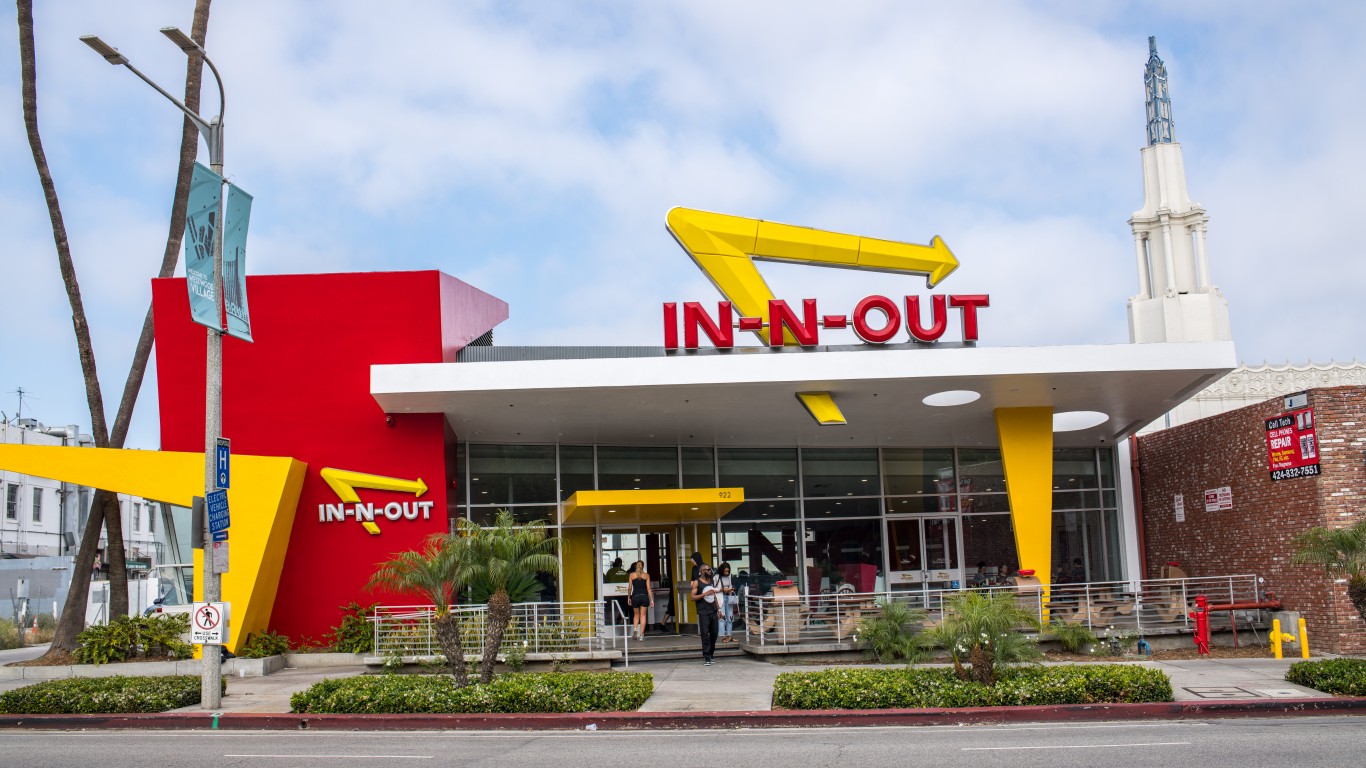
The large pool of employees who could be replaced is in sectors that employ millions. This includes the largest retailers and fast-food companies, as well as any other sector with “customer-facing” workers. Last year, The New York Times said Amazon plans to replace half a million jobs. As Amazon grows, its management believes, these jobs will disappear between now and 2033. Its warehouses might not have any workers at all.
The other side of the AI argument is that workers will be “retrained.” Bill Gates recently said the idea of retraining has little or no support.
Does the Challenger, Gray report have any value on its own? Not much, until it is added to the list of AI job destruction arguments.
Contact [email protected] for any questions or corrections.
Douglas A. McIntyre is the co-founder, chief executive officer and editor in chief of 24/7 Wall St. and 24/7 Tempo. He has held these jobs since 2006.
McIntyre has written thousands of articles for 24/7 Wall St. He is an expert on corporate finance, the automotive industry, media companies and international finance. He has edited articles on national demographics, sports, personal income and travel.
His work has been quoted or mentioned in The New York Times, The Wall Street Journal, Los Angeles Times, The Washington Post, NBC News, Time, The New Yorker, HuffPost USA Today, Business Insider, Yahoo, AOL, MarketWatch, The Atlantic, Bloomberg, New York Post, Chicago Tribune, Forbes, The Guardian and many other major publications. McIntyre has been a guest on CNBC, the BBC and television and radio stations across the country.
A magna cum laude graduate of Harvard College, McIntyre also was president of The Harvard Advocate. Founded in 1866, the Advocate is the oldest college publication in the United States.
TheStreet.com, Comps.com and Edgar Online are some of the public companies for which McIntyre served on the board of directors. He was a Vicinity Corporation board member when the company was sold to Microsoft in 2002. He served on the audit committees of some of these companies.
McIntyre has been the CEO of FutureSource, a provider of trading terminals and news to commodities and futures traders. He was president of Switchboard, the online phone directory company. He served as chairman and CEO of On2 Technologies, the video compression company that provided video compression software for Adobe’s Flash. Google bought On2 in 2009.