Japan Is Putting Up to $21 Billion Into New GlobalFoundries Chip Plants in New York
Japan is writing a multibillion-dollar check to build chip factories on American soil, but GlobalFoundries gets to run them without paying for them. The catch is buried in fees the company has not disclosed and a government equity stake that…


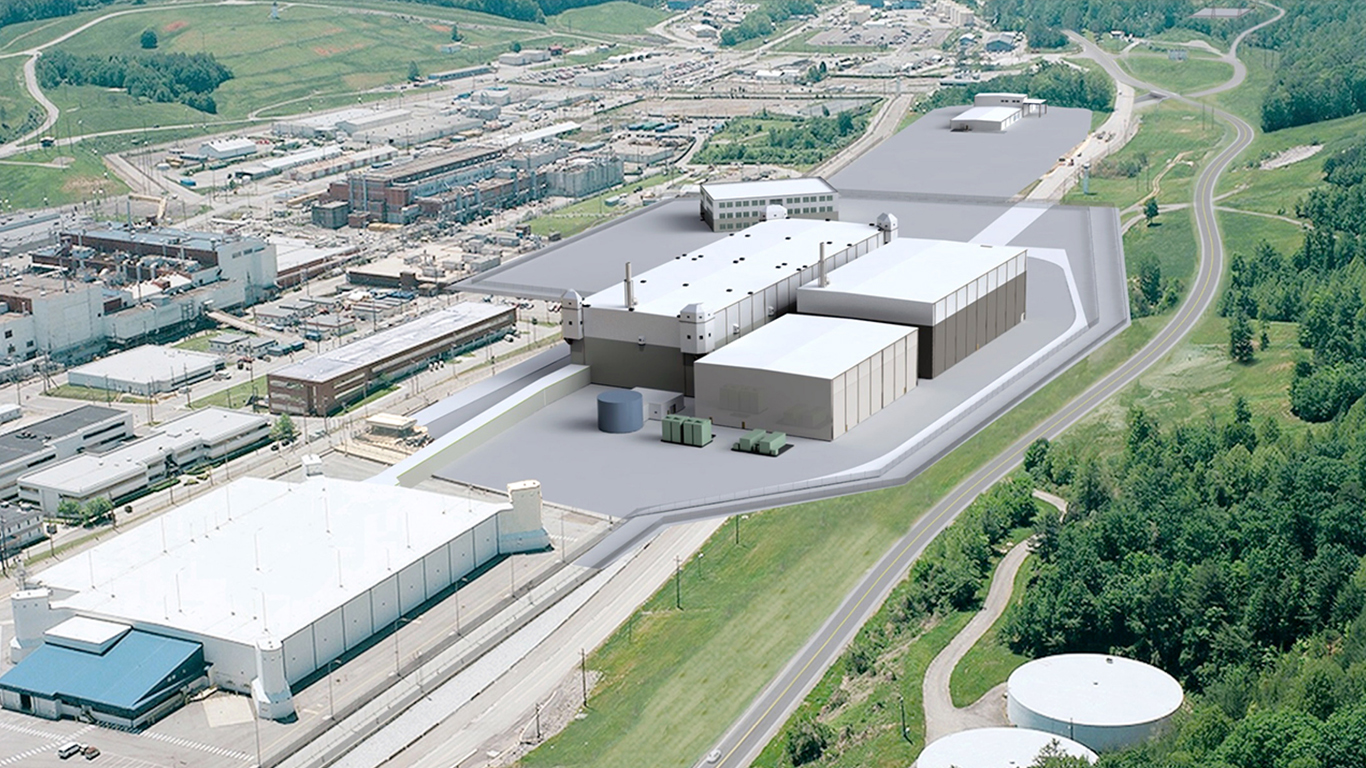
A chipmaker with a market value of $26.86 billion was named on October 14, 2026, as the operator of two New York chip plants. The plants have a funding ceiling of up to $21 billion, and Japan is providing the money.
GlobalFoundries (NASDAQ:GFS | GFS Price Prediction) was selected for two new factories. The company will serve as technology provider and operator at its Malta, New York, site under a United States and Japan initiative. The stock rose 4.80% to close at $48.94 on a day the Nasdaq fell 1.9%.
This is the capital-light version of the American chip expansion. GlobalFoundries avoids the construction bill, but someone else owns most of the upside, so what the deal is worth to you depends on fees the company has not disclosed.
Japan Pays, and GlobalFoundries Runs the Plants
Japan provides the capital. GlobalFoundries supplies the process technology, runs the plants, and makes fees plus licensing income.
About $10 billion is tied to a first fab expected online in 2029, with site work set to begin later in 2026. A second fab carries about $10 billion more, and that amount is described as an upper limit. At full operation, each would add about 900,000 wafers a year, and the project accounts for about 27,000 construction and ecosystem jobs.
Fee income usually carries higher margins than owning a plant because the operator carries no depreciation on buildings or tools, but an operator also gives up the advantage that comes when a full fab spreads its fixed costs over more wafers. That advantage is what pushed gross margin to 28.3% in the second quarter.
Washington Takes a Stake in Exchange for Redirected Subsidies
GlobalFoundries will reallocate its existing $955 million CHIPS Act award toward silicon photonics, silicon-germanium and advanced packaging in Malta and in Burlington, Vermont, under a separate agreement. In return, the Commerce Department receives an equity stake.
If the government receives newly issued shares, each existing share represents a smaller piece of the company, which is called dilution. The redirected money goes to the company’s fastest-growing area: Communications Infrastructure and Datacenter revenue grew 62.0% in the second quarter, and management said silicon-germanium is “oversubscribed throughout 2027.”
Specialty Chip Buyers Will Fill These Fabs
Renesas, Apple (NASDAQ:AAPL), Cirrus Logic (NASDAQ:CRUS) and General Motors (NYSE:GM) are accounted for as planning to use the capacity. They buy power, radio, sensor, and analog chips built on mature and specialty processes, where GlobalFoundries competes on features rather than the smallest transistors.
Demand for these chips follows a different cycle than AI accelerators. Automotive revenue fell 9.5% in the second quarter, so the factories depend on cars and phones as much as on data centers.
The $21 billion figure is a maximum, and the first plant won’t produce anything until 2029, though the company credited the deal to the President’s trade agreement with Japan, which means a future administration could revisit it.
Abu Dhabi’s Mubadala remains the majority owner, and only 148,421,000 of 557,419,000 shares are freely traded. Outside holders have little say over control, but buyers still bid the stock up against a falling market.
What the Japan Deal Means for GFS Valuation
The valuation supports a positive outlook because the stock trades at a forward P/E of 19, below its 200-day average of $54.67, and the consensus analyst target is $74.68.

Management expects silicon photonics revenue to “more than double in 2026”, so the stock rests on revenue the company already makes. The Japan factories add expansion that GlobalFoundries does not have to pay for.

This view is wrong if the first fab has not broken ground by December 31, 2026, or if the next earnings report still leaves out the fee structure and the size of the government stake. Falling below the 50-day average of $47.83 would show the market questions the deal.
Contact [email protected] for any questions or corrections.
Omor Ibne Ehsan is a writer at 24/7 Wall St. He is a self-taught investor with a focus on growth, cyclical, and dividend equities that have strong fundamentals, value, and long-term potential. He also has an interest in high-risk, high-reward investments such as penny stocks.