GlobalFoundries Can Profit From AI Without Making GPUs
GlobalFoundries just signed a $2 billion deal with TSMC, and it has nothing to do with making GPUs. Understanding exactly what they agreed to build reveals how AI chip profits flow to companies most investors overlook.


- GlobalFoundries’ agreement with TSMC establishes a substantial manufacturing role in the advanced AI packaging supply chain.
- The agreement expands GlobalFoundries’ AI exposure without requiring a return to leading-edge GPU fabrication.
- Continued investment in silicon interposers supports the packaging expansion discussed in my earlier glass article, while commercialization of glass follows a separate trajectory.
GlobalFoundries Expands Its Position in AI Manufacturing
In my September 28 247 article, “Nvidia’s Glass Packaging Push Could Reshape AI Chips,” I examined the implications of larger accelerator packages for substrate materials, interconnect density and manufacturing capacity. The underlying investment argument was that continued improvement in AI performance requires advances beyond transistor scaling. Integrating multiple logic dies and increasing HBM content place additional demands on the package, making its architecture and manufacturability increasingly consequential to accelerator economics.
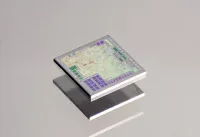
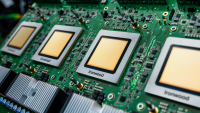
GlobalFoundries GFS | GFS Price Prediction has now announced a $2 billion manufacturing agreement with TSMC TSM to establish a U.S. supply of silicon interposers for TSMC’s CoWoS advanced packaging ecosystem. The agreement carries an initial five-year term, with capacity expansion at GlobalFoundries’ Malta, New York facility and volume production expected to begin ramping in the first half of 2028.
For GlobalFoundries, this represents an expansion into a manufacturing segment whose demand is linked to the development of increasingly complex AI accelerators. Its participation does not depend on manufacturing the leading-edge logic dies used by Nvidia NVDA or other accelerator designers. Instead, the company will supply components within the packaging infrastructure supporting those devices.
That distinction is important to the investment thesis. The value generated by AI semiconductor spending is distributed across manufacturing processes with different technology requirements, capital structures and competitive conditions. GlobalFoundries can expand its participation through specialized fabrication that complements TSMC’s leading-edge logic business, rather than competing directly for the same processor wafers.
Packaging Creates a Separate Manufacturing Opportunity
Advanced packaging has become a significant element of accelerator production because increases in compute capability must be accompanied by sufficient memory bandwidth and die-to-die connectivity. The package determines how effectively those components can be integrated, while manufacturing capacity determines whether a technically successful design can be delivered at the required volume.
Investors should therefore evaluate packaging as a distinct production requirement alongside logic fabrication and HBM supply. Additional wafer capacity does not necessarily produce a corresponding increase in finished accelerator shipments if interposer fabrication, assembly or testing remains constrained. Conversely, an expansion in packaging capacity cannot resolve a shortage of memory devices. Each investment addresses a particular requirement within the production chain.
The GlobalFoundries agreement is significant within that framework. It establishes a commercial relationship in the manufacture of components needed to support advanced packaging expansion. The opportunity is tied to the complexity and volume of packaged systems, rather than solely to the process node on which their processors are fabricated.
This also broadens the way investors should assess GlobalFoundries. Its AI exposure can develop through specialized manufacturing content associated with accelerator deployment. The relevant questions are how much business the company secures, how durable that business becomes across product generations, and whether it earns an adequate return on the capacity required to serve it.
Assessing the Agreement’s Financial Significance
According to Table 1, the agreement’s stated value divided by its initial five-year term produces a simple annual average of $400 million. For comparison, GlobalFoundries’ second-quarter 2026 revenue of $1.786 billion represents $7.144 billion when multiplied by four. The annual agreement average is approximately 5.6% of that annualized quarterly revenue base, establishing a useful measure of scale without implying a revenue-recognition schedule.
| Table 1. GlobalFoundries Agreement: Financial Scale Comparison | |
| Metric | Value |
| Stated agreement value | $2.000 billion |
| Initial agreement term | Five years |
| Agreement value divided by five years | $400 million annually |
| Reported GlobalFoundries revenue, Q2 2026 | $1.786 billion |
| Q2 2026 revenue multiplied by four | $7.144 billion |
| Simple annual agreement average relative to annualized Q2 revenue | 5.6% |
| Expected volume-production ramp | First half of 2028 |
| Source: The Information Network calculations using company disclosures | |
The comparison indicates that the agreement is financially meaningful relative to GlobalFoundries’ existing business. It does not establish that the company will recognize $400 million in each year, or that the entire amount will translate into incremental revenue relative to a previously anticipated manufacturing plan. Those distinctions require additional disclosure concerning shipments, pricing and the production schedule.
Profitability presents a separate issue. GlobalFoundries reported a second-quarter 2026 non-IFRS gross margin of 29.9%, but that corporate result should not be assigned to the new business without evidence concerning its cost structure. Interposer production will involve its own equipment requirements, process complexity, yields and utilization. The contribution during qualification and early production may differ materially from the economics achieved after the operation reaches a more established volume.
From an investor perspective, the more consequential question is whether the agreement creates a recurring position in TSMC’s packaging supply chain. A qualified manufacturing relationship that extends across product generations could have strategic value beyond the initial commitment. That possibility strengthens the relevance of the agreement, although its eventual financial benefit must be demonstrated through operating performance.
The Production Ramp Defines the Execution Period
The expected first-half 2028 ramp places the agreement within a multiyear manufacturing expansion rather than the immediate earnings cycle. Capacity additions, process qualification and production readiness will precede the operating results needed to assess its contribution.
This creates a useful distinction between commercial visibility and financial realization. The agreement establishes customer commitment and a direction for manufacturing investment. It does not yet establish annual shipments, capital intensity or operating margins. As the ramp approaches, investors should expect greater clarity on the relationship between installed capacity, customer demand and the cost of bringing that capacity into production.
The disclosed relationship is with TSMC’s CoWoS ecosystem; the announcement does not identify a particular Nvidia product or another end-customer accelerator. Assigning the business to an unannounced GPU would add specificity unsupported by the agreement. The commercial case rests on the manufacturing relationship itself and its prospective contribution to GlobalFoundries’ business.
Silicon Investment Does Not Undermine the Glass Thesis
The agreement also clarifies the relationship between established packaging technologies and emerging materials. My earlier glass article addressed the potential for glass to accommodate the mechanical and electrical requirements of larger packages. Investment in silicon interposers reflects the continuing need to expand qualified manufacturing capacity while those alternative materials develop.
TSMC’s CoWoS portfolio already incorporates different interconnect architectures. CoWoS-S uses a full silicon interposer, while CoWoS-L employs a redistribution layer with localized silicon interconnects. CoWoS-L therefore represents an architectural evolution within advanced packaging, rather than evidence that glass has displaced silicon.
The distinction matters because substrate materials and interposer architectures address related but separate requirements. Replacing an organic substrate core with glass does not automatically eliminate the silicon interposer or localized silicon components elsewhere in the package. A transition toward glass could occur within an architecture that continues to use silicon for selected interconnect functions.
Glass’s dimensional stability and potential for lower warpage are relevant as package dimensions increase. However, the investment case depends on whether those properties produce a qualified manufacturing process with acceptable yield, reliability and cost. Through-glass via formation, metallization and handling must satisfy production requirements before material advantages become commercial advantages.
Accordingly, the GlobalFoundries agreement should be viewed as evidence of continued investment in the packaging infrastructure required for AI expansion. It neither establishes a future glass award for GlobalFoundries nor invalidates the opportunity for glass. It demonstrates that customers are committing to additional silicon-based capacity while the industry evaluates subsequent changes in materials and architecture.
Intel Foundry Provides Another Route into Packaging
Intel INTC adds another dimension through its established advanced packaging capabilities. Foveros encompasses approaches for integrating chiplets, while EMIB uses localized silicon bridges embedded in the substrate. Intel’s New Mexico operations provide an existing manufacturing foundation, and the company has stated that some customers approach it first for advanced packaging.
For Intel Foundry, packaging can establish an external customer relationship without requiring an initial commitment to Intel’s leading-edge wafer processes. That commercial sequence is significant because a customer can evaluate integration capabilities independently of its decision about where to fabricate processor dies.
Nevertheless, Intel Foundry as a whole should not be characterized as predominantly a packaging business. Its reported revenue remains largely associated with internal manufacturing, and Intel does not separately disclose the packaging share of external revenue. The relevant opportunity is packaging’s potential contribution to external customer acquisition and business growth, rather than the size of the overall Foundry segment.
GlobalFoundries and Intel consequently offer different forms of participation. GlobalFoundries has secured a disclosed manufacturing commitment within TSMC’s packaging ecosystem. Intel offers established integration technologies through which it can pursue external business. Neither position requires assuming an unannounced Nvidia production award.
Investor Takeaway
GlobalFoundries’ agreement establishes a substantial commercial position in advanced AI packaging and expands the company’s participation beyond leading-edge processor fabrication. Its significance lies in the manufacturing content required to support increasingly complex accelerators and in the prospect of a durable relationship within TSMC’s packaging ecosystem.
The financial assessment must now progress from agreement value to production economics. The expected 2028 ramp provides an execution timeline, but revenue recognition, utilization, yields and capital requirements will determine the return generated by the business. Those measures will provide a firmer basis for evaluating the opportunity than extrapolating earnings from the headline commitment.
The agreement also reinforces the broader argument of my glass article: packaging is becoming a more consequential source of semiconductor investment. Established silicon technologies require additional capacity, Intel is pursuing external customers through its integration capabilities, and glass remains a prospective response to the requirements of larger packages. GlobalFoundries now has a defined commercial role within that expansion, giving investors an opportunity to assess its progress through measurable manufacturing and financial results.
Contact [email protected] for any questions or corrections.
Dr. Robert Castellano has over 40 years of experience analyzing the high-tech industries. He is president of The Information Network (www.theinformationnet.com). He earned a PhD degree in Chemistry from Oxford University (UK). His PhD thesis advisor, John Goodenough, won the Nobel Prize in Chemistry in 2019 for the invention of the Lithium Ion Battery. He writes with George Gilder, novelist, futurist, and economist, and his team for Eagle Financial Publishing.