Nvidia’s CEO Says “All of This Is Going to Pass” After Tech Lost $1 Trillion in a Day
Tech stocks shed over a trillion dollars in a single session while oil and Treasury yields climbed, yet Nvidia's CEO stood in Berlin projecting calm certainty about AI's future. Whether his confidence addresses the forces that actually triggered the selloff…

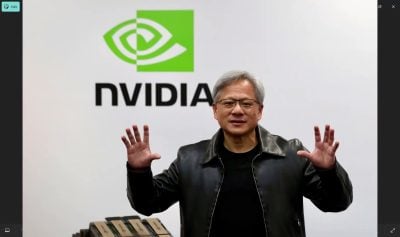
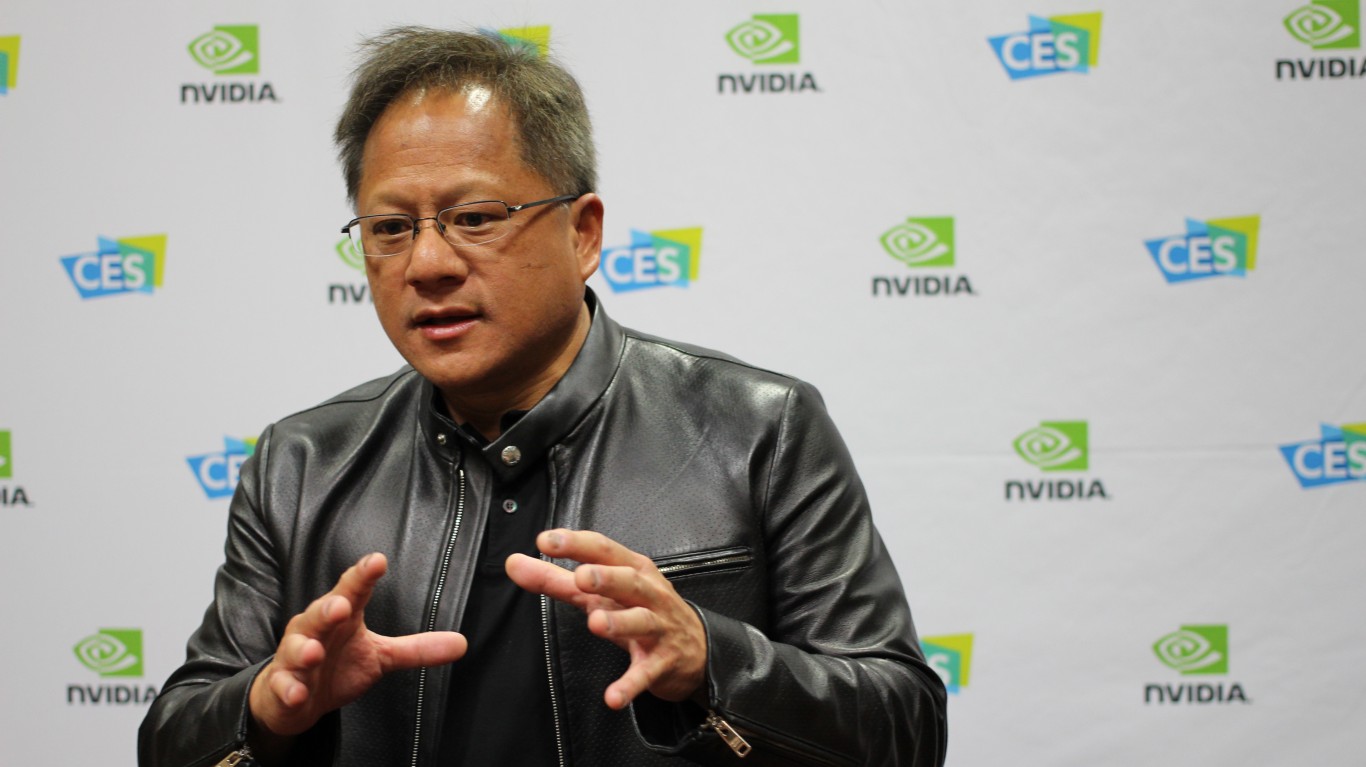
Jensen Huang, chief executive of Nvidia (NASDAQ:NVDA | NVDA Price Prediction), spent Friday, October 16, 2026, touring Europe. At an event in Berlin, he gave investors a one-line answer to a rough session: “All of this is going to pass, and the reason for that is very simple.”
The interview was published after the close, and the time he spoke was not disclosed, so his remarks should be read as made during the decline. Tech stocks lost more than a trillion dollars in value on the same day oil hit a five-month high.
The Nasdaq 100 fell 2.5% to 29,187.55, which left it about 7% below its latest all-time high. The S&P 500 lost 1.1%, and the Philadelphia semiconductor index dropped 3.8% for its eighth straight losing day, its longest such streak since 2008.
Nvidia slid only 1.43% to $214.13 and kept a market value of $5.17 trillion. It then rose 0.21% after hours to $214.57. What you need to decide is whether Huang’s confidence speaks to the forces that actually caused the selling.

Huang Offered Conviction but No New Numbers
Huang added: “It’s going to be transformative. It’s going to impact in a very positive way every single industry and every single country. There’s no question it will continue, and we’re at the beginning of that.” He argued that the technology’s benefits will soon outweigh investors’ concerns.
He made no new commitments. Huang announced no orders, no revised guidance, and no customer, so his comments reflect the view of an executive who stands to gain the most from continued AI spending.
His view still matters because he can see order books that outsiders cannot. On the August earnings call, he said, “At this moment, we have supply for 70%… Our demand is much higher than that.”
Investors Kept Nvidia and Sold Riskier Chip Names
AMD (NASDAQ:AMD) fell 5.95%, Intel (NASDAQ:INTC) lost 5.79%, Micron Technology (NASDAQ:MU) dropped 5.63%, and Broadcom (NASDAQ:AVGO) gave up 4.52%.
When investors cut risk, they held on to the company with the largest profits. Nvidia’s fiscal second-quarter revenue was $96.22 billion, and its net margin was 55.6%.
Its size works against it too. At 43 times trailing earnings, much of the long-term story is already priced in, and a company this large pulls major indexes down whenever it falls.
Huang Answered a Different Question Than the Market Asked
The selling came through oil and interest rates. West Texas Intermediate crude reached $101.91 a barrel on October 14, 2026, and the 10-year Treasury yield stood at 5.10% on October 15.
Higher yields raise the discount rate, the rate investors use to value future profits, and that hits highly valued growth stocks first. Huang’s argument is about the technology, so it offers little protection if oil keeps rising and rates follow.
Funding is the other risk. Worries about AI funding had already sent chip stocks lower before October 16, and a spending cycle can disappoint even when the technology delivers. Management cited expected top-five hyperscaler capital spending of $1.3 trillion in 2027, and any cut to that figure would matter more than any interview (we profiled seven suppliers riding that same expansion, from power to cooling, in a free report you can grab here).
What Nvidia’s Relative Strength Signals Before the November Earnings Report
Nvidia held up better than its peers. It closed about 12% below its 52-week high of $243.37 and well above its low of $164.27. The way investors sorted the chip group shows Nvidia is the AI stock they trust most under pressure.

Huang is likely right about demand, although the timing of a recovery depends on oil and yields that he cannot control. Expect more swings while the chip losing run continues.
The earnings report expected November 18 is the test. Management guided to fiscal third-quarter revenue of $108.0 billion, plus or minus 2%, with gross margin near 74.0%.
If revenue comes in below that range, or management lowers its forecast of about 70% growth for fiscal 2028, Huang’s prediction that the decline will pass will have been wrong, and the bullish case for the stock weakens with it.
Contact [email protected] for any questions or corrections.
Omor Ibne Ehsan is a writer at 24/7 Wall St. He is a self-taught investor with a focus on growth, cyclical, and dividend equities that have strong fundamentals, value, and long-term potential. He also has an interest in high-risk, high-reward investments such as penny stocks.