Nvidia CEO Jensen Huang Warns of ‘Horrible Outcome’ if China’s Huawei Gains AI Advantage
In a revealing April 2026 interview on the Dwarkesh Podcast, NVIDIA (NASDAQ:NVDA | NVDA Price Prediction) CEO Jensen Huang delivered a stark warning about the competitive landscape. He stated that if global AI models like DeepSeek begin to run best…

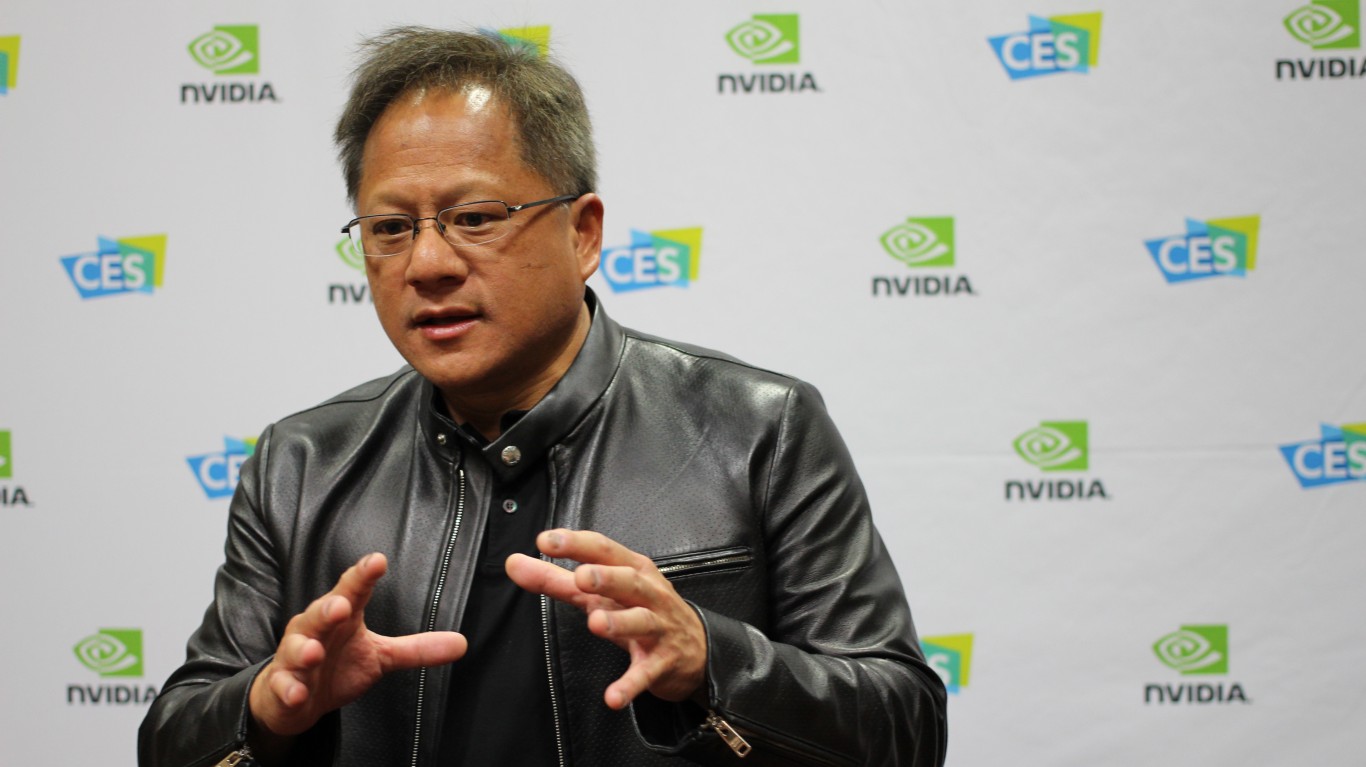
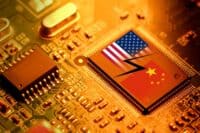
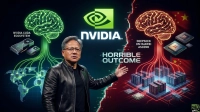
In a revealing April 2026 interview on the Dwarkesh Podcast, NVIDIA (NASDAQ:NVDA | NVDA Price Prediction) CEO Jensen Huang delivered a stark warning about the competitive landscape. He stated that if global AI models like DeepSeek begin to run best on Huawei hardware rather than American chips, the outcome would be “horrible” for the United States. When AI infrastructure shifts away from U.S. technology, the nation loses its primary leverage in the digital economy.
This is not merely a tech story for the average American investor. It is a retirement account story. NVIDIA now commands a market capitalization of roughly $5.3 trillion as of June 2026, making it the dominant position in nearly every S&P 500 index fund. The company represents over 7% of the entire index. If Huawei closes the performance gap that Huang describes, the financial impact will register in 401(k) accounts well before it manifests in any semiconductor lab.
The Reality of the “Great Wall” in Silicon
NVIDIA’s stock has held up remarkably well, yet the fundamental landscape in Asia tells a different story. China exposure is no longer a theoretical risk buried in footnotes. It has become a quantified loss as Huawei’s vertical integration accelerates across the AI supply chain.
- Inventory Write-downs: NVIDIA took a $4.5 billion write-down on H20 inventory in its first fiscal quarter of 2026. These chips were designed specifically to comply with export restrictions, yet Chinese firms increasingly reject them in favor of domestic alternatives from Huawei and other local manufacturers.
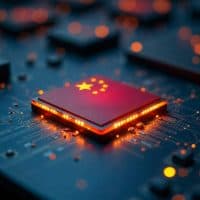
- The 950PR Leap: Huawei launched the Ascend 950PR in March 2026, marking a significant technical milestone. The chip delivers 1 PFLOPS (FP8) and 2 PFLOPS (FP4) of compute performance paired with 112 GB of Huawei’s proprietary HiBL memory. Industry benchmarks indicate that for large-scale inference workloads (including the 1.6-trillion parameter DeepSeek V4 model), Huawei’s ecosystem shows superior multimodal efficiency compared to the export-restricted chips NVIDIA can legally sell into China.
- The 60% Market Pivot: Huang conceded publicly that the Chinese high-end AI market is “effectively closed” to U.S. industry. Analyst projections suggest Huawei is positioned to capture approximately 60% of China’s domestic AI accelerator market by the end of 2026, creating a structural revenue gap that NVIDIA cannot easily fill through other geographies.
Concentration Risk: The Silent Portfolio Killer
The real investment lesson here is concentration risk. Because index funds weight holdings by market capitalization, a portfolio labeled as “diversified” in an S&P 500 fund is actually a concentrated bet on a handful of mega-cap AI names.
| Metric | NVIDIA (NVDA) | Broadcom (AVGO) | AMD (AMD) |
| Market Cap Share | Over 7% of S&P 500 | ~2.9% of S&P 500 | ~1.1% of S&P 500 |
| Valuation Multiple | High Growth Pricing | Infrastructure Play | Challenger Status |
If you hold $100,000 in a standard S&P 500 index fund, you own more than $7,000 of NVIDIA alone. For a 58-year-old investor with an $800,000 balance, that translates to over $56,000 of single-stock exposure to NVIDIA. A 30% correction in the AI sector (triggered by a geopolitical shift or a Huawei breakthrough) could erase years of retirement savings within a matter of weeks.
The New Threat: Sovereign AI Fragmentation
Beyond the direct rivalry with Huawei, a broader risk has emerged in the form of Sovereign AI. Nations across the European Union, the Middle East, and Asia are investing in nationalized AI infrastructure to ensure data residency, supply chain security, and reduced dependence on foreign technology providers. Countries no longer accept the role of “digital colonies” reliant on a single Silicon Valley supplier.
This fragmentation threatens NVIDIA’s global dominance. As governments prioritize “national clouds” over centralized hyperscaler infrastructure, the addressable market for any single chip vendor fragments accordingly. The shift represents a structural change in how compute capacity is procured and deployed worldwide.
Strategic Adjustments for Investors
The market currently prices NVIDIA for near-total dominance and perfect execution. Huang’s public warnings indicate that dominance is no longer a given. To protect your downside, consider the following research paths:
- The Equal-Weight Alternative: Investigate Equal-Weight S&P 500 ETFs such as the Invesco S&P 500 Equal Weight ETF (RSP). These funds assign each constituent roughly 0.2% weight instead of market-cap weighting. That structure reduces NVIDIA’s influence from over 7% to a fraction of a percent, dramatically cutting “single-point-of-failure” risk.
- Post-Earnings Context: NVIDIA reported Q1 FY2027 earnings on May 20, 2026, delivering revenue of $81.6 billion (up 85% year over year) and adjusted EPS of $1.87. The results exceeded the company’s guidance midpoint of $78 billion. Management’s forward guidance and commentary on China policy will be critical signals for the trajectory of the business through the remainder of fiscal 2027.
- The Cash Buffer: For investors within 10 years of retirement, evaluate a cash bucket strategy. Keeping 18 to 24 months of living expenses in Treasury bills or high-yield savings accounts ensures you are not forced to sell equity positions during a temporary geopolitical dip or market correction.
The Bottom Line: Jensen Huang is signaling publicly that the competitive moat is shrinking. Whether you choose to hold your position, trim exposure, or diversify through equal-weight funds, you should know exactly how much of that single-stock risk is embedded in your retirement portfolio.
Editor’s note: This article was updated in June 2026 to correct the interview source (Dwarkesh Podcast, April 2026), refresh NVIDIA’s market capitalization to $5.3 trillion, incorporate Q1 FY2027 earnings results reported on May 20, 2026, refine Huawei Ascend 950PR technical specifications, and update market share projections for the Chinese AI accelerator market through the end of 2026.
Contact [email protected] for any questions or corrections.
Ian Cooper is a veteran market analyst and investment strategist with more than 20 years of experience covering stocks, commodities, and macro trends. Since 1999, he has helped investors identify market opportunities using a blend of technical analysis, fundamental research, and market sentiment.
He is the creator of the ADD News Flow Strategy, which focuses on trading market reactions to major news events and investor psychology. Cooper was also among the analysts who warned about the 2008 financial crisis and major financial institution collapses ahead of the broader market.
Before joining 247 Wall St., Cooper wrote extensively for InvestorPlace and other financial publications, covering market trends, trading strategies, and investment opportunities.