Investors Have Borrowed a Near-Record $1.48 Trillion. This Surprising Tax Strategy Is Fueling the Binge
Wealthy investors discovered a way to borrow at near-record levels without triggering a tax bill, and the strategy grew so fast it caught even the brokers offering it off guard.


The Financial Industry Regulatory Authority (FINRA) reports that investors owed $1.48 trillion on margin at the end of September. That compares with $1.45 trillion in August and $1.18 trillion in October 2025. Speculation accounts for part of the climb. A fast-growing share comes from wealthy households borrowing to cut their tax bills, and that changes what margin debt tells us.
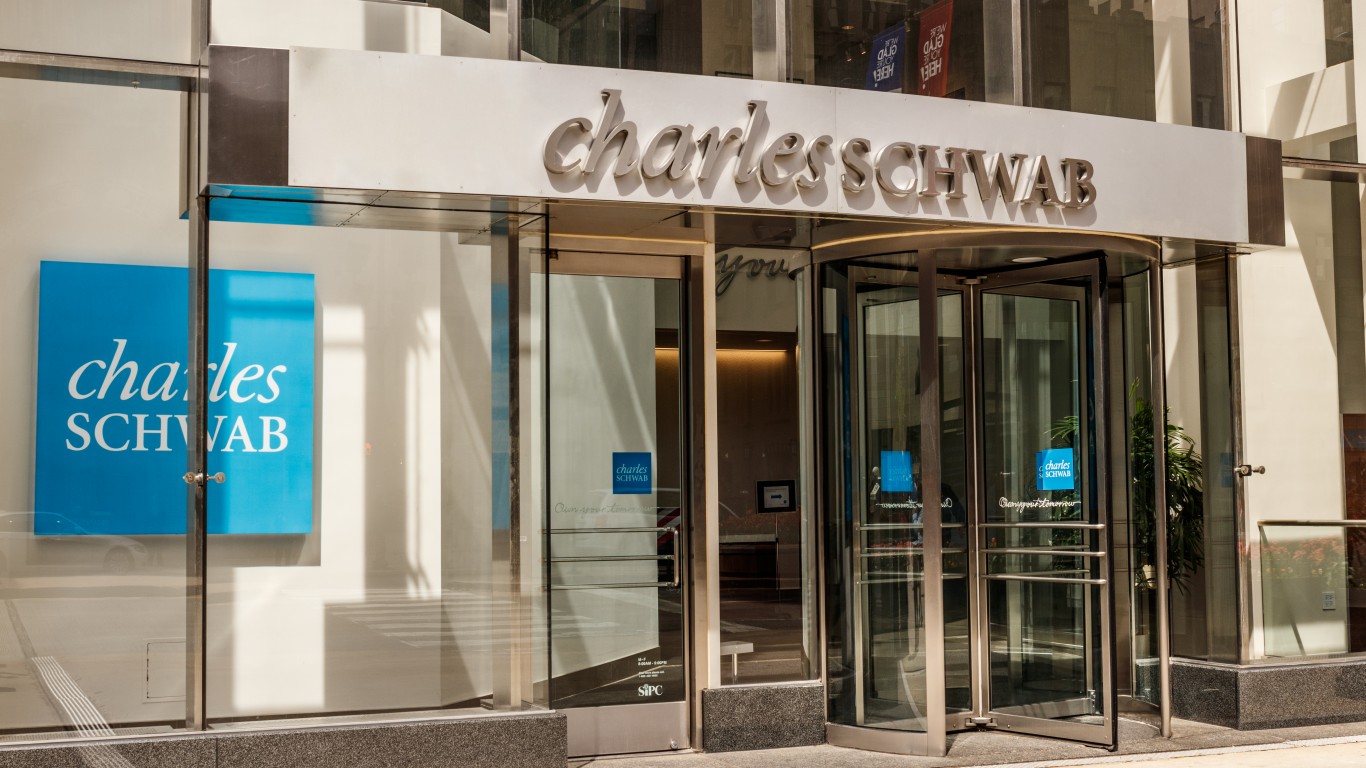
Charles Schwab (NYSE:SCHW | SCHW Price Prediction) shows the shift most clearly. In its October 15 results, margin loans rose 14% in the quarter to $187.9 billion. Of that, $60.7 billion, or 32.3%, was tied to tax-aware long-short strategies. Average margin loans linked to those strategies were $51.4 billion in the third quarter, compared with $2.8 billion a year earlier.

How Borrowing Became a Tax Shelter
Here’s how it works. An investor with big gains keeps the portfolio, borrows against it, buys more stocks, and shorts a separate basket. Positions that fall get sold to book losses. Those losses offset gains elsewhere, and the investor stays in the market. The Wall Street Journal reports that assets in these strategies grew from slightly more than $1 billion to nearly $190 billion in five years.
Two rules shape how these strategies are built. The wash-sale rule disallows a loss if substantially identical stock is bought within 30 days before or after the sale (26 U.S.C. § 1091(a)). The constructive-sale rule treats shorting the same or substantially identical property as a taxable sale (26 U.S.C. § 1259(c)). So managers short different stocks, and borrowed money pays for the whole structure.
The timing comes down to how much untaxed gain is sitting in portfolios. In its second-quarter commentary, Schwab noted the S&P 500 was up 21% year over year. The top 2026 federal rate on ordinary income is 37%. Plain borrowing against portfolios is booming too: Pledged Asset Line balances reached $37.3 billion, up 59% year over year.
“Saving money on taxes is something our clients love to do and is likely going to be something for which demand will continue,” CEO Rick Wurster told analysts.
Schwab Is Already Pumping the Brakes
Demand outpaced Schwab’s own plans. Wurster said the program grew faster than expected because a rival had less capacity to support it. Schwab began throttling growth in mid-September and changed minimums in October. The company also highlighted concentration exposure from the increase in long-short margin balances.
The lending is profitable for Schwab. CFO Mike Verdeschi called the spreads “very favorable”. Even so, the stock is down 12.7% over the past month and 7.2% this year. Higher rates also push up the cost of every borrowed dollar. The 10-year Treasury yield was 5.10% on October 15, and the Federal Reserve’s target rate tops out at 4.00%.

What to Watch Before Year-End
Tax-driven leverage tends to stick around. Unwinding it can trigger the very gains it was built to put off, and both the long and short sides can lose money in a sharp market rotation. That makes margin debt a weaker gauge of excess and a longer-lasting source of strain.
Three signals stand out. FINRA’s October data, due in the third week of November, will show whether the climb continues. Schwab’s fourth-quarter report will show whether long-short balances leveled off after the restrictions. And a Treasury September 28 notice on potentially abusive investment fund strategies warned that guidance could apply retroactively. Regulators are already looking at tax-driven products.
Contact [email protected] for any questions or corrections.
After two decades of patrolling the dark corners of suburbia as a police officer, Rich Duprey hung up his badge and gun to begin writing full time about stocks and investing. For the past 20 years, he’s been cruising the markets looking for companies to lock up as long-term holdings in a portfolio while writing extensively on the broad sectors of consumer goods, technology, and industrials. Because his experience isn’t from the typical financial analyst track, Rich is able to break down complex topics into understandable and useful action points for the average investor. His writings have appeared on The Motley Fool, InvestorPlace, Yahoo! Finance, Money Morning, and, of course, 24/7 Wall St. He has been featured in both U.S. and international publications, including MarketWatch, Financial Times, Forbes, Fast Company, and USA Today.