Johnson & Johnson’s Profit Fell 96% Year-Over-Year. But the Dividend Has Risen for 64 Years in a Row
Johnson and Johnson just posted a 96% profit collapse, yet on the same day raised its full-year guidance and extended a dividend streak most companies only dream about. The reason the headline number is almost completely misleading tells you everything…

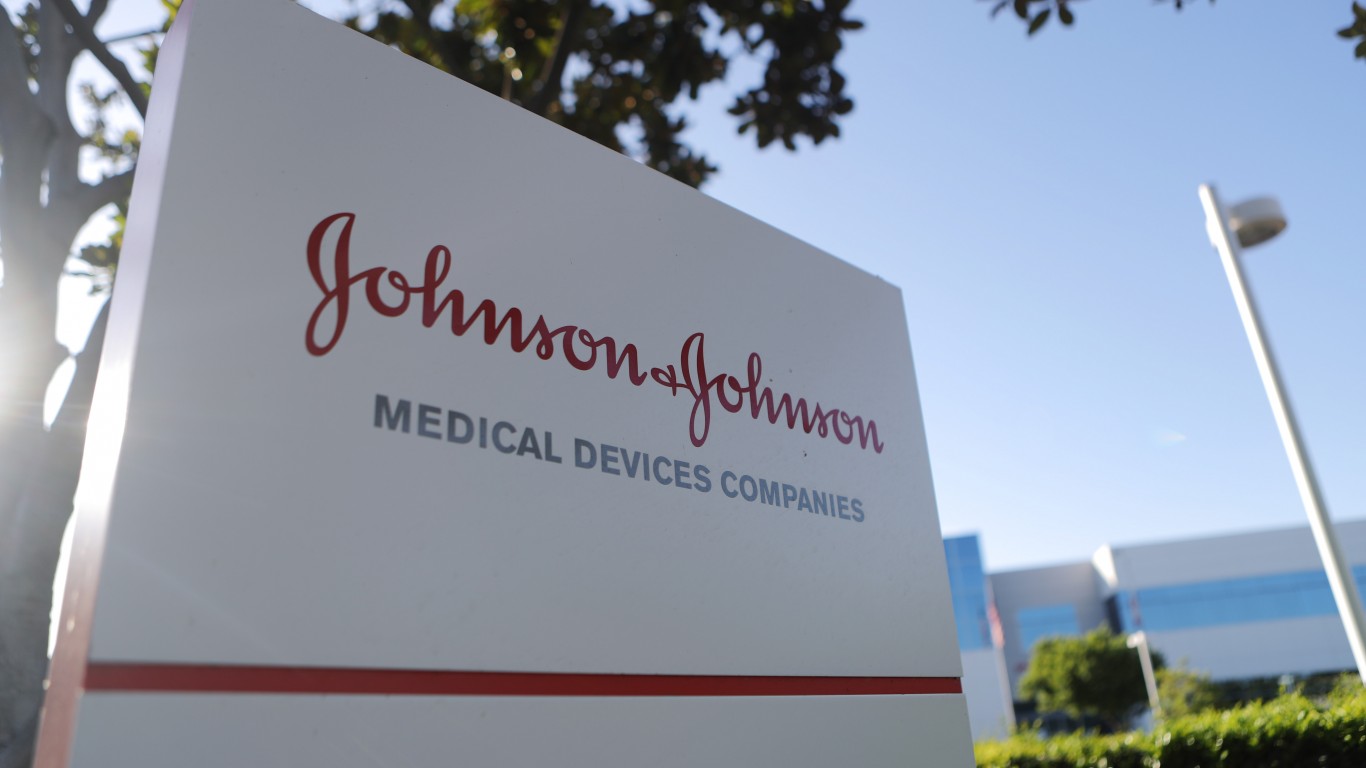
Johnson & Johnson (NYSE:JNJ | JNJ Price Prediction) reported Q3 GAAP net earnings of $210 million. That is a 95.9% drop from a year earlier. GAAP EPS fell to 9 cents from $2.12. For dividend investors, one number matters more than that headline: the gap between GAAP EPS and adjusted EPS. That gap shows whether the drop came from the business itself or from a one-time event. This quarter, it came from a one-time event.
Why the GAAP-to-Adjusted Gap Tells the Real Story
Most of the GAAP decline comes from a one-time special charge for the proposed talc litigation resolution. Costs from the Firefly Bio acquisition and the SAIL Biomedicines collaboration added to it. The ovarian talc agreement only goes forward if at least 95% of the remaining claimants sign on. Management said, “We are trending to meet the 95% threshold.”
Adjusted EPS was $2.59, compared with $2.80 a year ago, a decline of 7.5%. The deal costs also reduced adjusted results. Management expects Firefly and SAIL to cut 2026 adjusted EPS by $0.64 per share.
Sales rose 5.9% to $25.4 billion. Oncology grew about 17% and TREMFYA grew 68.2%. Those gains offset a 54% decline in STELARA as biosimilars took share. Chief executive Joaquin Duato said, “We proved our ability to grow through a significant loss of exclusivity.”
Guidance Went Up on the Same Day as the GAAP Drop

On the day it reported, the company raised its full-year adjusted EPS guidance midpoint to $11.10 from $11.04. Without the Firefly and SAIL deals, reported EPS growth would be close to 9%. Raising guidance on the same day as the charge signals that management sees the full year on track.
A 48% Payout Leaves Room for Year 65
The quarterly dividend is $1.34, or $5.36 a year. This year’s raise was the 64th annual increase in a row, putting JNJ in the rare club of Dividend Kings with 50-plus years of consecutive hikes (we ranked ten of them by valuation in a free report here). The annual dividend equals about 48% of the adjusted EPS guidance midpoint. The board declared the next $1.34 payment on October 13, payable December 8.
Cash flow supports the dividend too. Free cash flow for the first nine months was about $15.1 billion, up from $14.2 billion a year earlier. Management kept its full-year free cash flow target of about $21 billion. Net debt is about $28 billion.
What Would Change the Dividend Math
- Bullish: talc participation reaches the 95% threshold, free cash flow hits the full-year target and the payout ratio stays below 50%.
- Bearish: talc participation falls short, MedTech growth stays near its 2.5% pace or the expected $1.36 per-share hit to 2027 adjusted EPS pushes the payout ratio higher.
Shares have pulled back since the report. Shares fell from $264.63 when results came out to $253.27 a day later. On Tuesday, Oct. 20, the stock traded around $259.98, leaving it up around 2538% for the year and 34.20% over the past year.

Why the Dividend Case Still Holds
The GAAP decline came from a one-time legal charge. Adjusted earnings, the raised guidance and growing free cash flow all still cover a dividend that has gone up for 64 straight years, so the dividend picture remains intact.
Contact [email protected] for any questions or corrections.
Joel South covers large-cap stocks, dividend investing, and major market trends, with a focus on earnings analysis, valuation, and turning complex data into actionable insights for investors.
He brings more than 15 years of experience as an investor and financial journalist, including 12 years at The Motley Fool, where he served as an investment analyst, Bureau Chief, and later led the Fool.com investing news desk. He has also co-hosted an investing podcast and appeared across TV and radio discussing market trends.