Valero’s Refining Margins Nearly Tripled. These 3 Dividend Stocks Could Benefit
Refining margins just surged to levels that make dividends look almost too safe, yet one of these three refiners carries nearly 12 times more debt than another. Knowing which stock guards its payout best changes the calculus for income investors…


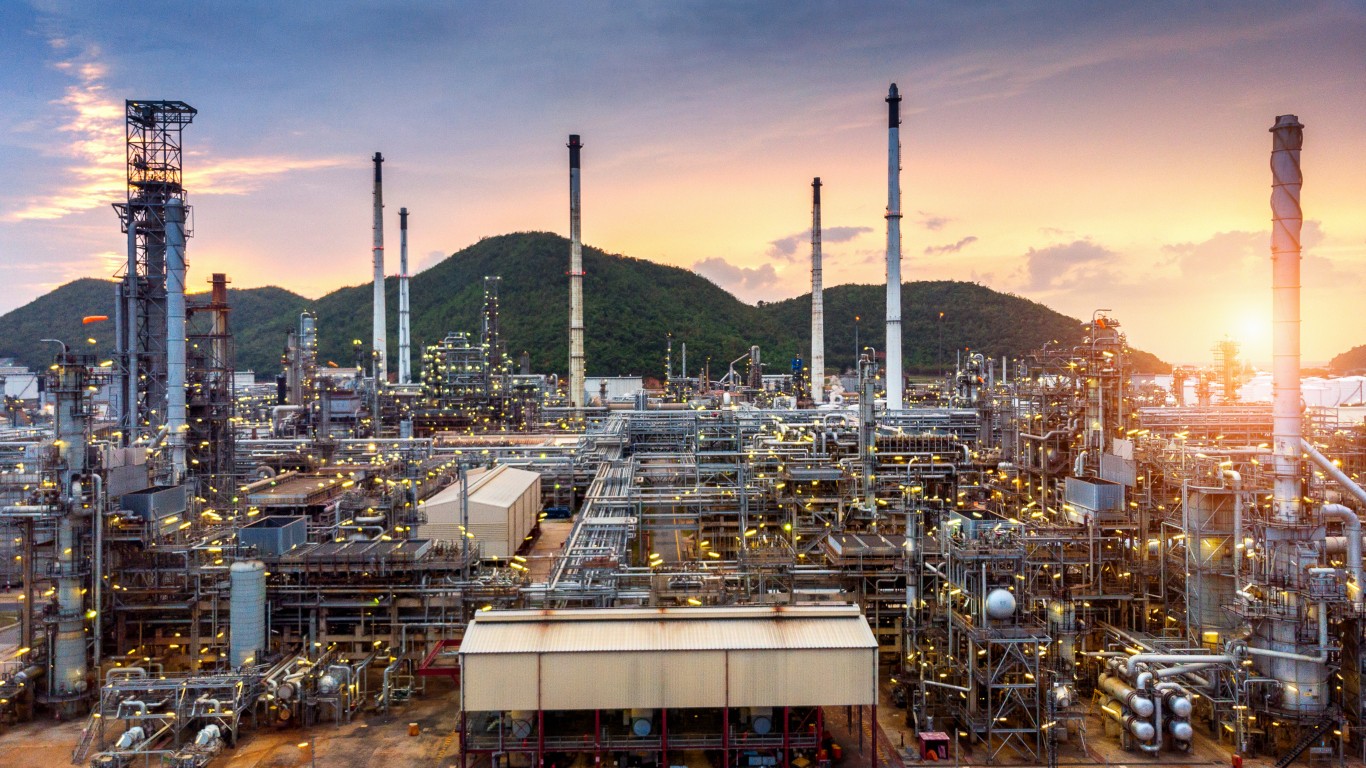
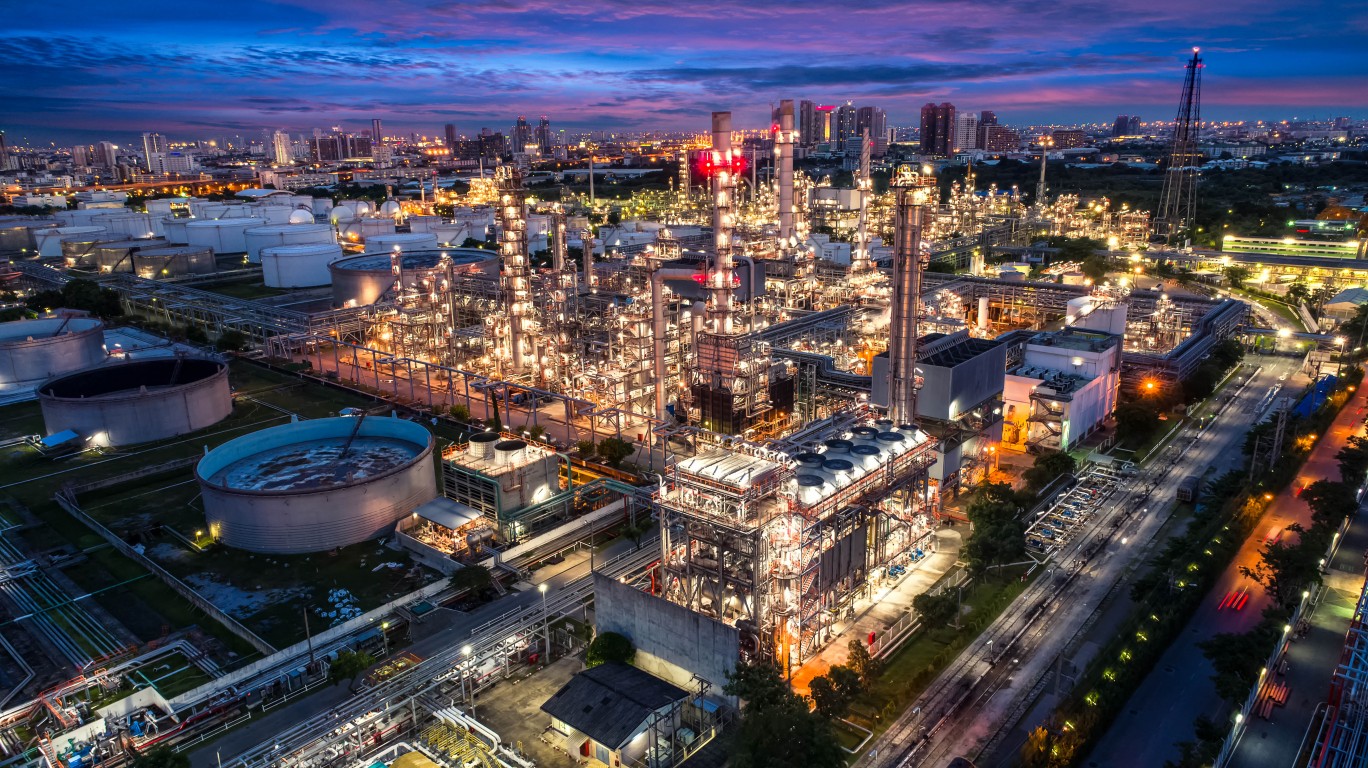
Valero Energy (NYSE:VLO | VLO Price Prediction) kicked off refiner earnings season this morning with one number that sums up the group’s boom: its refining margin rose to $39.24 per barrel from $13.14 a year earlier. That gap between what refiners pay for crude and what they get for gasoline and diesel is now paying for dividends and buybacks at Valero, Marathon Petroleum (NYSE:MPC) and Phillips 66 (NYSE:PSX). All three carry modest yields. What they offer income investors is a dividend that keeps growing, with enough cash coverage to hold up when margins come back down.
How Refiners Turn the Crack Spread Into Shareholder Cash
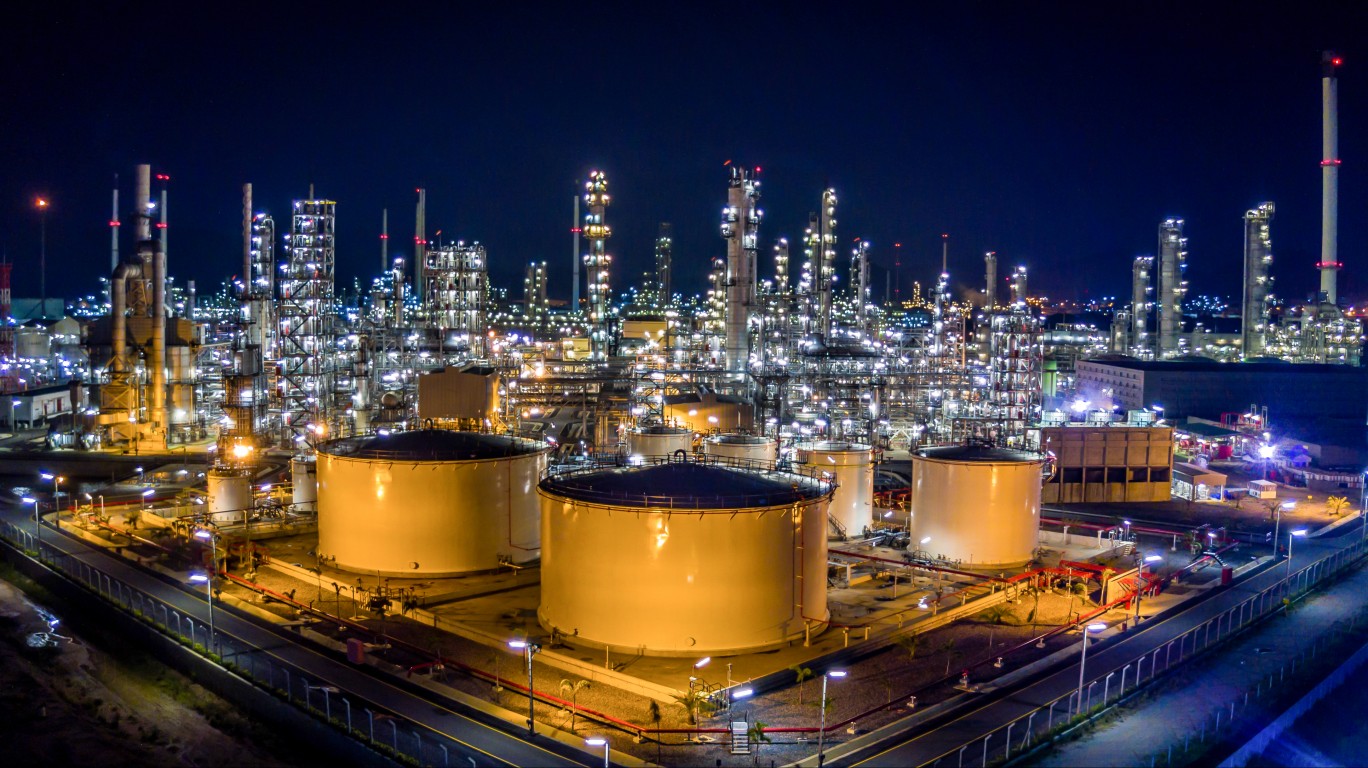
A refiner buys crude oil, breaks it into gasoline, diesel, and jet fuel, and sells those products. The difference between the two prices is called the crack spread, and it works as the refiner’s gross margin. Crude prices and fuel prices respond to different things (OPEC supply, refinery outages, inventories, freight costs and seasonal demand), so the spread can double or collapse within a year. That’s why a refiner’s dividend is best tested against low margins.
Some unusual forces are behind this surge. Valero’s management said shipping a supertanker (a VLCC) from the Gulf Coast to Asia now costs around $30 to $35 per barrel, compared with a 2025 average of around $5 per barrel. That has widened discounts on many crude grades, so Gulf Coast refiners are buying some of the cheapest crude in the world. Executive Vice President and COO Gary Simmons said lower-complexity refiners in the Far East are earning margins in the $2 to $3 a barrel range, which he views as a reason today’s spreads can last.
The EIA’s May outlook estimated a U.S. refinery utilization factor of 0.96 for the third quarter. Investors are still pricing in a peak. Valero shares fell 3.98% in today’s session despite the earnings beat, after rising 161.48% year to date.
Valero Energy: A Fortress Balance Sheet Guards a Ratcheting Dividend
At $419.35, Valero’s $1.20 quarterly dividend ($4.80 annualized) gives a forward yield of 1.14%.
The dividend is well covered. Trailing dividends of $4.66 per share take up about 19.4% of trailing EPS of $23.99. Third-quarter adjusted operating cash flow came to $7.3 billion, against capital investments of $432 million. Dividends plus buybacks added up to a payout ratio of 52% of that cash flow. The balance sheet is the biggest strength: $9.8 billion of cash against $8.6 billion of total debt, for a net debt-to-capitalization ratio of just 4%.
The dividend record supports that picture. Valero kept its quarterly payout at $0.98 from 2020 through 2022 without cutting it. It then raised the payout to $1.02, $1.07, $1.13, and now $1.20, one step per year. CFO Homer Buller called the dividend “a permanent commitment” and “a one-way ratchet,” and said Valero drew on its financial strength to maintain it during the pandemic.
Buybacks handle the flexible part of the payout. Buller said Valero looks at “both the dividend and share repurchases as a component of our total shareholder return.” He added that cash above the company’s long-term $4 to $5 billion target “will ultimately be directed towards our owners.”
Bull case: Adjusted EPS of $23.90 beat the $20.30 consensus, Valero’s sixth consecutive beat. The newly finished St. Charles FCC project already generated more EBITDA than its investment case called for, and the stock trades at a forward P/E of 10. All that extra cash means Valero can speed up buybacks if margins slip and still protect the dividend.
Risk: California. Decommissioning the Benicia refinery and dealing with the state’s regulatory pressure add cost and uncertainty to Valero’s West Coast business.
Marathon Petroleum: Pipeline Cash Covers the Dividend Before Refining Earns a Dime
Marathon pays $1.00 a quarter. At $455.26, that’s a forward yield of 0.88%, the lowest of the three. The yield is small because the stock is up 183.21% year to date and because the board directs most extra cash to buybacks.
The dividend uses only about 13.9% of trailing EPS of $28.88. Second-quarter operating cash flow, excluding working capital, was $6.6 billion, and the parent company held $6.7 billion in cash against a target balance of roughly $1 billion. The built-in safety net is MPLX (NYSE:MPLX), the midstream partnership Marathon controls. On the second-quarter call, CEO Maryann Mannen said MPLX is “giving us the $2.8 billion and growing to cover our dividend for MPC and the capital that we outlay.” In plain terms, pipeline and processing fees can pay the dividend even if refining margins dry up. Management expects MPLX distributions to grow 12.5% annually in 2026 and 2027.
The quarterly dividend has climbed from $0.58 to $0.75, $0.825, $0.91 and $1.00, with each raise declared late in the year.
Buybacks make up most of the total return. Of the $2.8 billion returned in the second quarter, $2.5 billion went to repurchases, and $6.1 billion of authorization was left at midyear. The weighted diluted share count fell from 313 million to 295 million. Fewer shares mean a smaller total dividend bill and more cash flow per share for remaining holders.
Bull case: Second-quarter EPS of $17.73 beat the $13.95 consensus, the refining and marketing margin rose to $36.33/bbl vs $17.58 a year earlier, and margin capture reached 112%. At a forward P/E of 5, it’s the cheapest of the three on expected earnings.
Risk: The dividend comes second. Mannen said “the return of capital via share buyback is the priority,” so holders focused on income get a steadily growing but modest check while most of the boom goes to repurchases.
Phillips 66: The Group’s Biggest Yield Just Got Another Raise
Last week, Phillips 66 declared a $1.33 quarterly dividend, up from $1.27, a 4.7% raise. Annualized at $5.32, it works out to a forward yield of 1.90% at $279.90, the highest of the three.
Trailing dividends of $4.94 per share take up about 28.3% of trailing EPS of $17.44. Second-quarter operating cash flow excluding working capital was $4.3 billion, against capital spending of $726 million. Shareholders received $887 million ($508 million in dividends and $379 million in buybacks), or 21% of cash flow, well below the company’s commitment to return greater than 50%. CEO Mark Lashier said midstream, along with marketing and specialties, provides “that consistent cash generation to cover the sustaining capital and the dividends.”
The dividend record is a steady climb: from $0.90 a quarter to $0.92, $0.97, $1.05, $1.15, $1.20, $1.27 and now $1.33. Its history of regular quarterly payments goes back to 2012.
Buybacks are set to pick up. Management expects to increase repurchases in the second half, and Lashier said, “The share repurchases will allow us to keep pace with our dividend increases even more dramatically.”
Bull case: Adjusted EPS of $9.41 beat the $8.09 consensus, the fourth straight beat. Refining utilization hit 96%, and midstream is targeting an EBITDA run rate of $4.5 billion by year-end 2027. That growing base of fee income supports the dividend, and the stock trades at a forward P/E of 10.
Risk: Leverage. Debt-to-capital reached 48% at Q1, up from 39% at year-end, with total debt of $20.6 billion and net debt of $16.5 billion. Management expects net debt to fall to less than $16 billion by the end of this year.
Ranking the Three Refiners on Dividend Safety
Valero ranks first on dividend safety. It has a 4% net debt-to-capitalization ratio, $9.8 billion in cash reserves, and a dividend it maintained through the pandemic. Marathon ranks second because MPLX distributions cover its dividend regardless of what refining earns, even though its 0.88% yield is the smallest. Phillips 66 ranks third: it pays the biggest yield and just raised it, but its 48% debt-to-capital ratio leaves it the least room if crack spreads fall back.
Any of the three can support an income portfolio built to run on the checks rather than share sales (we laid out how to build that kind of ladder in a free guide here: Never Touch the Principal).
Contact [email protected] for any questions or corrections.
Chris Lange is a financial and geopolitical writer with more than a decade of experience covering a myriad of topics. He has published thousands of articles for 24/7 Wall St., with past coverage focused heavily on stocks, IPOs, healthcare, defense, global affairs, and technology.
His work has been quoted, or referenced by a number of outlets including Business Insider, USA Today, Yahoo Finance, MSN, The Motley Fool, and many other publications. A graduate of Southwestern University, he studied business with a focus on investments and has previous experience in banking and startups.
When not reading or writing the news, he is following his passion for Lacrosse, playing chess, or building solar projects with his dad.