Phillips 66 and Valero Are Turning Strong Refining Margins Into Bigger Dividends

This post may contain links from our sponsors and affiliates, and Flywheel Publishing may receive compensation for actions taken through them.
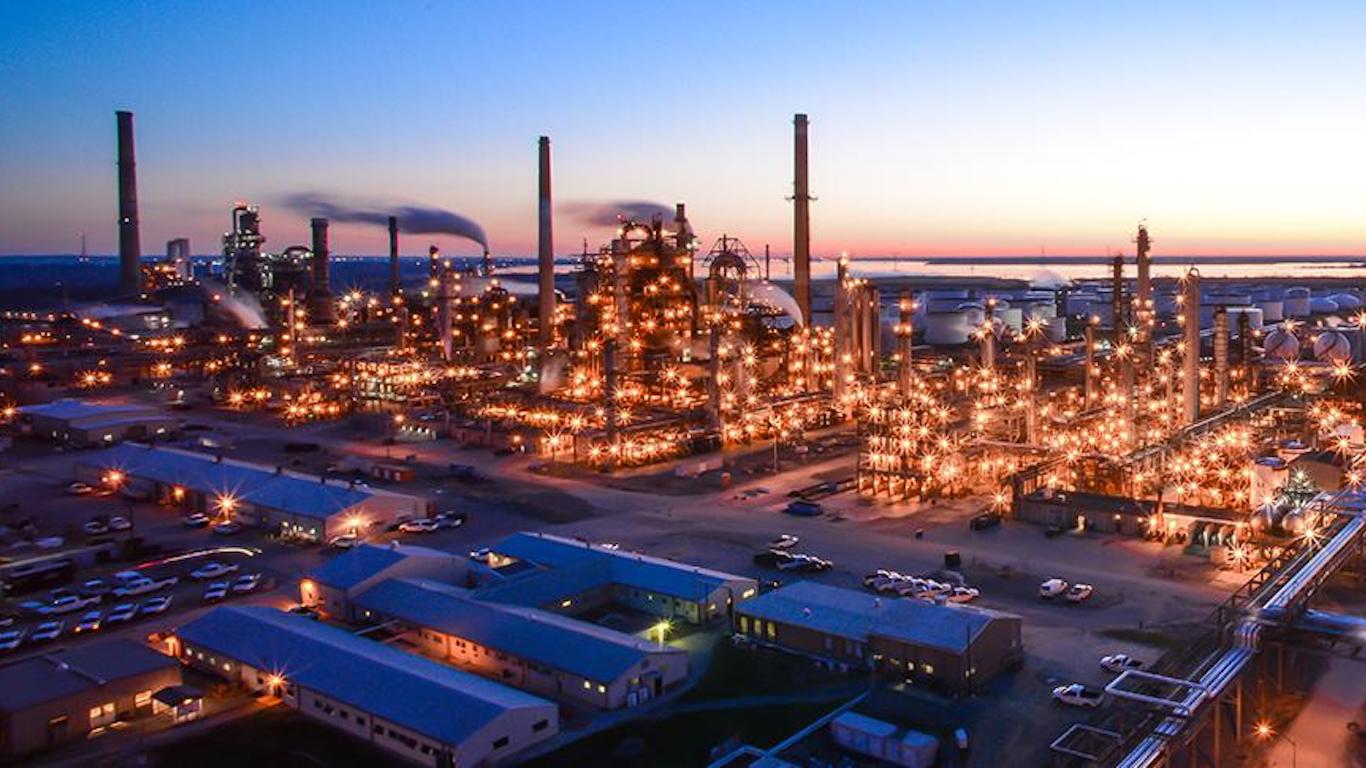
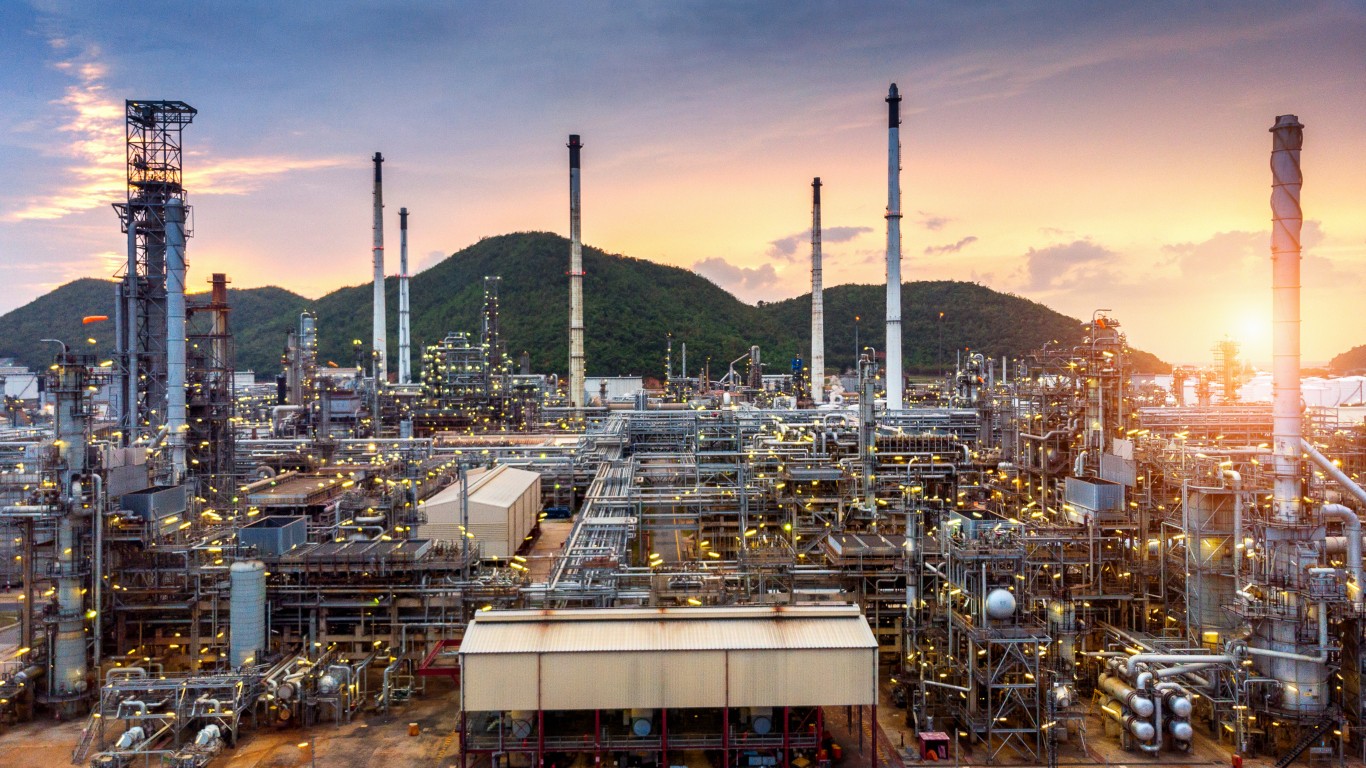
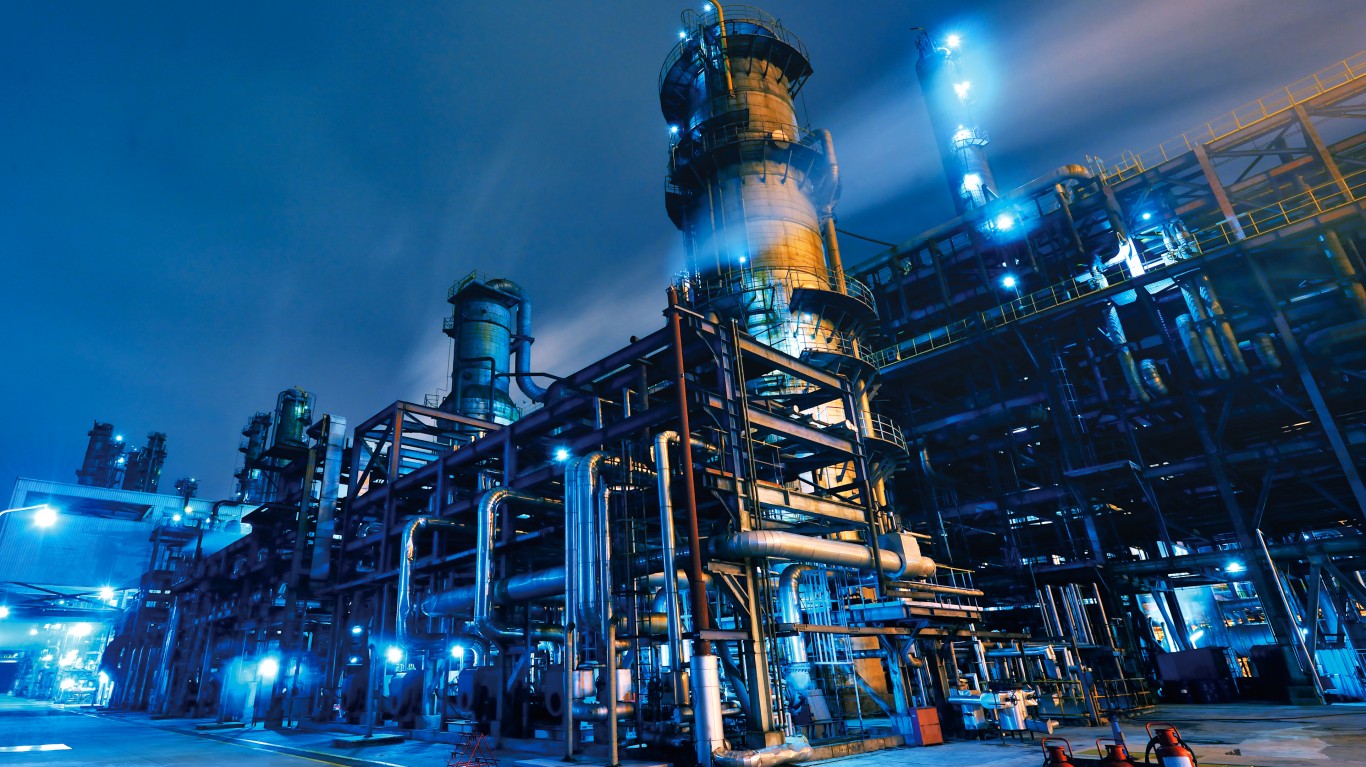
Refiners make money on the gap between what they pay for crude oil and what they collect for gasoline, diesel, and jet fuel. The industry calls that gap the crack spread, and it matters far more to a refiner’s cash flow than the price of oil itself. The spread has been huge recently: Phillips 66 (NYSE:PSX | PSX Price Prediction) recorded a realized refining margin of $38.00 per barrel[1] in its latest quarter. Phillips 66 and Valero Energy (NYSE:VLO) are both turning that windfall into higher dividends and large buybacks. Neither stock has a big yield, though, so the income case depends on how safe the payout is and how fast it can grow. Refining profits swing with the cycle, so each dividend below is tested against a weak year, not a boom year.
Phillips 66: Two Raises in One Year, Backed by Midstream Cash
Phillips 66 yields 1.91% with its stock at $260. The yield is modest, so this is a dividend-growth stock rather than a high-yield one. Refining is the largest earner, but the company also runs Midstream, Chemicals (through the CPChem joint venture), Marketing & Specialties, and Renewables segments. Those pipelines, fractionators and export docks earn fees whether crack spreads are wide or narrow, and that steadier income is what makes the dividend durable.
Dividend track record. The upcoming quarterly payment is $1.33 per share, up from $1.27 earlier this year and $1.20 a year ago. Management said the latest rate is 10.8%[2] above the prior-year fourth quarter. The quarterly dividend started at $0.20 per share in 2012. During the pandemic, it stayed at $0.90 through 2020 instead of being cut, and it has stepped up every year since. Increases usually come once a year, with the rate unchanged for several quarters in between, so the record does not support Aristocrat-style streak claims.
Coverage. Trailing dividends of $5.01 per share against trailing EPS of $31.18 work out to a payout ratio of about 16%. A boom year makes any payout look safe, so 2025 is the better test. That year operating cash flow was $4,962 million,[3] and capex was $2,233 million, leaving roughly $2,729 million of free cash flow. The CEO put the current dividend spending at about $2 billion[2]. At the new $1.33 rate and today’s share count, the annual spending is about $2,075 million. A soft year still covers the dividend, though with less room to spare than Valero has.
Balance sheet. Acquisitions drove debt-to-capital to 48%[4] in the first quarter, with total debt at $27.1 billion. Management then cut debt quickly. By the end of the third quarter, total debt had fallen to $18.5 billion[2] and net debt-to-capital to 26%. The CFO said the company had “achieved the 2027 net debt-to-capital ratio target ahead of schedule.”[2]
Buybacks vs. dividends. In the third quarter, Phillips 66 paid $504 million[1] in dividends and spent $2,273 million on buybacks. Those returns equaled 45%[1] of operating cash flow excluding working capital. The company aims to return greater than 50%[2], and management called reaching that level in the fourth quarter “very doable.”
Bull case. Midstream produces about $4 billion in EBITDA per year, and management expects it to grow about 5% per year. Buybacks keep shrinking the share count, which lets the company raise the per-share dividend without a matching jump in total cash paid. The CFO said, “It is reasonable to assume high-single-digit growth in the per-share dividend for the foreseeable future.”[2] The stock trades at about 8x forward earnings. It is up 105.64% year to date but down 11.31% over the past month.
Risk: falling refining margins. The realized refining margin was $10.11 per barrel[5] in the first quarter, and operating cash flow that quarter was negative at $(2,264) million[4] because of working-capital changes. If spreads narrow, the buyback slows first. The dividend then has to rely on midstream earnings.


Valero Energy: More Cash Than Debt Behind a Ratcheting Dividend
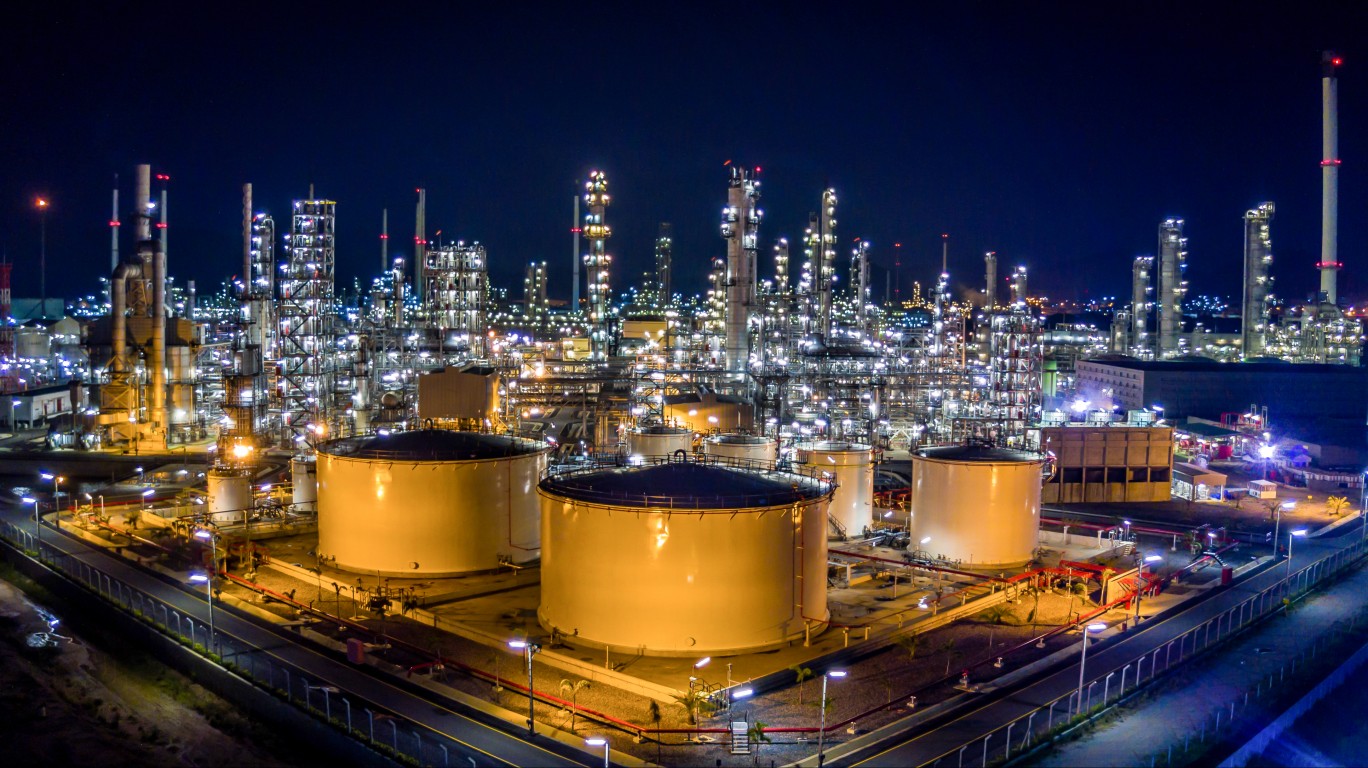
Valero yields 1.26% at $368 a share. The larger pure-play refiner has 14 petroleum refineries and about 3.0 million barrels per day of throughput capacity. It also owns a 50% stake in the Diamond Green Diesel renewable diesel joint venture and 12 ethanol plants. In the third quarter, renewable diesel swung to $353 million[6] of operating income, and ethanol set a production record.
Dividend track record. The quarterly dividend is $1.20 per share, a 6% raise from $1.13. The verified history shows the dividend rising from $0.40 in 2015 to $0.98 by 2020. It held at that level from 2020 through 2022 without a cut, then rose four years in a row to $1.02, $1.07, $1.13, and $1.20. The CFO’s description: “The dividend is a one-way ratchet.”[7] He added that Valero will “use, and have used, the balance sheet to defend it, as we did during the pandemic.”
Coverage. Trailing dividends of $4.73 against trailing EPS of $43.97 put the payout ratio near 11%. The weak-year test matters most. In 2025, when full-year EPS was just $10.61[8], operating cash flow of $5,826 million minus capex of $1,888 million left about $3,938 million of free cash flow. The current dividend rate across today’s share count costs about $1,339 million a year. Even in a soft year, the dividend uses only a fraction of free cash flow.
Balance sheet. Valero ended the third quarter with $9.8 billion[7] of cash against $8.6 billion of total debt. Net of cash, its debt-to-capitalization ratio was 4%[7]. It also has $5.3 billion[7] of additional liquidity. The long-term cash target is $4 billion to $5 billion[7], and management said the extra cash is set aside so it can keep returning cash to shareholders if commodity prices fall.
Buybacks vs. dividends. Buybacks do most of the work here. Valero returned $2.6 billion[9] in the second quarter, a 59% payout of adjusted operating cash flow, and posted a 52%[7] payout in the third quarter. The CFO said, “All the excess cash we are accumulating will ultimately be directed toward our owners.”[7]
Bull case. Valero’s refining margin rose to $39.24 per barrel[6] from $13.14 a year earlier. Its Gulf Coast plants run cheap, heavy crude grades that many rivals cannot process. The COO said management has “high confidence that this current crack spread environment is very sustainable,”[7] and the company sees “no indication of demand destruction.” Over the long run, the Energy Information Administration projects U.S. refinery throughput staying above 14.7 million b/d in every scenario through 2050, which eases the electric-vehicle worry for income holders. The stock trades at about 8x forward earnings.
Risk: plant outages. A fire at the Port Arthur refinery took a unit offline, and repair costs are estimated at $250 million[7], much of it expected to be covered by insurance. With refineries running near full capacity, another unplanned shutdown during a period of wide margins would take a large bite out of quarterly cash flow and the buybacks it pays for.


Two Refiners, Two Ways to Protect Your Income
Phillips 66 offers income investors faster dividend growth, with two increases this year, plus a fee-based midstream business that keeps paying when refining margins narrow. Valero offers the stronger balance sheet, with more cash than debt and a dividend that its 2025 free cash flow covers with plenty to spare. Both keep their regular dividends small enough to survive a weak year and pay out the boom-year cash as buybacks. The crack spread sets the size of the total cash return, and each company’s dividend history shows the regular payout held up through the downturns. For readers trying to build an income stream that lives on checks instead of sold shares, we laid out how to assemble a dividend ladder with that exact goal in a free guide: Never Touch the Principal.
Contact [email protected] for any questions or corrections.
Chris Lange is a financial and geopolitical writer with more than a decade of experience covering a myriad of topics. He has published thousands of articles for 24/7 Wall St., with past coverage focused heavily on stocks, IPOs, healthcare, defense, global affairs, and technology.
His work has been quoted, or referenced by a number of outlets including Business Insider, USA Today, Yahoo Finance, MSN, The Motley Fool, and many other publications. A graduate of Southwestern University, he studied business with a focus on investments and has previous experience in banking and startups.
When not reading or writing the news, he is following his passion for Lacrosse, playing chess, or building solar projects with his dad.