Can Exxon’s $4.5 Billion Refining Windfall Defy Dropping Crude Prices on Oct. 30?

This post may contain links from our sponsors and affiliates, and Flywheel Publishing may receive compensation for actions taken through them.
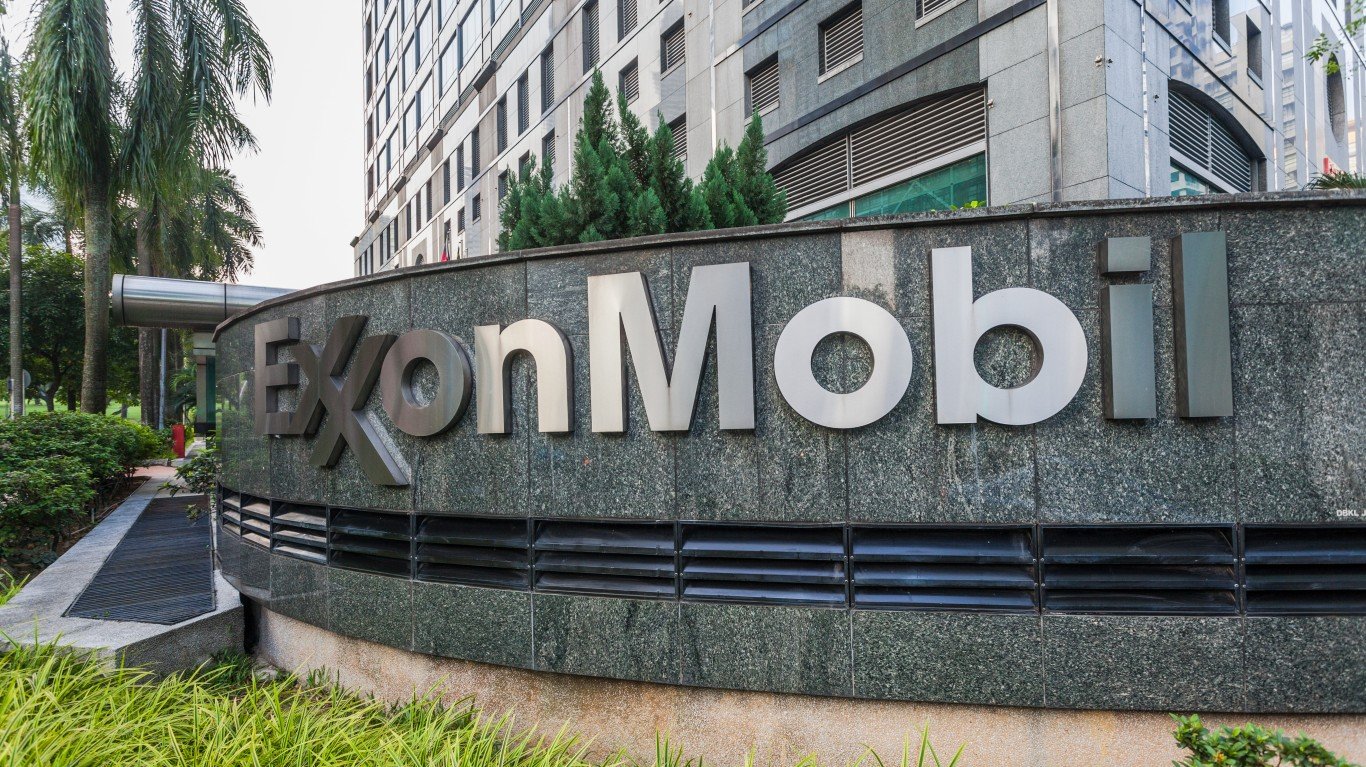
Exxon Mobil (NYSE:XOM | XOM Price Prediction) reports third-quarter results on Oct. 30. A projected $4.5 billion refining boost runs into lower average crude prices, and this report will show which force carried the quarter.

Refining Muscle Powered a Huge Second Quarter
Last quarter, Exxon earned $14.5 billion and generated $23.6 billion in operating cash flow while temporarily losing roughly 10% of upstream production to Middle East disruptions. Free cash flow exceeded $17 billion, and net debt fell by more than $7 billion.
Refining did the heavy lifting. About 3 million barrels a day of industry capacity sat idle because of the Strait closure, and CEO Darren Woods said on the July call that Exxon expects “a very robust refining market with very high margins.” Gulf Coast reliability exceeded 95%, and diesel output set a second-quarter record.
Shares have gained 13.63% over the past month, closing at $183.21 on Oct. 23.
Wall Street Expects Earnings to More Than Double
| Metric | Consensus | Year-Ago | Growth |
|---|---|---|---|
| Q3 2026 EPS | $3.981 | $1.88 | 111.76% |
| Q3 2026 Revenue | $104.03B | $85.29B | 21.96% |
| FY 2026 EPS | $12.9051 | $6.99 | 84.62% |
| FY 2026 Revenue | $421.33B | $332.24B | 26.82% |

The quarterly EPS consensus has rose from $3.2767 90 days ago.
Refining Gains Versus Crude and Derivative Drag
The net math is what matters. Energy Products should collect roughly $4.5 billion in added earnings, but lower average Brent prices could create a $1.3 billion upstream drag. An estimated $2.5 billion paper loss from derivative timing effects adds noise. Those timing effects cost $3.88 billion in the first quarter, so you should focus on underlying earnings.

Upstream volume is the second test. Guyana reached about 900,000 barrels per day and the Permian exceeded 1.8 million oil equivalent barrels per day last quarter. I want an update on the Errea Wittu FPSO, which management targeted for start-up by year-end, and on the Golden Pass LNG ramp.
Capital returns matter too. Exxon plans $20 billion in 2026 buybacks and has extended dividend growth to 43 consecutive years, the kind of run that puts it firmly in the Dividend Kings club we ranked by valuation in a free report. Structural cost savings reached $16.3 billion against a $20 billion target for 2030.
Finally, listen for management’s tone on windfall taxes. Rising refining profits have renewed scrutiny in Washington, and Exxon runs 850,000 barrels a day of capacity in the U.K. and Europe, where similar levies are under discussion.
A Real Test of Exxon’s Through-Cycle Pitch
Management has argued that Exxon can perform across market cycles. This quarter tests that claim directly, because refining, upstream growth and cost cuts must offset lower crude and complex derivative accounting. If underlying earnings hold up and buybacks stay on pace, the stock’s run has a stronger foundation. Keep an eye on fourth-quarter refining commentary, since that will shape whether the windfall lasts.
Contact [email protected] for any questions or corrections.
After two decades of patrolling the dark corners of suburbia as a police officer, Rich Duprey hung up his badge and gun to begin writing full time about stocks and investing. For the past 20 years, he’s been cruising the markets looking for companies to lock up as long-term holdings in a portfolio while writing extensively on the broad sectors of consumer goods, technology, and industrials. Because his experience isn’t from the typical financial analyst track, Rich is able to break down complex topics into understandable and useful action points for the average investor. His writings have appeared on The Motley Fool, InvestorPlace, Yahoo! Finance, Money Morning, and, of course, 24/7 Wall St. He has been featured in both U.S. and international publications, including MarketWatch, Financial Times, Forbes, Fast Company, and USA Today.