SpaceX Just Did Something It’s Never Done Before. Here’s the Bull Case for SPCX Stock in 2027

This post may contain links from our sponsors and affiliates, and Flywheel Publishing may receive compensation for actions taken through them.
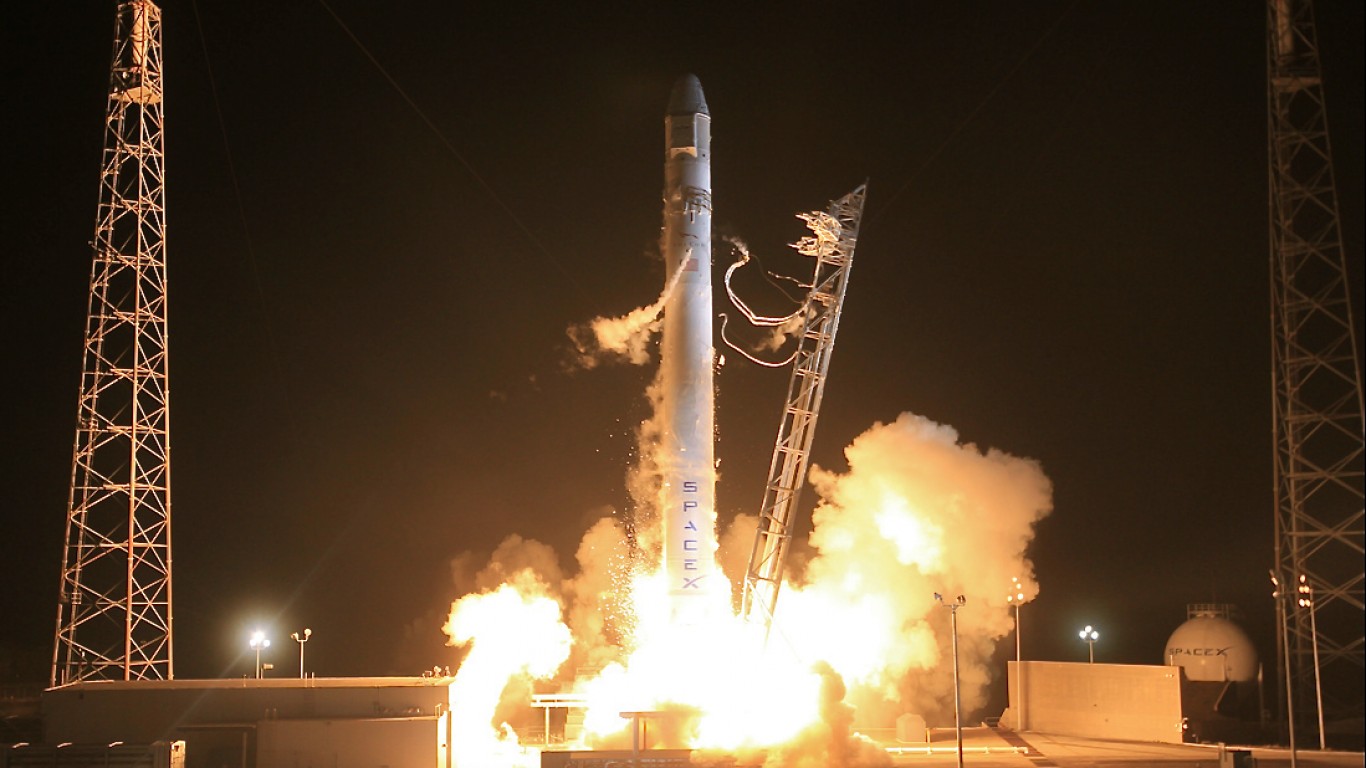
SpaceX (NASDAQ:SPCX | SPCX Price Prediction) missed the double catch on Starship Flight 15, but it achieved a first for any rocket company. The Super Heavy booster aborted its planned tower catch and diverted offshore, where it was lost. Ship 42, however, completed 14 Earth orbits over approximately 22.5 hours, deployed 26 next-generation Starlink V3 satellites, and on November 14, became the first Starship upper stage caught by the tower’s arms. The upper stage is the harder, more expensive piece to reuse. Shares sit at $139.11, down 8.58% over the past month. Here’s what SpaceX needs to hit $275 in 2027.

Wall Street Already Sees 84% Upside in SpaceX
The consensus price target of $256.41 implies 84% upside, with 31 Buy-rated analysts against just 2 Sells. Analysts expect 2027 revenue of $181.32 billion, up 270% from $48.99 billion in 2026. The 2027 EPS estimate rose to $4.1006 from $1.7454 90 days ago, with 14 upward revisions and 1 down in 30 days.

SpaceX has beaten revenue expectations in both quarters as a public company, by 14.59%[1] in Q2 and 12.11%[2] in Q3. Q3 also brought $4.40 billion[2] in net income versus a $1.10 billion loss a year earlier.
Here’s What It Takes for SpaceX to Reach $275
At today’s price, SpaceX trades at 34x 2027 earnings. At $275, that rises to 67x, versus 21-23x for the S&P 500. That premium is high, but analysts expect EPS to expand sharply from 2026 levels.
What might drive SpaceX to $275.
- Upper-stage reuse: Management targets reflying the second stage by early 2027[3], with Starship flying weekly during the first half of 2027 and twice weekly after that.
- Starlink capacity: Flight 14 alone delivered bandwidth equivalent to 10 Falcon 9 launches[3]. Connectivity revenue grew 69%[2] as subscribers reached 13.6 million.
- Compute: SpaceX plans an incremental 10 gigawatts[3] in 2027, with new deployments earning back their cost in less than a year.
- Guidance: Q1 2027 revenue guidance of $33 billion to $37 billion[3], and Elon Musk forecasts ARR of $500 billion to $1 trillion by the end of 2027.
SpaceX’s Short Trading History Shows $275 Is Within Reach
Reaching $275 would take a 98% gain. SpaceX has no long annual return record, but its 52-week range of $104.83 to $225.64 marks a 115% swing, and shares rose 35% after the Q2 report alone.

$275 Is a Stretch, but Here’s Why It’s Possible
Two-stage recovery and upper-stage reuse remain unproven risks, and Q4 capex is guided at $35 billion to $40 billion[3]. Still, rising estimates, consistent revenue beats, and a reusable Starship could carry SpaceX toward $275. Returns at this level shouldn’t be expected every year, but we’ve outlined the basis for how SpaceX could see outsized returns in 2027.
Contact [email protected] for any questions or corrections.
After two decades of patrolling the dark corners of suburbia as a police officer, Rich Duprey hung up his badge and gun to begin writing full time about stocks and investing. For the past 20 years, he’s been cruising the markets looking for companies to lock up as long-term holdings in a portfolio while writing extensively on the broad sectors of consumer goods, technology, and industrials. Because his experience isn’t from the typical financial analyst track, Rich is able to break down complex topics into understandable and useful action points for the average investor. His writings have appeared on The Motley Fool, InvestorPlace, Yahoo! Finance, Money Morning, and, of course, 24/7 Wall St. He has been featured in both U.S. and international publications, including MarketWatch, Financial Times, Forbes, Fast Company, and USA Today.