Meta’s $25 Billion Stock Sale Drew Five Times the Demand
Meta pulled in far more investor demand than it had shares to sell, yet buyers still watched the stock fall the moment trading opened. What convinced NVIDIA and AMD to pour billions into a company whose free cash flow just…


Large investors put in orders for about five times the stock Meta Platforms (NASDAQ:META | META Price Prediction) had for sale, then watched the shares close below the price they paid.
Meta priced 40,000,000 Class A shares at $625 on October 26, 2026, raising $25.0 billion, up from the $22.5 billion planned at launch. People familiar with the deal said orders came to about five times the shares offered, meaning about $125 billion of demand by our calculation.
The price sat 0.9% below the $630.56 last sale on October 26. On October 27, Meta fell 1.64% to $620.19 and traded at $619.59 after hours.
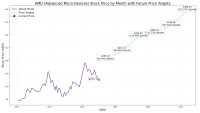
NVIDIA (NASDAQ:NVDA), which committed $3 billion, rose 0.90% to $217.94. AMD (NASDAQ:AMD), which committed $1 billion, rose 5.45% to $560.26.
What Meta Locked In Versus What It Only Planned
The common shares were sold through forward sale agreements, so Meta has not collected any cash yet. It expects about $24.9 billion in net proceeds, or $28.7 billion with the full 6,000,000-share underwriter option, when the forwards settle by November 19, 2027.
Meta also sold 250,000,000 depository shares at $50 each, or $12.5 billion, bringing the underwritten total to $37.5 billion. Each is a 1/20th interest in its 6.50% Series A Mandatory Convertible Preferred Stock.
Holders collect that fixed dividend and take stock-like losses below the $625 initial price. They forgo gains up to the $734.2144 threshold, a 17.5% premium, before converting in 2029.
A $60 billion at-the-market program, which would gradually sell nonvoting Class C shares, remains intent only. Meta has no agreement for it and does not expect it to start before the first quarter of 2027.
Why NVIDIA and AMD Are Funding Their Own Customer
NVIDIA said on October 26 that “NVIDIA will invest $3 billion in Meta’s equity offering” as Meta expands its Vera Rubin deployment. AMD said on October 27 that its first Helios rack-scale systems are installed and in testing at Meta.
That $4 billion trails the non-binding indication of up to $5.0 billion from NVIDIA, AMD and Broadcom (NASDAQ:AVGO). No Broadcom purchase was confirmed.
Against NVIDIA’s $5.26 trillion market value, $3 billion is insignificant. AMD’s gain reflects the installation of Helios systems at one of the world’s largest data center operators, although both deals are partly vendor financing: suppliers recycling cash into a buyer of their hardware.
Why a Company This Profitable Is Selling Stock
Last quarter Meta spent almost $34 billion on buildings and equipment while generating almost $33 billion in cash, turning free cash flow negative for the first time since 2012. Its credit default swaps, the cost of covering its debt, hit a record 127 basis points on October 23, making equity the better option.
The 15 largest investors took about 70% of the deal, people familiar with it said, which reduces flipping risk. However, hedging by convertible buyers and the coming Class C supply can limit any rebound.
What Could Weigh on Meta Shares Into 2027
Meta faces pressure from several sources. Dilution arrives when the forwards settle, Class C supply follows, and its new AI businesses are expected to begin contributing revenue in 2027.
NVIDIA captures this spending more directly because it books Meta’s expansion as revenue without issuing stock, and its data center revenue reached $89.02 billion in its latest reported quarter. It trades at 44 times earnings, while AMD trades at 211 after pricing in its news.

That pressure would ease if Meta closes back above $625. It must hold there into the Class C trading debut expected in late January 2027.
Contact [email protected] for any questions or corrections.
Omor Ibne Ehsan is a writer at 24/7 Wall St. He is a self-taught investor with a focus on growth, cyclical, and dividend equities that have strong fundamentals, value, and long-term potential. He also has an interest in high-risk, high-reward investments such as penny stocks.