AMD Regaining Its $1 Trillion Valuation Faces the Ultimate Test on Nov. 3
AMD reports earnings on Nov. 3 with its stock up over 165% this year and a trillion-dollar market cap tantalizingly close, but Wall Street already knows that beating estimates alone is not enough to hold that valuation.


AMD (NASDAQ:AMD | AMD Price Prediction) reports third-quarter results on Tuesday, Nov. 3, after the bell. The stock is up 165.22% this year, and its market cap stands near $926.5 billion. This report will show whether the AI story can hold a $1 trillion valuation.

Record Results Raised the Bar for Q3
Last quarter, revenue rose 50.1% to $11.54 billion, beating the $11.31 billion consensus. Non-GAAP EPS of $1.66 exceeded the $1.61 estimate. Data Center revenue more than doubled to $6.72 billion, or 58% of sales.

Management guided Q3 revenue to about $13 billion, plus or minus $300 million, with non-GAAP gross margin near 56%. CEO Lisa Su said on the August call that AMD starts the second half “with strong momentum as EPYC demand accelerates, Instinct deployments scale and Helios begins to ramp.”
The stock has cooled since then. Shares fell 9.93% over the past month, then rebounded 6.22% this week.

Wall Street Expects 41% Revenue Growth
| Metric | Q3 2026 Consensus | YoY Growth | FY2026 Consensus | YoY Growth |
|---|---|---|---|---|
| Normalized EPS | $1.9346 | 61.2% | $7.5884 | 82.0% |
| Revenue | $13.08 billion | 41.4% | $50.97 billion | 47.1% |
Helios Shipments and EPYC Supply Will Set the Tone
Helios is my first stop. Initial shipments were set to begin in the third quarter of 2026, ramping through Q4 and into 2027. Su said customer pull was “very strong and tracking ahead of our initial forecast.” I want to hear about customers beyond OpenAI, Meta and Anthropic, since management expects that list to grow through Q4 and early 2027.
You should watch gross margin next. CFO Jean Hu said data center AI margins run slightly below the corporate average during the ramp, so holding near 56% while Helios scales would ease concerns about pricing against NVIDIA (NASDAQ:NVDA).
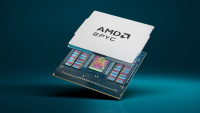
EPYC is the higher-margin offset. AMD expects server revenue to grow more than 80% year-over-year in the second half of 2026, but supply is tight because much of the demand was unforecasted. Updates on the Venice launch and capacity increases matter here. (We studied what the biggest tech winners looked like early and turned the pattern into a free playbook here: The Next Nvidia Playbook.)
Finally, the Q4 outlook. Consensus calls for Q4 revenue of $16.14 billion and EPS of $2.6473. On Polymarket, traders put a 62% probability that Q3 Data Center revenue exceeded $8 billion. Gaming remains a drag after falling 31% last quarter.
A Trillion-Dollar Valuation Needs a Real Q4 Step-Up
AMD trades at about 36x the 2027 EPS consensus of $15.7629, compared with $13.4921 90 days earlier. Beats alone have not protected the stock before. In the Q4 2025 report, AMD beat EPS estimates by 15.98%, and shares still fell 17.31%. If Helios volumes and Q4 guidance confirm the step-up management described, the 2027 estimates look earned.
Contact [email protected] for any questions or corrections.
After two decades of patrolling the dark corners of suburbia as a police officer, Rich Duprey hung up his badge and gun to begin writing full time about stocks and investing. For the past 20 years, he’s been cruising the markets looking for companies to lock up as long-term holdings in a portfolio while writing extensively on the broad sectors of consumer goods, technology, and industrials. Because his experience isn’t from the typical financial analyst track, Rich is able to break down complex topics into understandable and useful action points for the average investor. His writings have appeared on The Motley Fool, InvestorPlace, Yahoo! Finance, Money Morning, and, of course, 24/7 Wall St. He has been featured in both U.S. and international publications, including MarketWatch, Financial Times, Forbes, Fast Company, and USA Today.