ConocoPhillips vs. EOG Resources: Which Oil Dividend Holds Up Better When Prices Swing?

This post may contain links from our sponsors and affiliates, and Flywheel Publishing may receive compensation for actions taken through them.
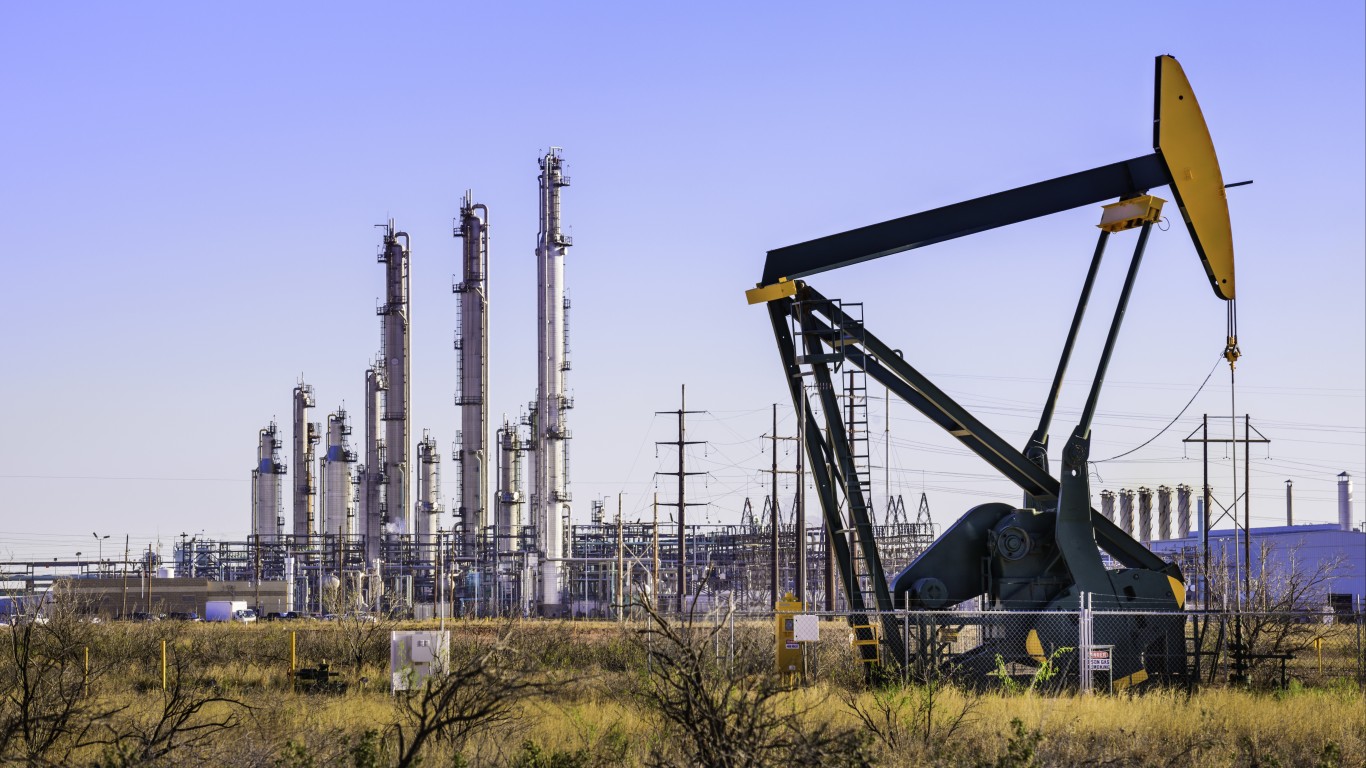
ConocoPhillips (NYSE:COP | COP Price Prediction) or EOG Resources (NYSE:EOG): which oil dividend holds up better for someone building a retirement portfolio? Over the past year, WTI crude fell to $55.44 on December 16, 2025, then climbed to $114.58 on April 7, 2026. A retiree’s income needs to withstand both extremes.
Both stocks have moved with crude. ConocoPhillips is up 63.44% year to date, and EOG is up 58.86%. WTI last traded at $107.89. Each company reports third-quarter results soon, so the next test of these payouts is only weeks away.


Income Today: EOG Pays More and Covers It More Easily
EOG’s annualized forward dividend is $4.08, against $3.36 at ConocoPhillips. At current prices, EOG yields about 2.52% and ConocoPhillips about 2.24%.
EOG also covers its dividend with more buffer. In the second quarter, it paid $540 million in regular dividends out of $2.8 billion of free cash flow, which works out to roughly 19%. ConocoPhillips paid $1 billion out of $4.2 billion, about 24%. Both companies paid extra cash in the last oil boom: EOG made special payments as large as $1.50 in December 2023, and ConocoPhillips paid out $1.40 in 2022. Today, both pay only a fixed quarterly dividend. Winner: EOG.


Growth Runway: ConocoPhillips Is Lowering Its Breakeven
ConocoPhillips expects its free cash flow breakeven to fall from the mid-forties WTI today to the low-30s by 2029. A breakeven is the oil price the company needs to cover its spending. The lower figure comes with a planned $7 billion free cash flow inflection. In November 2025, it raised its dividend 8% to $0.84. In the second quarter, it doubled buybacks to $2.0B, and it aims to return 45% of cash flow from operations to shareholders. Executive Andrew O’Brien said, “Diversity helps lower our decline rate versus pure unconventional companies.”
EOG has held its dividend at $1.02 since its raise from $0.975, and it guides to 5% oil production growth. Winner: ConocoPhillips.
Stress-Tested Record: EOG’s 28 Years Without a Cut
EOG has not cut or suspended its regular dividend in 28 years, and it has raised it 36% since the first quarter of 2022. Its 2026 program covers growth, exploration, and the dividend at a WTI breakeven price below $50 per barrel. EOG ended the quarter with $4.9 billion in cash and $3 billion of net debt.
ConocoPhillips holds more cash, at $8.1 billion, with leverage well below 1x. Its ordinary dividend also rose sharply, from $0.265 in 2017. Even so, it relies on forward targets, while EOG can point to nearly three decades of actual results. Winner: EOG.
One Risk Each Company Carries
ConocoPhillips: the Middle East. Disruption in Qatar and higher Surmont royalties left second-quarter production modestly lower YoY at 2,248 MBOED.
EOG: leverage after the Encino deal. Total debt reached $7.9B, versus $4.2B a year earlier. EOG also took $843M of 2025 losses on its Barnett Shale and Woodford assets.
Verdict: EOG Owns the Sturdier Dividend
For retirees who spend their dividend checks, EOG offers a sturdier income profile. It pays a higher yield, uses less of its free cash flow to cover the dividend, and has gone 28 years without a cut. ConocoPhillips tends more toward total return for investors who reinvest. Its 10-year price gain of 351.45% far outpaces EOG’s 147.38%, and its breakeven keeps falling.
On dividend durability, EOG wins clearly: its payout has already lasted through 28 years of oil swings, and it takes less cash flow to fund today. We laid out how to build a dividend ladder around names like these in a free guide here for retired people seeking income that keeps coming without having to sell shares.
Contact [email protected] for any questions or corrections.
Chris Lange is a financial and geopolitical writer with more than a decade of experience covering a myriad of topics. He has published thousands of articles for 24/7 Wall St., with past coverage focused heavily on stocks, IPOs, healthcare, defense, global affairs, and technology.
His work has been quoted, or referenced by a number of outlets including Business Insider, USA Today, Yahoo Finance, MSN, The Motley Fool, and many other publications. A graduate of Southwestern University, he studied business with a focus on investments and has previous experience in banking and startups.
When not reading or writing the news, he is following his passion for Lacrosse, playing chess, or building solar projects with his dad.