Can Online Savings Rates Really Last? A South Carolina Caller Put the Question to Clark Howard

This post may contain links from our sponsors and affiliates, and Flywheel Publishing may receive compensation for actions taken through them.

A caller from South Carolina asked a question. On the May 15, 2026 episode of The Clark Howard Podcast, Joel asked the question almost every saver asks before moving money to an online bank. According to the episode summary, he wanted to know whether the high rates online savings accounts offer are sustainable and consistent compared with what local banks pay. He told The Clark Howard Podcast he was earning around 1.5% in his money market account.
No online savings rate is locked in. These accounts pay variable rates that move with the broader interest-rate environment. The edge online banks hold over typical branch banks comes from how they are built, though, and that edge has held up through both rising and falling rate cycles.
Why Online Banks Can Afford to Pay You More
A traditional bank pays for a branch network. That means leases, tellers, security, drive-through lanes and ATMs in every town it serves. An online bank runs from a website and an app, so the money it saves on real estate and staff can go back to depositors as interest.
Online banks also have no street corner to pull customers in, so their rate does that job. Savers can compare yields in a few minutes. Across dozens of institutions, an online bank that lets its rate fall too far behind tends to lose deposits. Local banks lean more on convenience and long relationships, and many pay little on savings because plenty of customers never shop around.
Clark Howard described this on an earlier show dated October 3, 2018. "When you have an online savings account with someone, you’re the lender lending to the bank instead of the other way around," he said. He added that savers can feel confident the big online banks are "going to offer good rates today, tomorrow and for as far in the future". Anyone can see this.
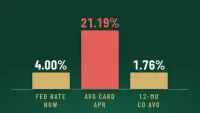
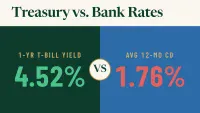
For a sense of what a typical bank pays, the FDIC national average 12-month CD rate was 1.76%[1] in October 2026. Joel’s money market account was paying less than even that average one-year CD. The national figure is a bank-wide average, and top online banks have routinely paid 3-5x[1] that average.
Will Online Savings Rates Last? Watch the Federal Reserve
Because savings rates are variable, the bank can raise or lower your yield at any time, and in practice, online savings rates generally track the federal funds rate. When the Fed raises its target, online banks tend to lift their yields within weeks. When it cuts, those yields come down.
Clark drew the same connection during a rising-rate stretch on a December 14, 2017 show. "Interest rates are rising generally in the economy. And so I think you’re going to see the online banks become steadily more favorable on the interest rates they pay," he said.
The federal funds target rate upper bound was 4.00%[2] as of November 12, 2026. The 13-week Treasury bill yield averaged 4.21% that same day. The FDIC national average 12-month CD rate rose every month from April 2026 through November 2026[1], reaching 1.81% on November 1, up from a low of 1.52% in March.
For now, the signals point up. Minutes from the Fed’s latest meeting, released on November 18, 2026, showed almost all officials expect more rate hikes. The Fed’s Waller said the central bank may need to "shock people" with a half-point hike. If those increases come, variable online savings rates would be expected to rise too.
Rates can also fall. If the Fed cuts later, online yields will come down along with everything else.
In an simple example, a $20,000 balance at Joel’s money market rate earns $300 a year. The same balance at the 13-week Treasury bill yield would earn $842. That T-bill yield works as a yardstick. A savings rate far below it means the bank is keeping most of what your cash could earn.
What Keeps Your Savings Safe Whether Rates Rise or Fall
An online savings account at an FDIC-insured bank has the same federal deposit insurance as an account at the bank down the street. Coverage runs up to $250,000 per depositor, per insured bank, per ownership category. Credit union deposits get similar protection through the NCUA.
Check whether the institution actually holding your money is insured itself, since many savings apps are technology companies that place deposits with a partner bank. FDIC insurance pays out if that partner bank fails. It does nothing if the app company fails, and poor recordkeeping at the app can delay your access to funds. Regulators are still working on this weak spot. The FDIC Board of Directors approved a proposed rule on custodial deposits on November 17, 2026[3].
Before moving money, look up the institution’s legal name in the FDIC’s BankFind tool, and if the account agreement mentions a “partner bank” or “program bank,” look that bank up too. Keep your total at any one bank under the insurance limit.
Bottom Line for Joel and Every Saver Weighing a Switch
Online savings rates move with the Fed, so any single rate will change over time. The reason they run higher lasts: lower overhead and real competition for deposits. A saver earning less than what most one-year CDs pay nationally is giving up interest for no added safety, as long as the online bank has FDIC insurance in its own name.
Start by comparing your current yield with the latest 13-week Treasury bill yield and the FDIC national averages. Then confirm the online bank’s FDIC status, open the account, and link it to your local checking for everyday cash. After each Fed decision, check your rate so you know when it’s time to move.
Frequently Asked Questions About Online Savings Rates
Can an Online Bank Cut My Savings Rate Without Warning?
Yes. Rates on these accounts can change at any time under the account agreement, and banks usually cut after the Fed does. If your bank cuts while competitors hold steady, that is your cue to shop around.
Is an Online Savings Account as Safe as My Local Bank?
At an FDIC-insured bank, it is. Deposit insurance works the same with or without branches. Most of the risk lies with apps that hold your money through a partner bank, so confirm which bank actually holds the deposit.
Should I Lock In a CD if I Think Rates Will Fall?
A CD fixes your rate for its term. That protects you from cuts, but your money is tied up and you’ll pay a penalty to withdraw early. With Fed officials signaling hikes, locking in a long term now could mean missing higher yields later. Emergency money belongs in savings you can reach.
Is a Money Market Account Better Than a High-Yield Savings Account?
Money market accounts at banks are FDIC-insured, pay variable rates and often include check writing or a debit card. Joel’s account shows a money market can trail a strong online savings account, so compare the yield itself rather than the account type.
How Often Should I Check My Savings Rate?
Check rates periodically and after each Fed meeting. Look at the 3-month Treasury bill yield and the FDIC national averages for comparison. Move your money when the rate falls behind those benchmarks.
Contact [email protected] for any questions or corrections.
Austin Smith is a financial publisher with over two decades of experience as an investor, analyst, and advisor. He covers stocks, ETFs, Artificial intelligence and personal finance for 24/7 Wall St. Previously, he spent over a decade at The Motley Fool as a senior editor for Fool.com, portfolio advisor for Millionacres, and launched The Ascent to help reader take control of their personal finances.
His work has been featured on Fool.com, NPR, CNBC, USA Today, Yahoo Finance, MSN, AOL, Marketwatch, and many other publications. He is as an advisor to private companies, and co-hosts The AI Investor Podcast with Eric Bleeker.
When not looking for investment opportunities, he can be found skiing, running, or playing soccer with his children. Learn more about Austin's investment approach here.